Loading cart…
No products in the cart.

Original price was: $518.00.$259.00Current price is: $259.00.
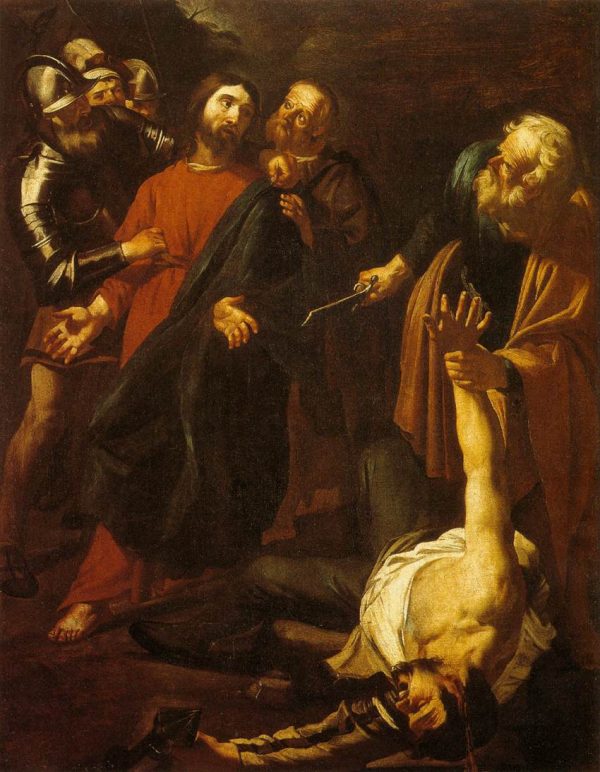
A compact, close-pressed arrest scene by Dirck van Baburen, painted with the raking light and hard shadow of Utrecht Caravaggism, now offered as a hand-painted oil reproduction with genuine surface texture.
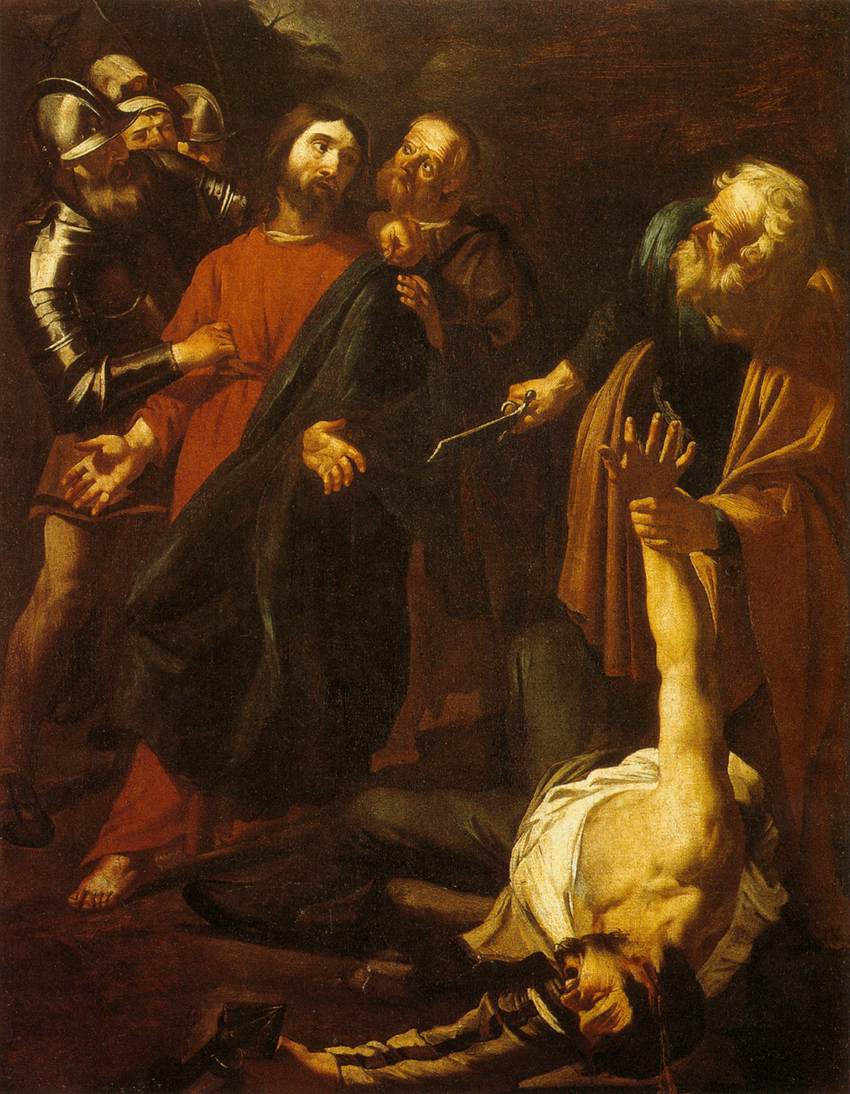
Stand close to this canvas and the composition presses in on you the way it presses in on Christ. The picture holds its figures tight within a compact, near-square field, a deliberate proportion that leaves no room for a horizon or a moment of visual rest; every inch is occupied by bodies, hands, and the glint of armour caught in torchlight. That closeness is not incidental. It is the mechanism by which the painting works on a viewer, pulling the eye into a scrum of arms and faces before it has time to settle.
The subject is the arrest in the garden, the night Jesus was taken, folded together with the sudden violence of Malchus losing an ear in the scuffle. Baburen stages it as a single collapsing instant: soldiers grip and shove, Christ submits with a stillness that reads almost as defiance, and the servant recoils in pain at the margin of the group. The figures are pushed forward against the picture plane, so close that the drama feels enacted in the room rather than observed from a distance.
Trained in Utrecht and shaped by time in Rome, Baburen absorbed the lessons of Caravaggio directly and returned them with a harder, more theatrical edge than his Italian or Flemish contemporaries allowed themselves. Flesh is modelled in raking, artificial light against pools of near-total shadow; colour is kept low and warm, so that a face or a raised hand seems to ignite out of the dark. This is Utrecht Caravaggism at full strength, and it places the painting among the more physically direct religious scenes of the early seventeenth century, a genuinely famous painting within that circle of Dutch painters who looked south for their light and came home to reinvent it.
A hand-painted oil painting reproduction of this scene is built by a trained artist working directly in oil on canvas, matching the nocturnal palette and the raking contrasts stroke by stroke rather than reproducing them mechanically. The brushwork stays visible, the impasto in the lit passages keeps its raised texture, and the canvas carries the weight and depth of layered colour that a printed surface cannot hold. What results is a painted object with its own material presence, not a copy in the flat sense but a repainting.
Four centuries on, the scene still holds attention because it refuses the comfortable distance most religious paintings offer; it asks to be stood in front of, not glanced at. Owning a version of it, painted rather than printed, is a way of keeping that immediacy in a room rather than filing it away as an image.
Empty walls flatten a room. A classical artwork restores structure and visual hierarchy. One painting defines the space, anchors furniture, and establishes identity.
Worldwide shipping included. Each painting is produced to order and safely packed for international transport.
All payments are encrypted and processed through trusted payment providers.
Real brushwork, layered oil paint, and durable pigments on museum-quality canvas.
If the result does not meet expectations, return it for a full refund.


Your artwork is painted on premium cotton canvas, then shipped safely rolled in a rigid tube with extra blank canvas border — ready for stretching or framing locally.
Select a handcrafted frame and we’ll deliver your painting fully assembled, protected, and ready to hang.
For safe shipping, framing is available up to a maximum size. Larger sizes will automatically disable the frame option.


Choose “Stretched” to receive your canvas mounted on wooden stretcher bars — perfect if you’ll frame it later or display it as-is.
Gallery Wrap is a deeper, 1.5" style stretcher. The canvas wraps around the sides and is stapled on the back for a clean, modern, frameless look.
We ship with UPS, FedEx, or DHL straight to your door. You’ll receive a tracking number as soon as your order leaves our studio. Typical delivery is 5 to 7 days after dispatch; large, framed, or stretched pieces may take longer depending on the safest shipping route.


Unframed canvases are protected with a film, carefully rolled, and secured inside a rigid shipping tube.

Stretched, Gallery Wrapped, and Framed paintings are wrapped, cushioned with foam protection, and boxed for safe transit.