Loading cart…
No products in the cart.

Explore famous landscape paintings that changed how artists saw land, weather and light—from Van Gogh’s night sky and Constable’s English countryside to Monet’s garden, Friedrich’s solitary heights and the vast American wilderness. This curated catalogue brings together Romantic panoramas, Impressionist colour, Post-Impressionist fields, classical rivers and seasonal forests in six focused rooms. Every work is available as a hand-painted oil reproduction on real canvas, made to order by a trained artist rather than printed or mechanically transferred. Choose the size and presentation that suit your wall, then follow the sections below to compare how different painters transformed mountains, fields, water, roads and trees. Whether you prefer quiet countryside or dramatic sublime scenery, these landscape oil paintings offer a considered path through some of art history’s most memorable views.
These works changed the visual language of landscape painting. Night skies become turbulent, ordinary fields acquire monumentality, snow turns village life into pattern, and gardens dissolve into colour. They provide an immediate starting point for anyone exploring the most famous landscape paintings in Western art.
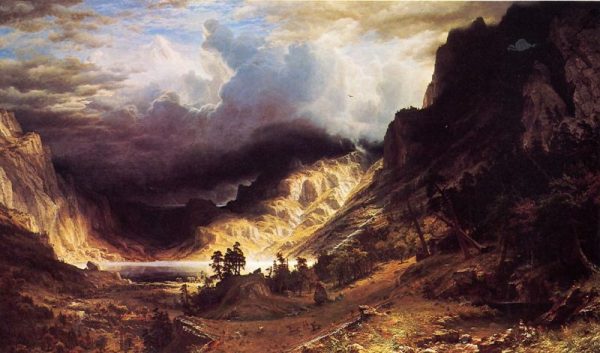
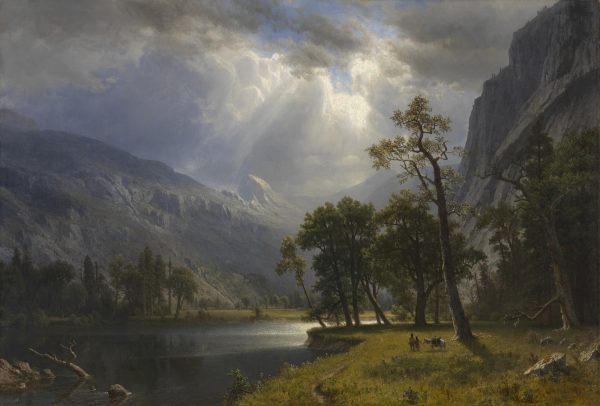
Romantic painters treated mountains, cliffs and immense valleys as encounters with forces larger than the viewer. From the Andes to Yosemite and Provence, these canvases use scale, distance and changing weather to create awe while preserving the geography of a particular place.
Hudson River School
Albert Bierstadt
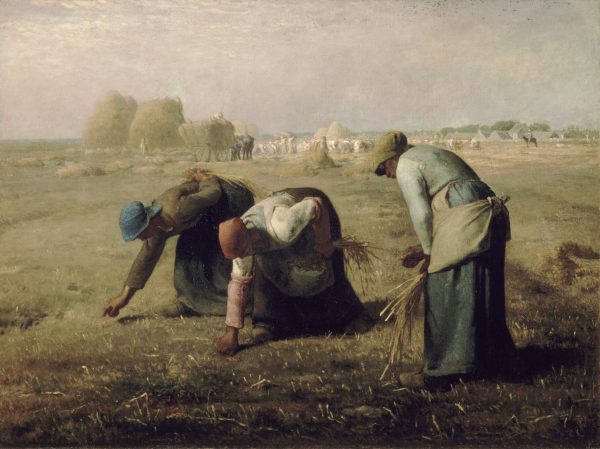
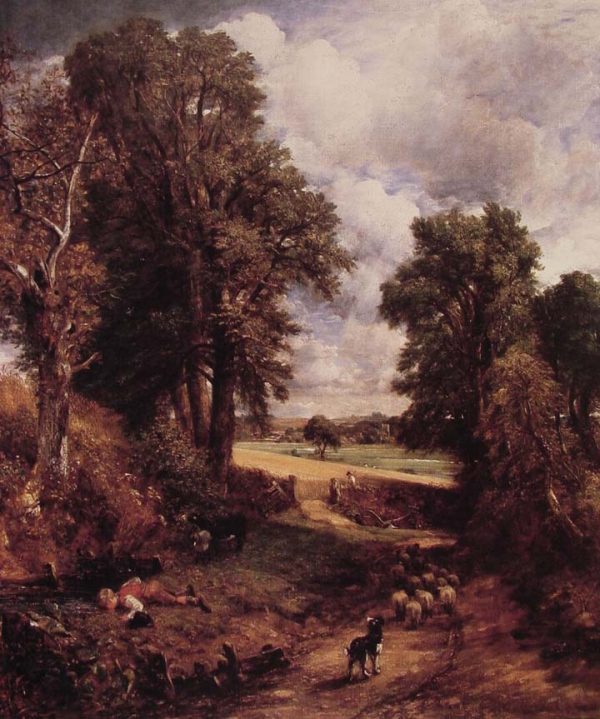
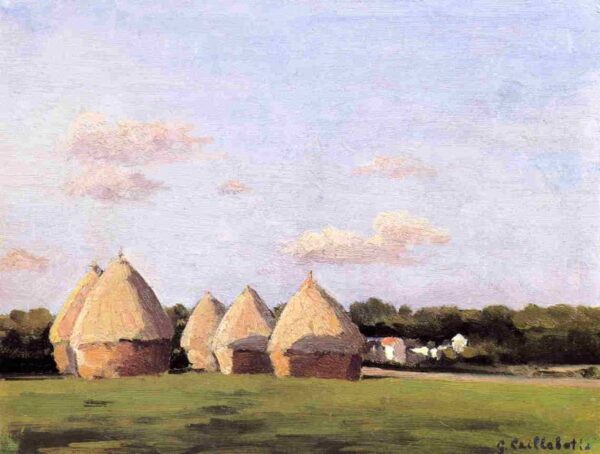
Landscape painting often finds its deepest drama in cultivated land. Harvesters, haystacks, poppies, country roads and darkening wheat fields show how artists transformed daily labour and familiar countryside into images of season, memory and human endurance.
Still lakes and rushing waterfalls let painters study reflection, movement and atmosphere. This room moves from northern quiet to the Hudson River School, pairing intimate riverbanks with panoramic scenes in which water organizes the entire landscape.
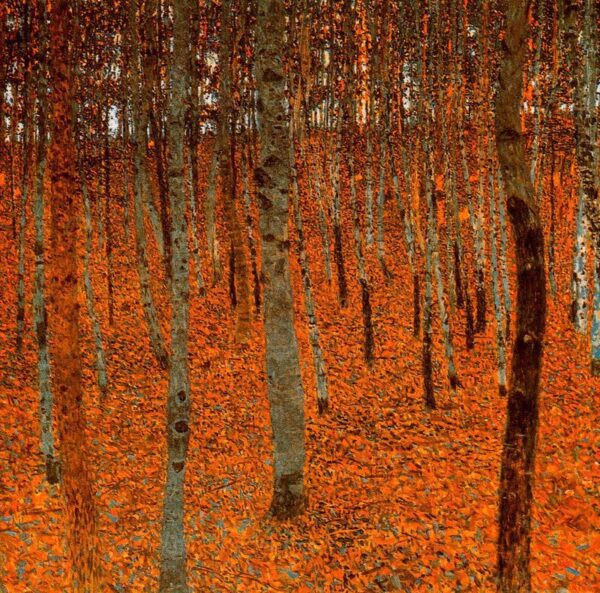
A forest can be decorative, mysterious or almost abstract. These paintings follow trees through spring green, autumn colour, mist and snow, showing how different schools used the same natural forms to express rhythm, solitude and the passage of time.
Hudson River School
Jasper Francis Cropsey
Hudson River School
Sanford Robinson Gifford
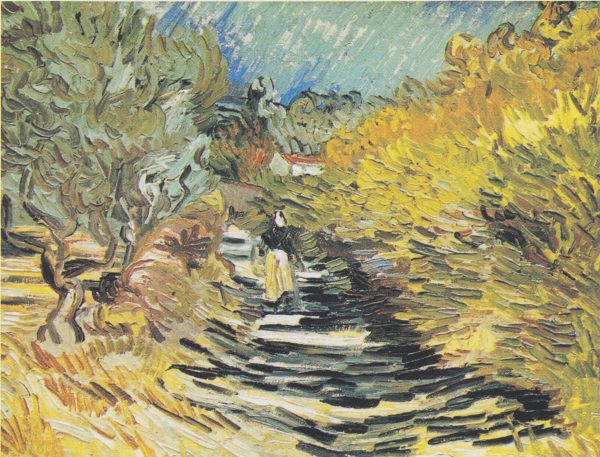
Roads and rows of trees pull the eye into a painting, while the sky determines its mood. Van Gogh, Hobbema, Pissarro, Monet and their contemporaries turned these simple structures into studies of movement, perspective, wind and light.
Where each one was painted, where it hangs today, and why people still stop in front of it.
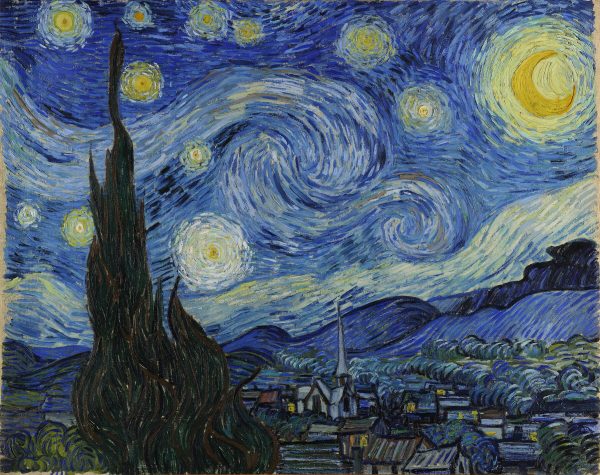
The view from Van Gogh’s window at the asylum in Saint-Rémy, with a village he added from memory and a sky he could not stop moving. Museum of Modern Art, New York. Read the story.
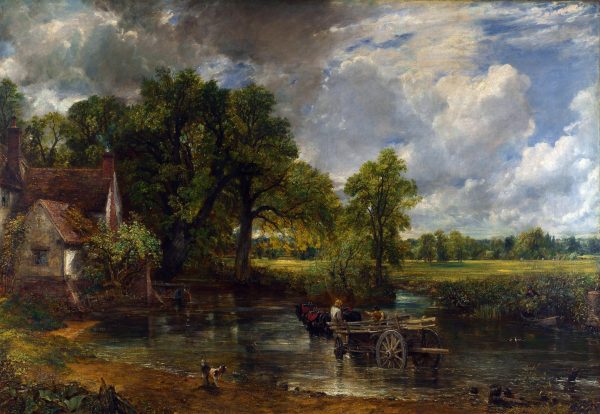
A farm cart crossing the River Stour beside Willy Lott’s cottage in Suffolk, the countryside Constable grew up in. National Gallery, London. Read the story.
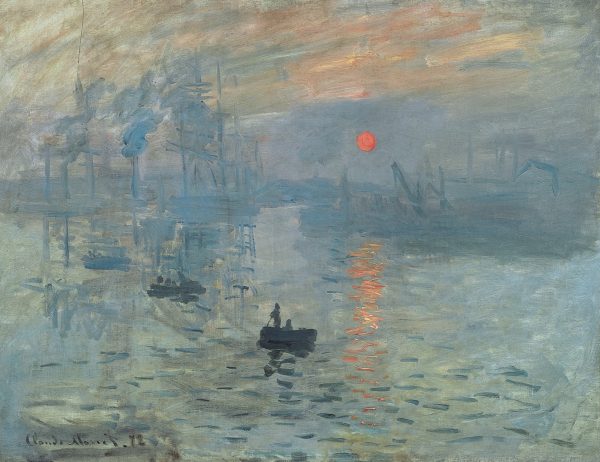
An orange sun over the port of Le Havre, painted in a few quick strokes. A critic mocked the title, and the word stuck: Impressionism. Musée Marmottan Monet, Paris. Read the story.
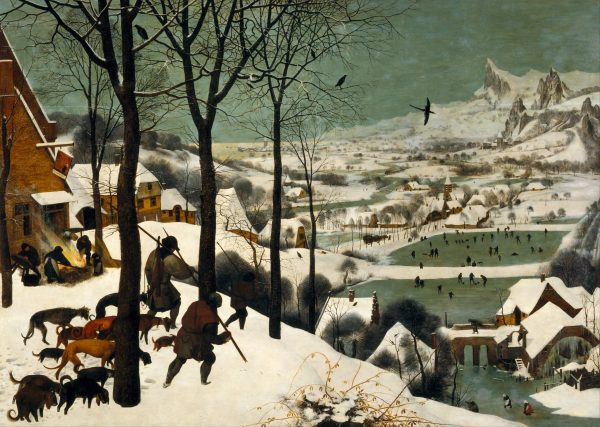
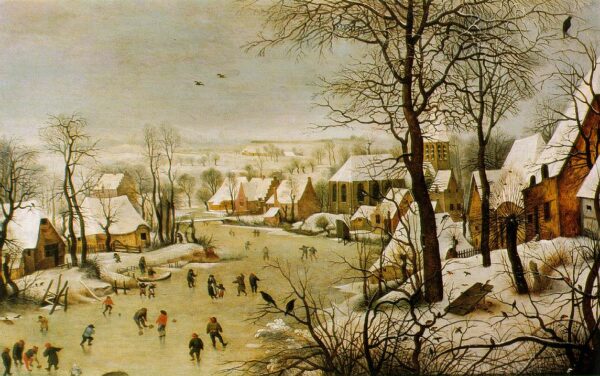
Tired hunters come home over a hill while villagers skate on frozen ponds below. One of the first great winter landscapes. Kunsthistorisches Museum, Vienna. Read the story.
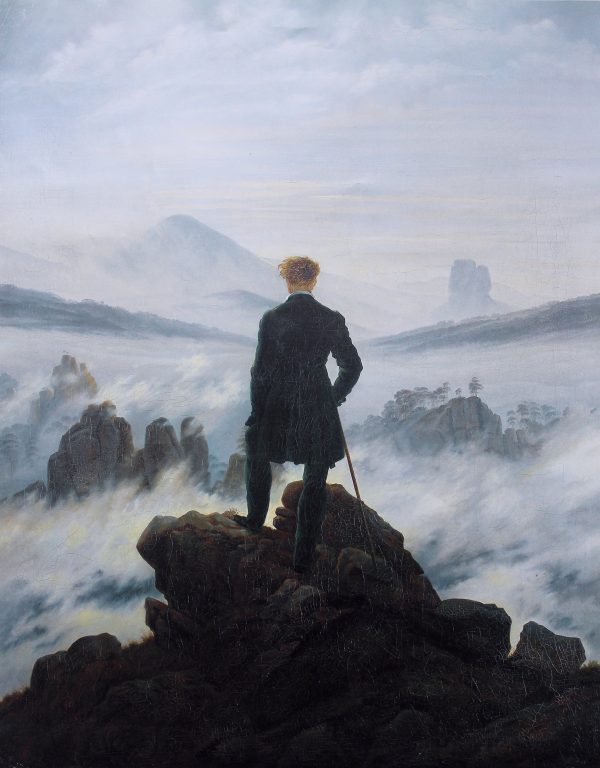
A man seen from behind on a rocky peak, looking out over a sea of mist. The image of Romanticism itself. Hamburger Kunsthalle. Read the story.
A ghostly warship that fought at Trafalgar is towed by a black steam tug to be broken up, under a burning sunset. Voted Britain’s favourite painting. National Gallery, London. Read the story.
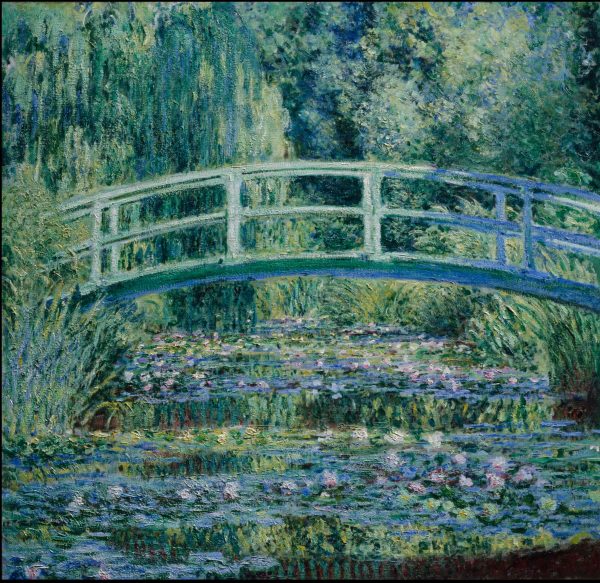
The arched footbridge Monet built over his water garden at Giverny, painted again and again for the rest of his life. Read the story.
A storm over wild forest on the left, calm farmland on the right, and a bend of the Connecticut River between them. Cole painted himself in the middle, at his easel. Metropolitan Museum of Art, New York. Read the story.
A Spanish city under a green, thundering sky. One of the first pure landscapes in Western painting, and still one of the strangest. Metropolitan Museum of Art, New York.
The mountain outside Aix-en-Provence that Cézanne painted over and over, breaking it into blocks of colour that led straight to Cubism. Read the story.
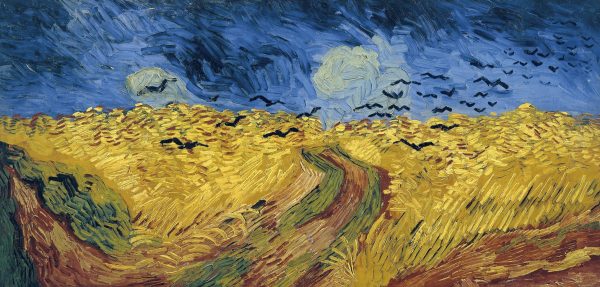
A stormy sky, a path that goes nowhere and black birds rising over the wheat, painted in July 1890, weeks before his death. Van Gogh Museum, Amsterdam. Read the story.
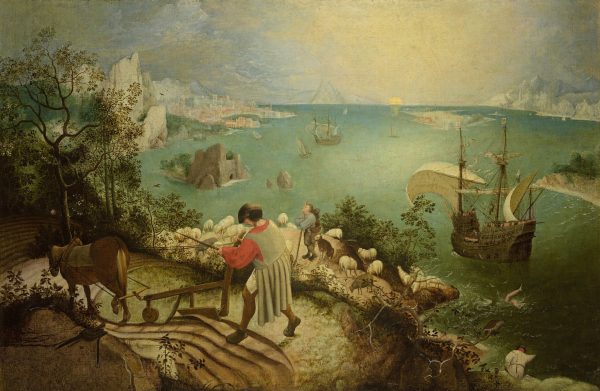
A ploughman, a shepherd and a ship carry on with their day, and in the corner a pair of legs disappears into the sea. Royal Museums of Fine Arts, Brussels. Read the story.
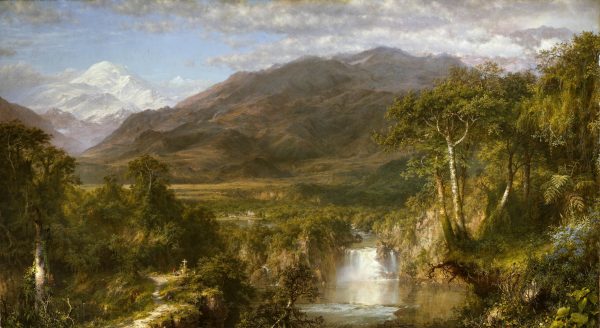
Ten feet of South American mountains, rivers and jungle. When it was first shown in New York, visitors paid to see it and studied the detail through opera glasses. Metropolitan Museum of Art, New York.
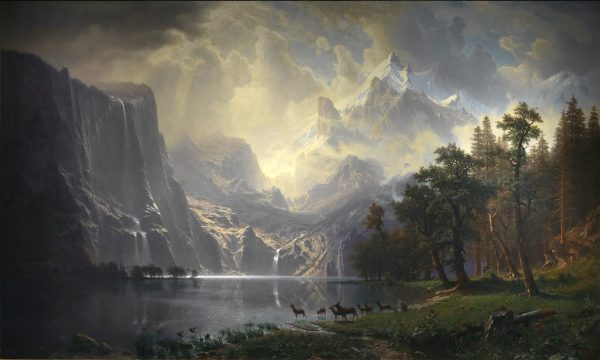
Granite peaks, a waterfall and a lake glowing like a stage set: the American West as a promised land. Smithsonian American Art Museum, Washington.
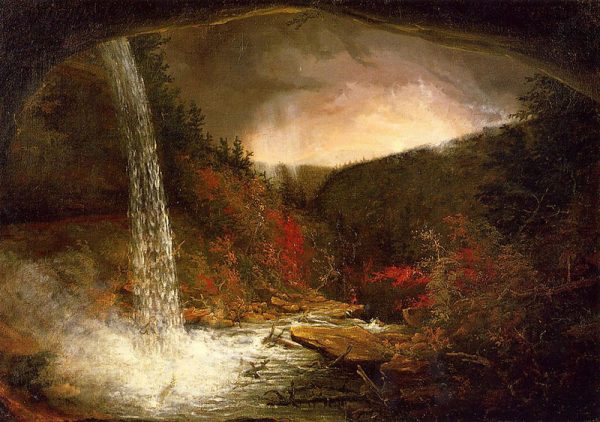
A two-step waterfall in the Catskill Mountains, painted by the founder of the Hudson River School, the first American school of landscape painting.
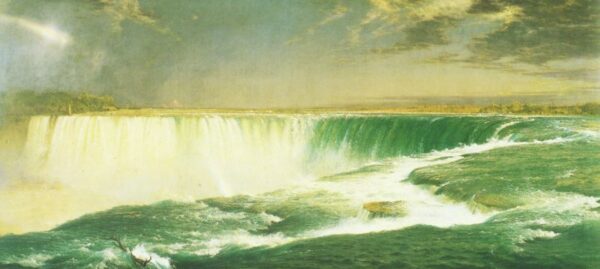
Church made Niagara his signature subject, painting the falls as if you were standing right at the edge of the water.
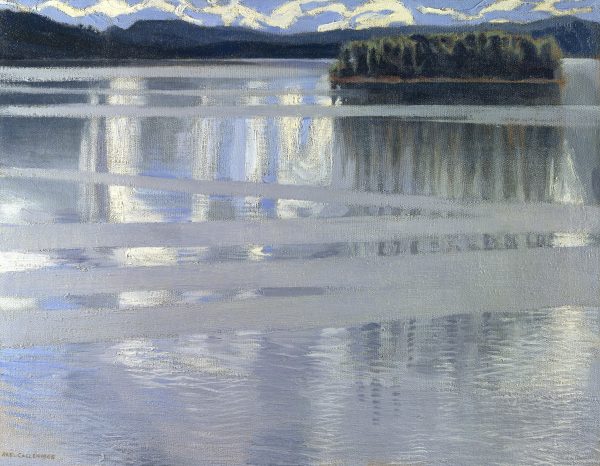
A still Finnish lake crossed by silver zigzags of wind, which some read as the wake of the hero Väinämöinen from the Kalevala.
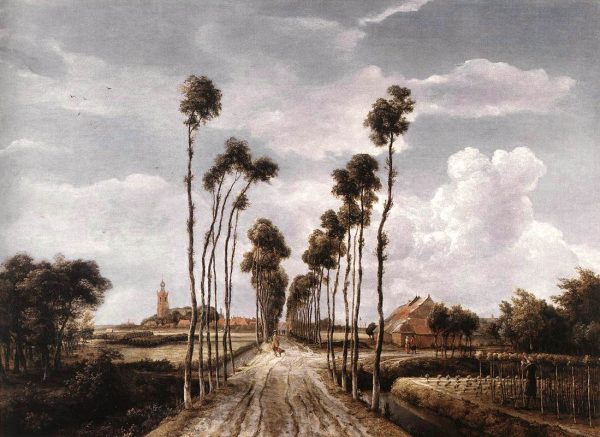
A straight road between two rows of tall, thin trees, leading the eye to a Dutch village. The simplest composition on this list. National Gallery, London.
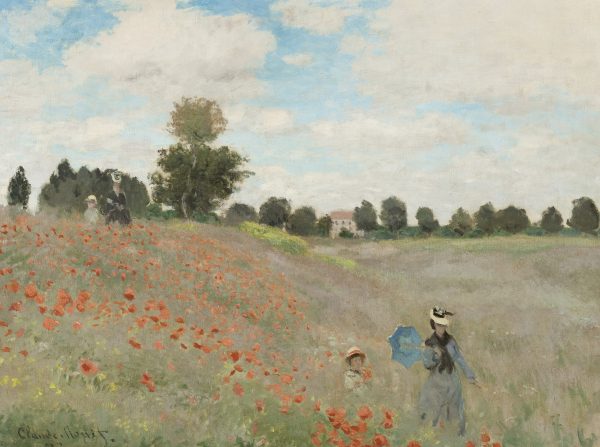
A mother and child walk down a hill of red poppies, painted twice, at the top and the bottom of the slope. Musée d’Orsay, Paris.
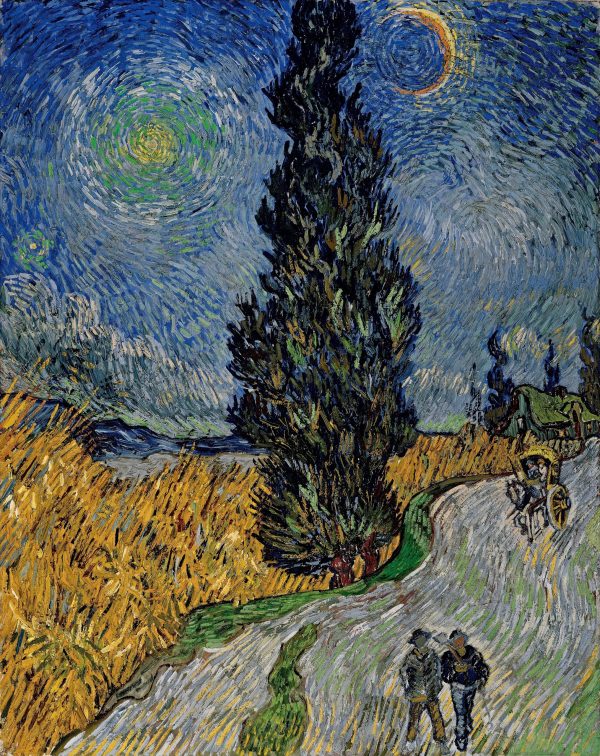
A cypress rises between a crescent moon and a star, one of the last paintings Van Gogh made in Saint-Rémy. Kröller-Müller Museum, Otterlo.
Each painting is recreated to order in oil on canvas. Use the artwork page to select dimensions and presentation, or contact ByMuseum when you need a custom size.
A trained painter rebuilds the composition by hand, preserving visible brushwork, colour transitions and surface texture. These are paintings, not giclée or canvas prints.
Wide landscape compositions work especially well above sofas, beds and consoles. Leave breathing room around the frame and choose a width that relates clearly to the furniture below.
Choose a framed or gallery-wrapped presentation on the product page. Every reproduction is made to order and includes free worldwide shipping.
Short answers to the questions collectors ask when comparing landscape subjects and hand-painted reproductions.
The Starry Night, The Hay Wain, Impression, Sunrise, The Hunters in the Snow and Friedrich’s wanderer are among the most widely recognized. This catalogue places them beside influential landscapes from Europe and the Americas.
Important landscapes do more than record a place. They change how viewers understand weather, light, distance or humanity’s relationship with nature, and often introduce techniques that influence later artists.
No. Every ByMuseum landscape reproduction is painted by hand with oil paint on canvas. The finished surface has real brushwork and texture rather than printed dots or transferred ink.
Measure the available wall and nearby furniture first. A landscape above a sofa usually looks balanced at roughly two-thirds to three-quarters of the sofa’s width, although the room and frame also matter.
Yes. Choose an available size on the artwork page or contact ByMuseum for a custom dimension. The composition is adjusted carefully so important details are not cropped.
Compare related works in Romanticism, Impressionism, Post-Impressionism, The Sea and the complete Collections hub.
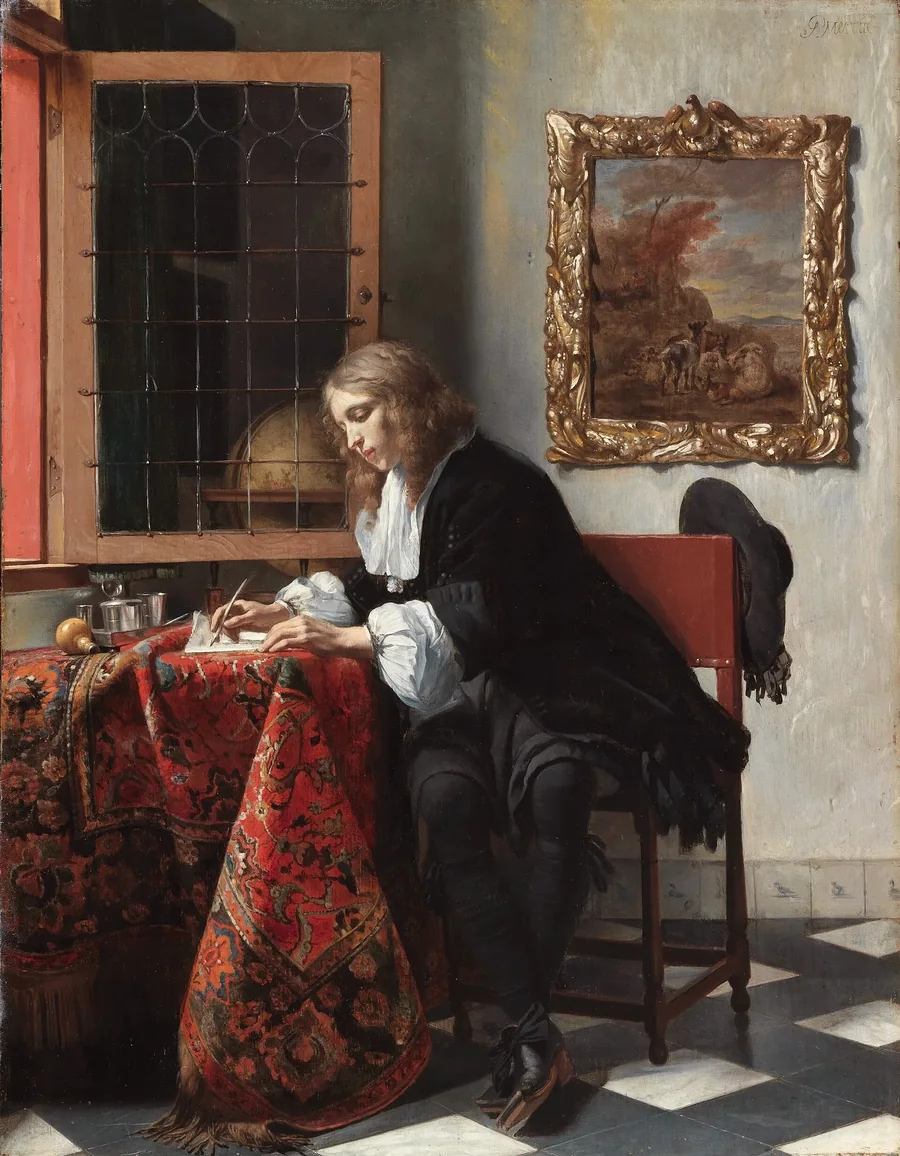
Man Writing a Letter
Gabriel Metsu, c. 1664
The gallery list
Every painting is already 50% off. Join the list and we will send you an extra $15 code, plus first access to new collections.
No spam. Unsubscribe anytime. · Privacy Policy
Welcome
Your $15 code is on its way. Explore the gallery while you wait.