Loading cart…
No products in the cart.

Art movement · 1400–1600
Renaissance art developed in Italy during the 14th century and spread across Europe between the 15th and 16th centuries. The word Renaissance means “rebirth,” referring to a renewed interest in the knowledge,…
The Renaissance, the “rebirth”, began in Florence in the early 1400s and spread across Europe over the next two centuries. Painters rediscovered the art and ideas of ancient Greece and Rome, learned to build convincing space with linear perspective, and studied anatomy, light and the human face as never before. Rich patrons like the Medici and the popes paid for it all. Around 1500 Leonardo, Michelangelo and Raphael took painting to a height it has been measured against ever since, while in Venice Titian made colour the subject, and in Flanders van Eyck, Bosch and Bruegel built a Northern Renaissance of their own with oil paint.
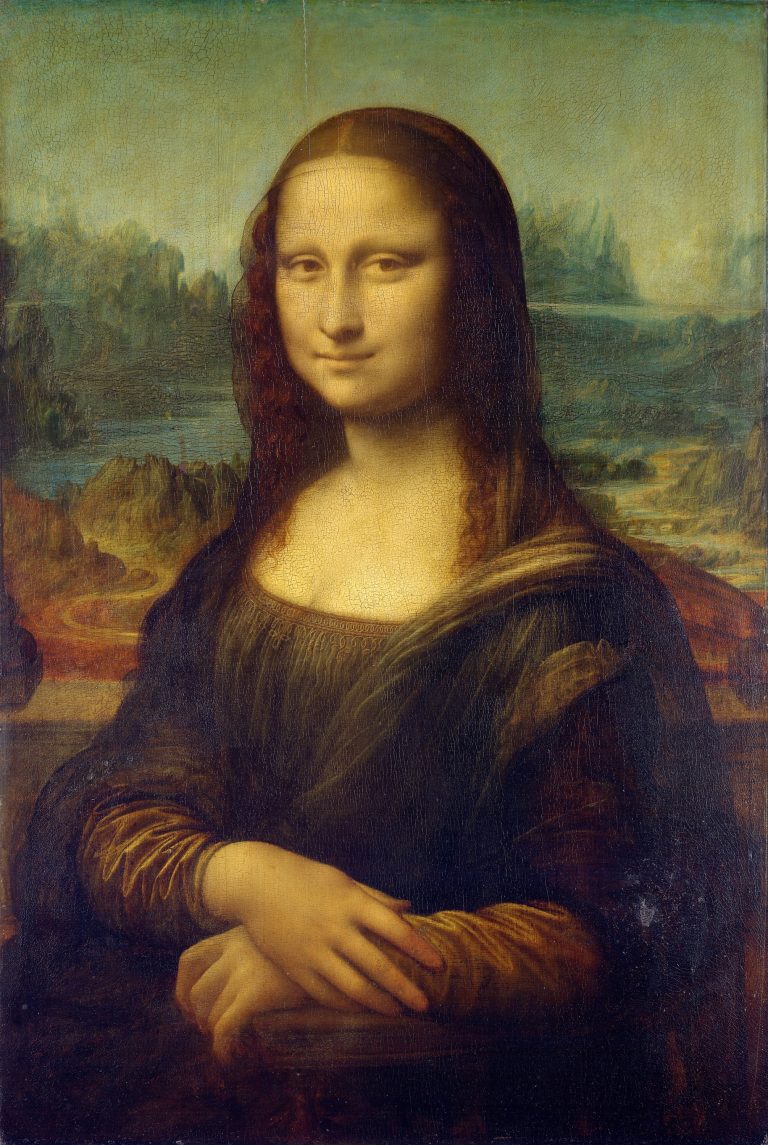
Lisa Gherardini, wife of a Florentine silk merchant, with the most discussed smile in the world. It only became world famous after it was stolen in 1911. Louvre, Paris. Read the story.
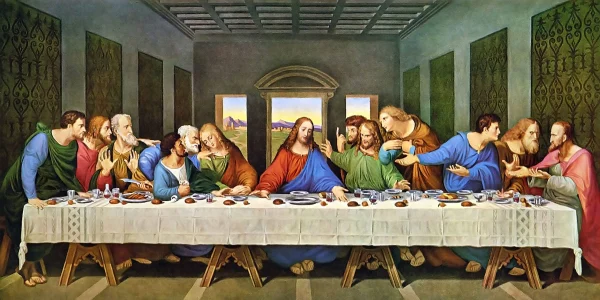
The moment Christ says one of the twelve will betray him, and every apostle reacts. Painted on a refectory wall in Milan, it began to flake within Leonardo’s lifetime. Santa Maria delle Grazie, Milan. Read the story.
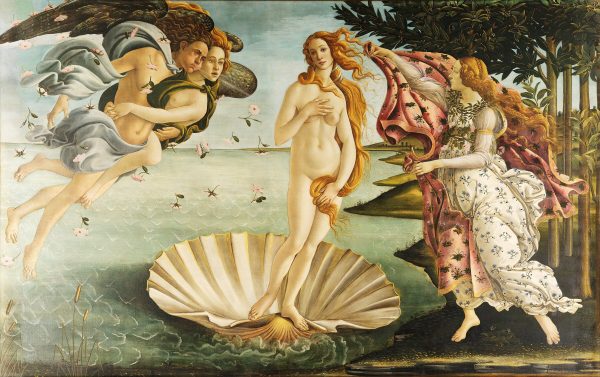
The goddess arrives on a shell, blown ashore by the winds. One of the first large paintings of a pagan myth since antiquity. Uffizi, Florence. Read the story.
Venus in an orange grove with the Three Graces, Flora and about 190 kinds of flowers. Uffizi, Florence. Read the story.
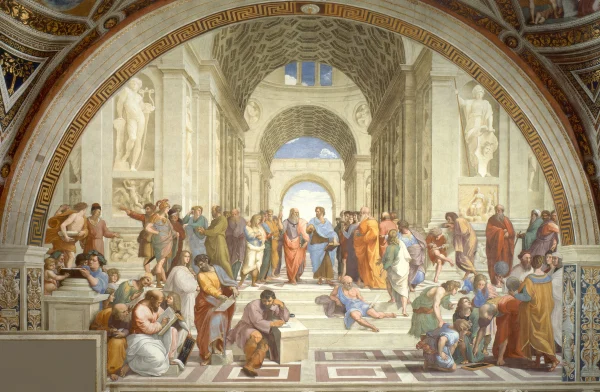
Plato and Aristotle at the centre of a great hall of ancient philosophers, many of them portraits of Raphael’s contemporaries. Vatican. Read the story.
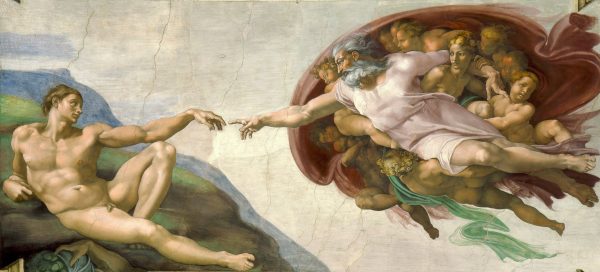
Two hands almost touching on the ceiling of the Sistine Chapel. Sistine Chapel, Vatican. Read the story.
Cecilia Gallerani turns with a white ermine in her arms, one of only four surviving portraits of women by Leonardo. Czartoryski Museum, Kraków. Read the story.
A reclining nude looking straight at us, with a sleeping dog and two maids at a chest behind her. Manet answered it with Olympia. Uffizi, Florence. Read the story.
A merchant and his wife in their bedroom, with a convex mirror that reflects two more figures, one perhaps the painter himself. National Gallery, London. Read the story.
Two French envoys among globes and instruments, and across the floor a stretched shape that becomes a skull when seen from the side. National Gallery, London. Read the story.
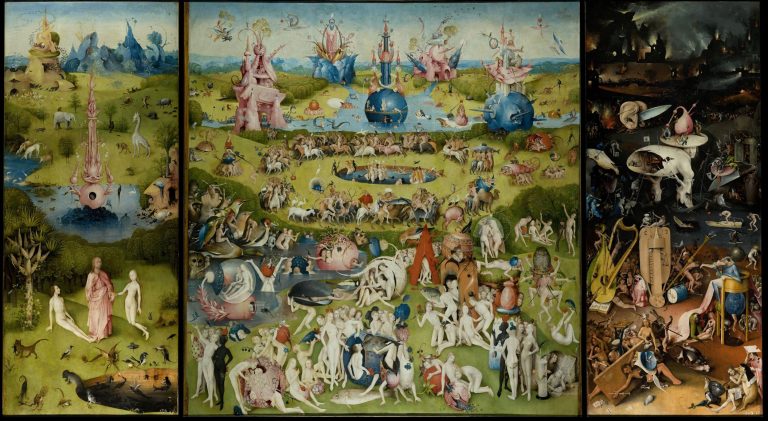
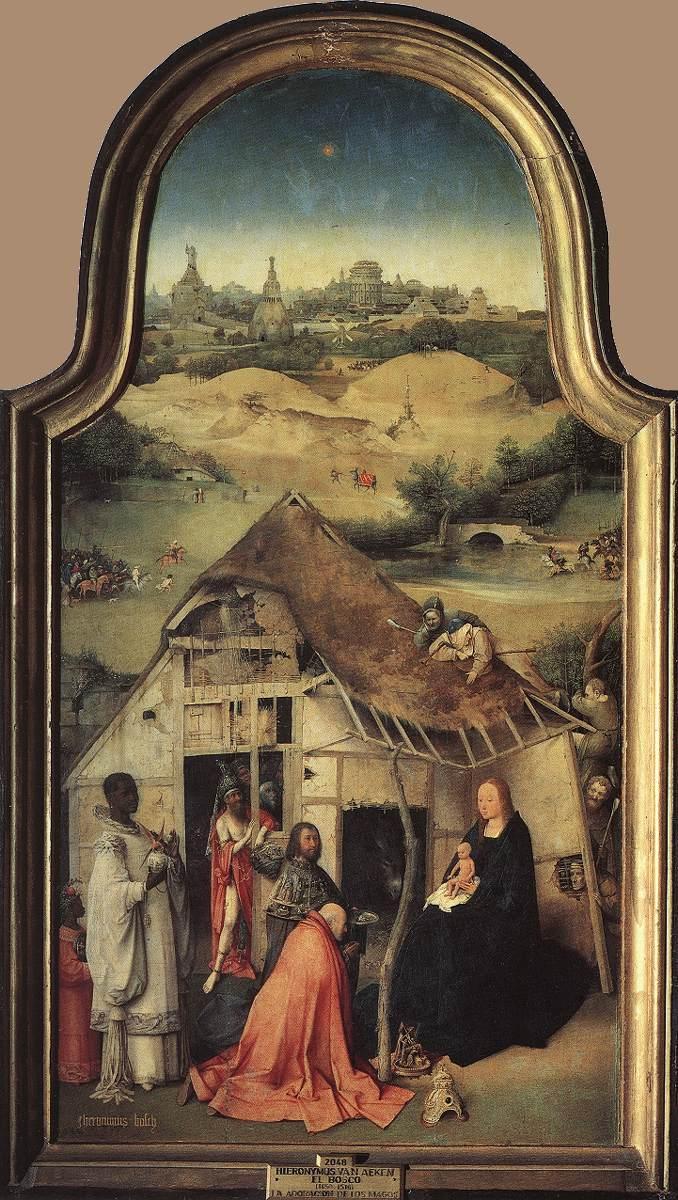
Paradise, a garden of naked pleasure and a nightmarish hell, side by side on three panels. Prado, Madrid. Read the story.
Hunters returning over a hill above a frozen valley, the masterpiece of the Northern Renaissance landscape. Kunsthistorisches Museum, Vienna. Read the story.
A Venetian banquet with more than a hundred guests, where Christ turns water into wine almost unnoticed. The largest painting in the Louvre, hanging opposite the Mona Lisa. Read the story.
Painted for a hospital that treated a terrible skin disease, it shows Christ covered in the same sores as the patients praying in front of him. Unterlinden Museum, Colmar. Read the story.
Read more in our guides to famous Renaissance paintings and famous Renaissance artists, or visit the artist page for Michelangelo. Every Renaissance painting in our shop is in the public domain and can be ordered as a hand-painted oil reproduction on canvas, in the size you choose.
The Renaissance gave us the paintings everyone knows: the Mona Lisa, The Last Supper, The Birth of Venus, The Creation of Adam. Reproductions of these masterpieces bring a museum's calm and balance into a home.
Mona Lisa, The Last Supper, The Birth of Venus, Primavera and The Creation of Adam.
Some icons, like The Last Supper and the Sistine Chapel, are wall paintings many metres wide. Choose a canvas size that suits your wall rather than the original.
Quick answers about Renaissance and ordering a hand-painted reproduction.
See our guides to famous Renaissance paintings and Renaissance artists.
It began in Italy in the 14th century and spread across Europe through the 15th and 16th centuries.
No. Each work is painted by hand with oil colour, so the finished surface has real brushwork and natural variation rather than a mechanically printed image.
Yes. Select a listed size or contact ByMuseum for custom dimensions that preserve the composition’s proportions.
Visit the complete art movements timeline or browse artists A–Z.
Enter the curated collections or browse every hand-painted oil reproduction.

Man Writing a Letter
Gabriel Metsu, c. 1664
The gallery list
Every painting is already 50% off. Join the list and we will send you an extra $15 code, plus first access to new collections.
No spam. Unsubscribe anytime. · Privacy Policy
Welcome
Your $15 code is on its way. Explore the gallery while you wait.