Loading cart…
No products in the cart.

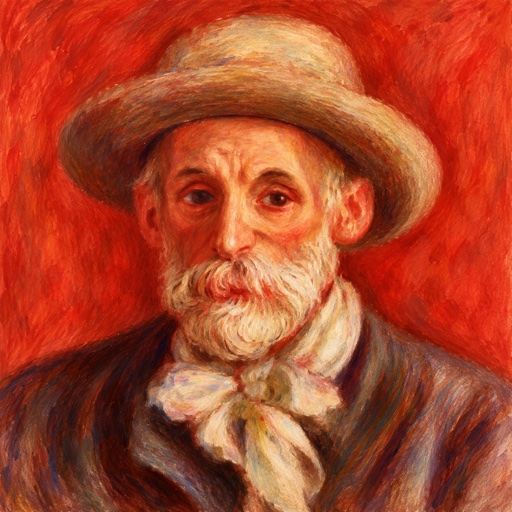
French painter · Impressionism
1841 – 1919
Pierre-Auguste Renoir (1841 to 1919) painted Parisians dancing, boating and laughing in the sunlight. Explore his most famous paintings and order any of them hand-painted in oil.
Pierre-Auguste Renoir was born in Limoges in 1841 and grew up in Paris, where at 13 he started work painting flowers on porcelain. At art school he met Claude Monet, Alfred Sisley and Frédéric Bazille, and in the 1870s he became one of the leading Impressionists, painting Parisians dancing, boating and talking in the open air. After a trip to Italy in 1881 he turned to firmer drawing and smoother surfaces. In old age rheumatoid arthritis twisted his hands, yet he kept painting in the south of France, a brush placed between his stiff fingers, until he died at Cagnes-sur-Mer in December 1919, at 78. He is often quoted as asking: “Why shouldn’t art be pretty? There are enough unpleasant things in the world.”
A Sunday afternoon dance in Montmartre, with sunlight falling through the trees onto dresses, hats and faces. A smaller version sold in 1990 for $78.1 million. Musée d’Orsay, Paris. Read the story.
Renoir’s friends lingering over lunch on a restaurant balcony by the Seine. The young woman playing with a little dog is Aline Charigot, who became his wife. Phillips Collection, Washington. Read the story.
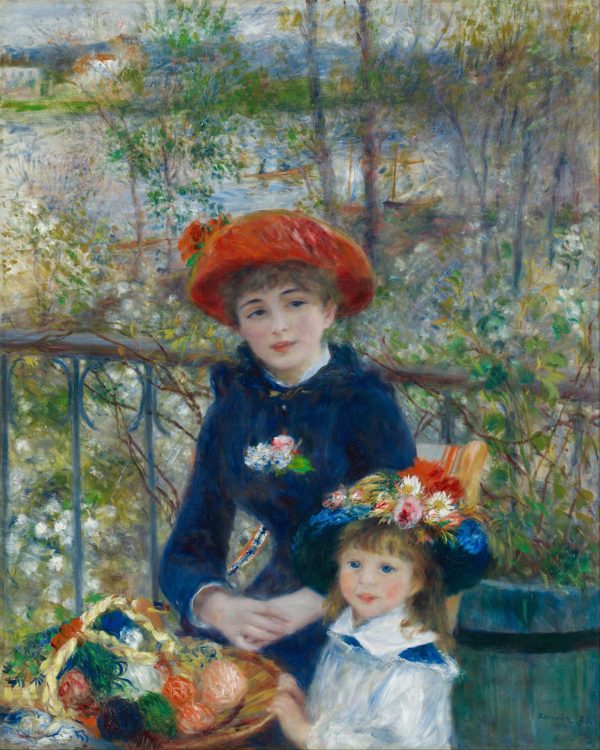
A young woman and a little girl in a red hat on a terrace above the river, with flowers and leaves melting into colour behind them. Art Institute of Chicago. Read the story.
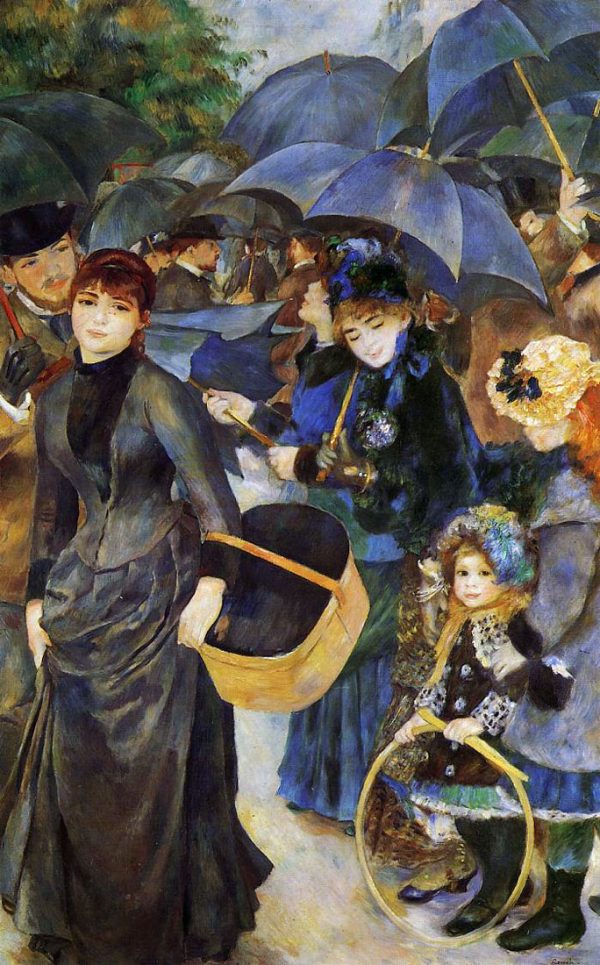
A crowded Paris street in the rain. Renoir painted it in two campaigns years apart, so you can see both of his styles in one picture: soft on the right, crisp on the left. National Gallery, London. Read the story.
A couple whirling at an open-air dance, her red bonnet against his straw hat. The woman was modelled by Suzanne Valadon, later a painter herself. Museum of Fine Arts, Boston.
The same model in a white satin gown at a city ballroom, the elegant twin of the country dance. Musée d’Orsay, Paris.
A small girl in blue in a garden path full of flowers, one of the best loved paintings in Washington. National Gallery of Art, Washington. Read the story.
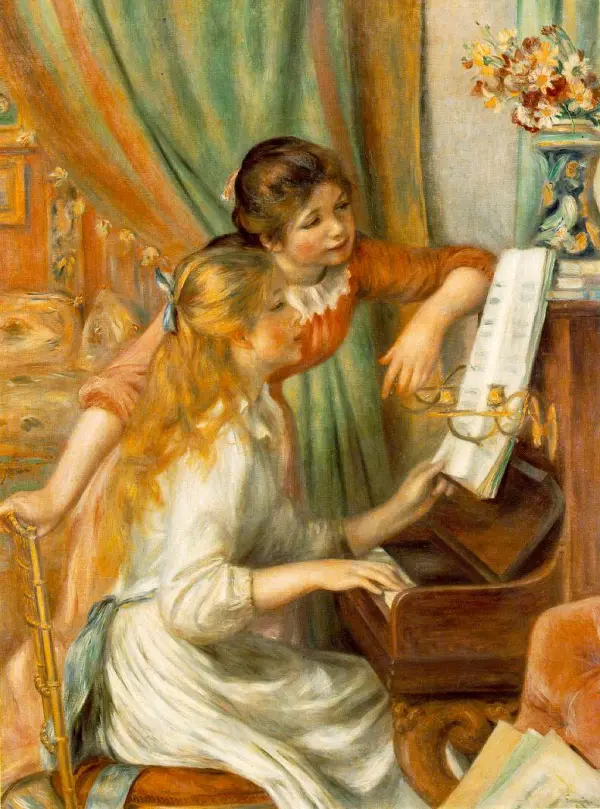
Two girls leaning over a sheet of music. It was the first of his paintings bought by the French state. Musée d’Orsay, Paris. Read the story.
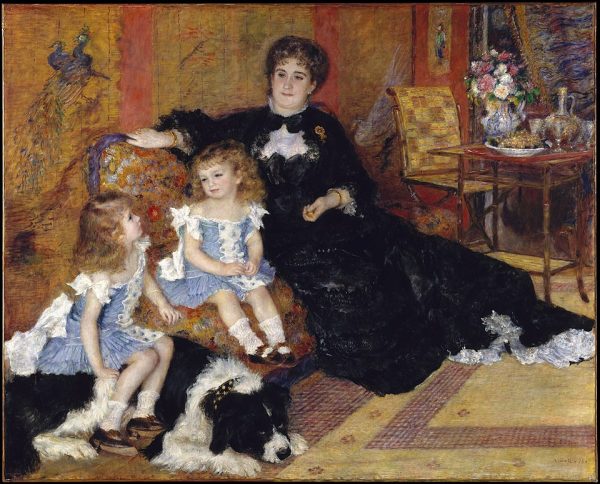
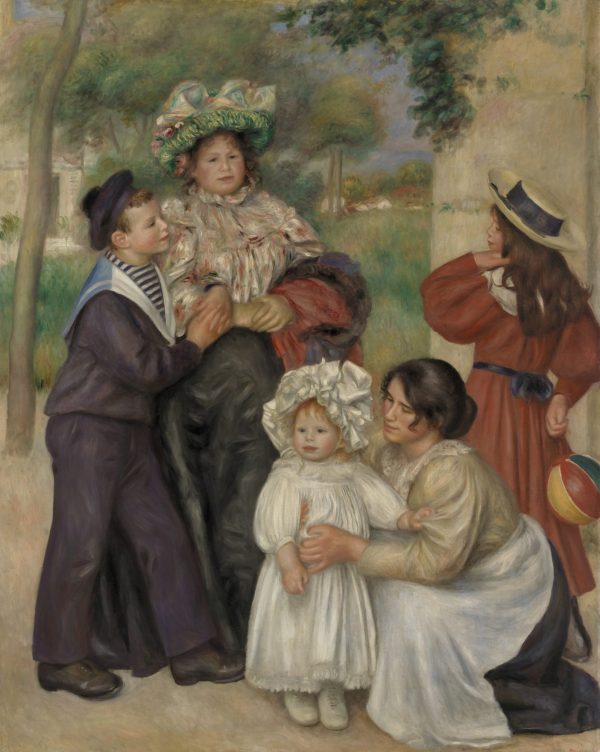
The wife of a powerful Paris publisher with her two children and the family dog. Its success at the Salon of 1879 made Renoir’s name. Metropolitan Museum of Art, New York. Read the story.
A floating café and bathing place on the Seine, painted side by side with Monet. The flickering water here is where Impressionism begins. Nationalmuseum, Stockholm. Read the story.
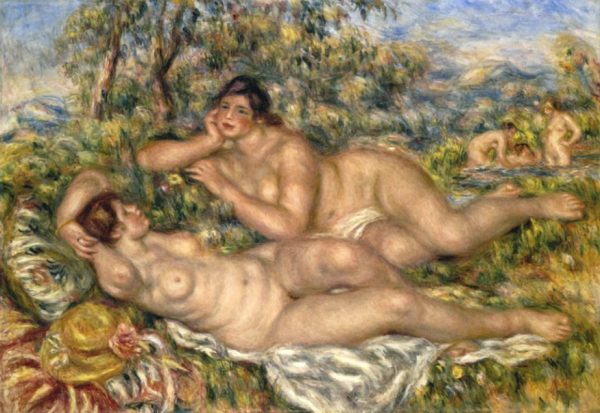
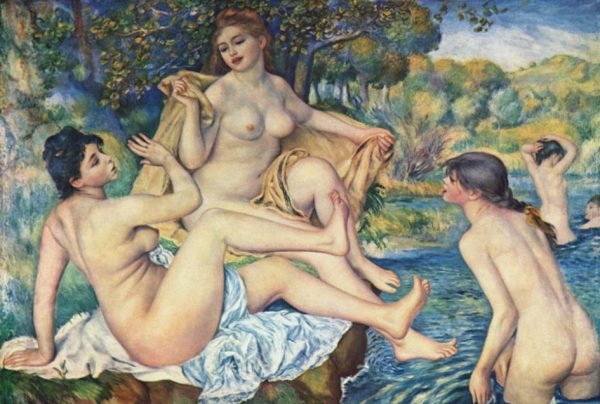
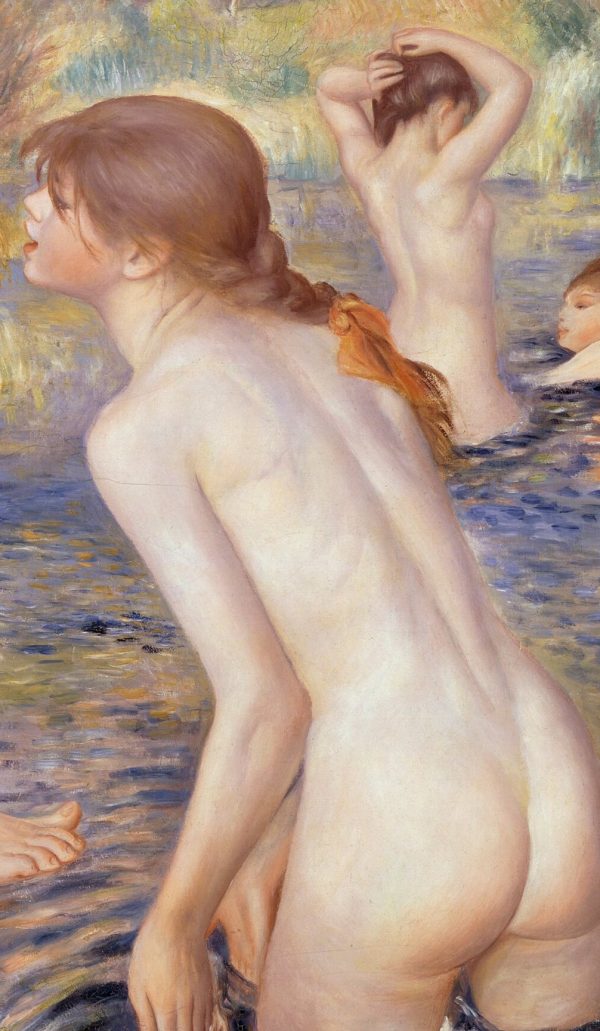
Nude bathers by the water, drawn with firm outlines after his trip to Italy. Renoir worked on it for three years. Philadelphia Museum of Art. Read the story.
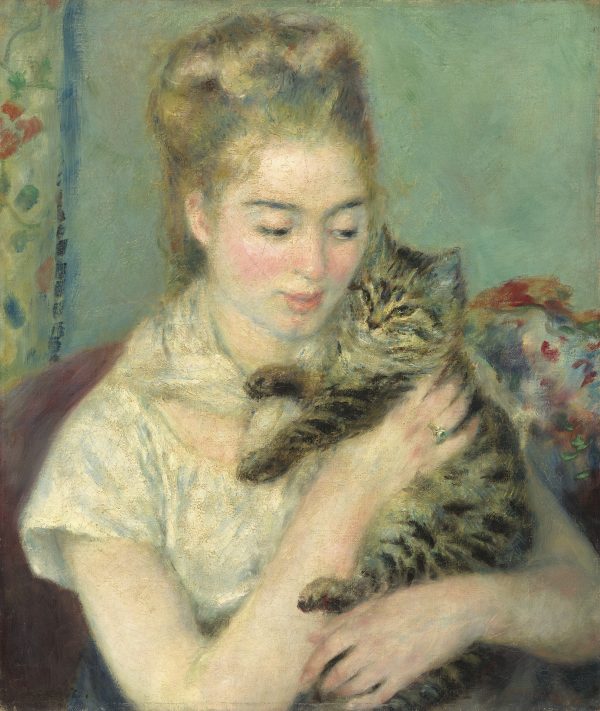
The daughter of his friend Berthe Morisot, holding a cat that dozes in her arms. Musée d’Orsay, Paris.
In his Impressionist years Renoir worked with soft, feathery strokes and let sunlight break into spots of colour on skin and clothes, with shadows in blue and violet. He loved people more than landscape, and especially warm, glowing skin. After 1881 his drawing became firmer and his surfaces smoother, and in his last decades he painted in rich reds and oranges. Through every period the mood stays the same: pleasure, light and company.
Renoir died in 1919, so his paintings are in the public domain. Every painting on this page can be ordered as a hand-painted oil reproduction on canvas, in the size you choose. For more of the stories, read our guide to Renoir’s famous paintings.
Renoir painted pleasure: dances, boating parties, children and friends in the sun. His soft, feathery brushwork and warm light make his paintings some of the easiest Impressionist works to live with.
Luncheon of the Boating Party and Bal du moulin de la Galette are his masterpieces of friends together. They suit dining rooms and large living-room walls.
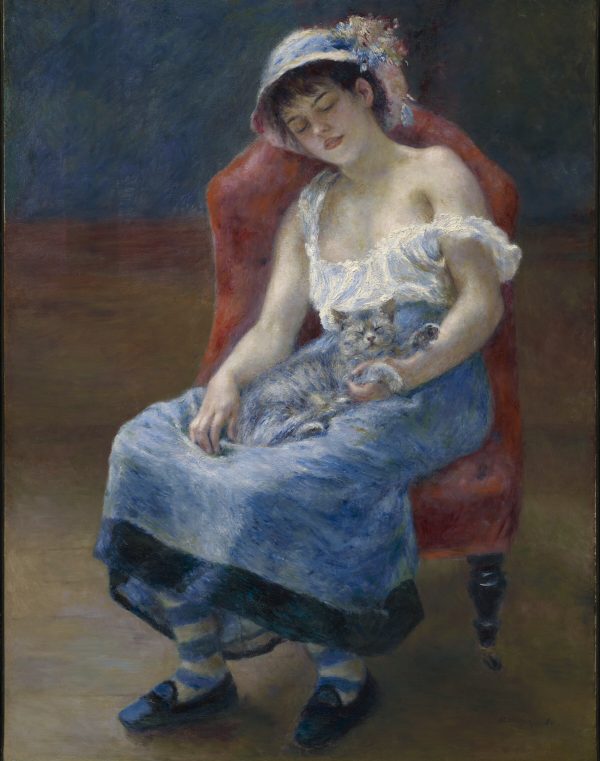
Two Sisters (On the Terrace), Young Girls at the Piano and Sleeping Girl with a Cat are gentle choices for bedrooms and family rooms.
The crowd scenes are full of faces. Give them a larger canvas so each figure stays readable; the portraits work well at a smaller size.
Quick answers for anyone choosing a Pierre Auguste Renoir reproduction.
Bal du moulin de la Galette (1876), Luncheon of the Boating Party (1880-1881), Two Sisters (On the Terrace) (1881) and Young Girls at the Piano (1892).
Start with our guide to Renoir's paintings, then read about Luncheon of the Boating Party and the Moulin de la Galette.
Yes. Renoir died in 1919 and his paintings are in the public domain.
No. A trained painter rebuilds the image with oil paint on artist canvas, preserving visible brushwork, layered colour and surface variation.
Yes. Choose a listed dimension or contact ByMuseum when your wall requires a custom size that keeps the painting’s original proportions.
Browse curated painting collections, compare art movements, or visit the complete painting shop.
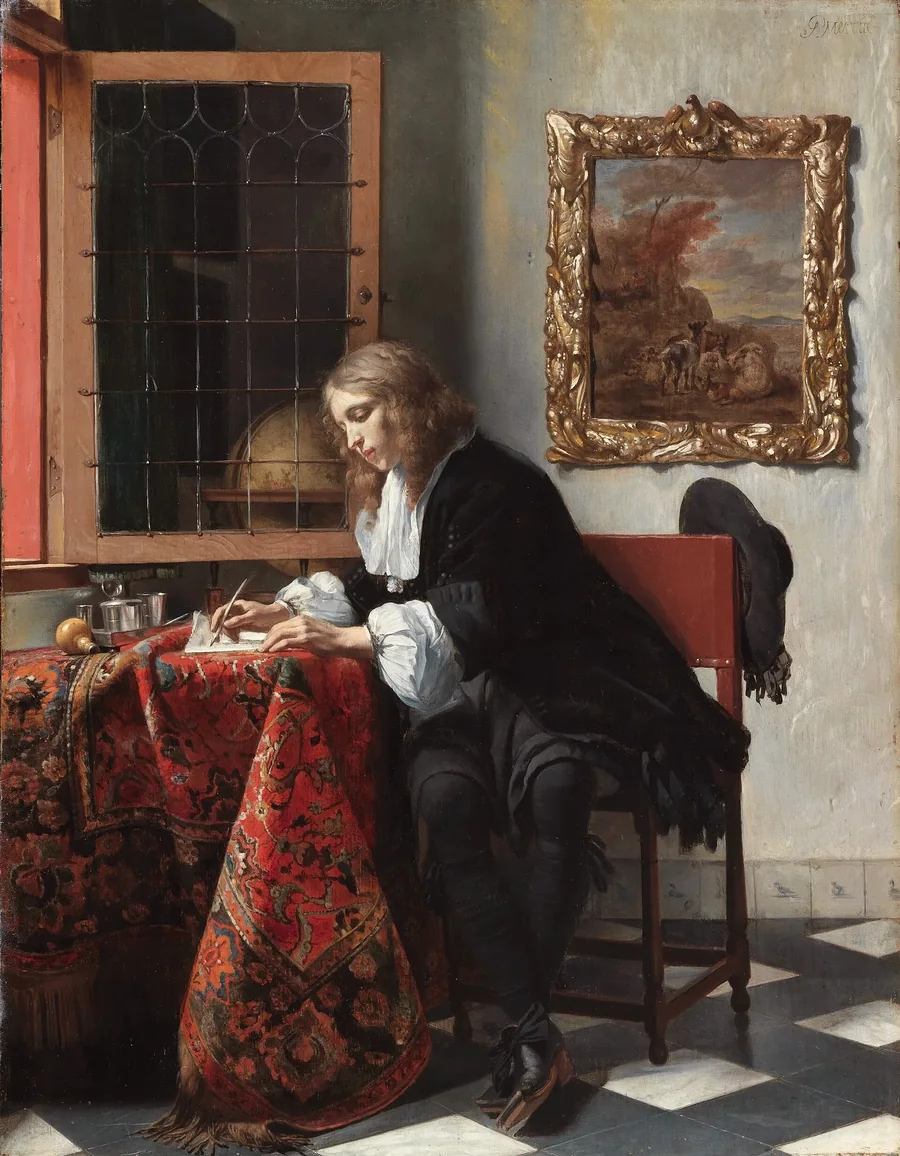
Man Writing a Letter
Gabriel Metsu, c. 1664
The gallery list
Every painting is already 50% off. Join the list and we will send you an extra $15 code, plus first access to new collections.
No spam. Unsubscribe anytime. · Privacy Policy
Welcome
Your $15 code is on its way. Explore the gallery while you wait.