Loading cart…
No products in the cart.

Art movement · 1890–1910
Art Nouveau developed around 1890–1910 as artists and designers searched for a new modern visual language. Instead of copying historical styles, they created flowing compositions inspired by plants, flowers, and natural growth…
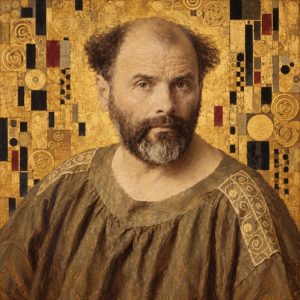
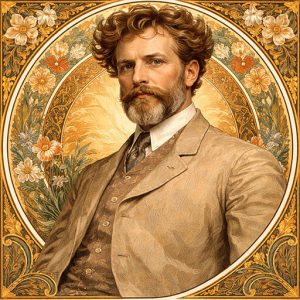
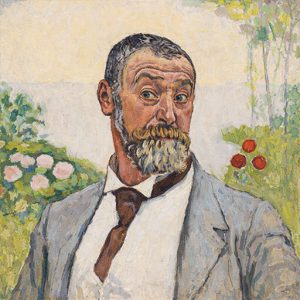
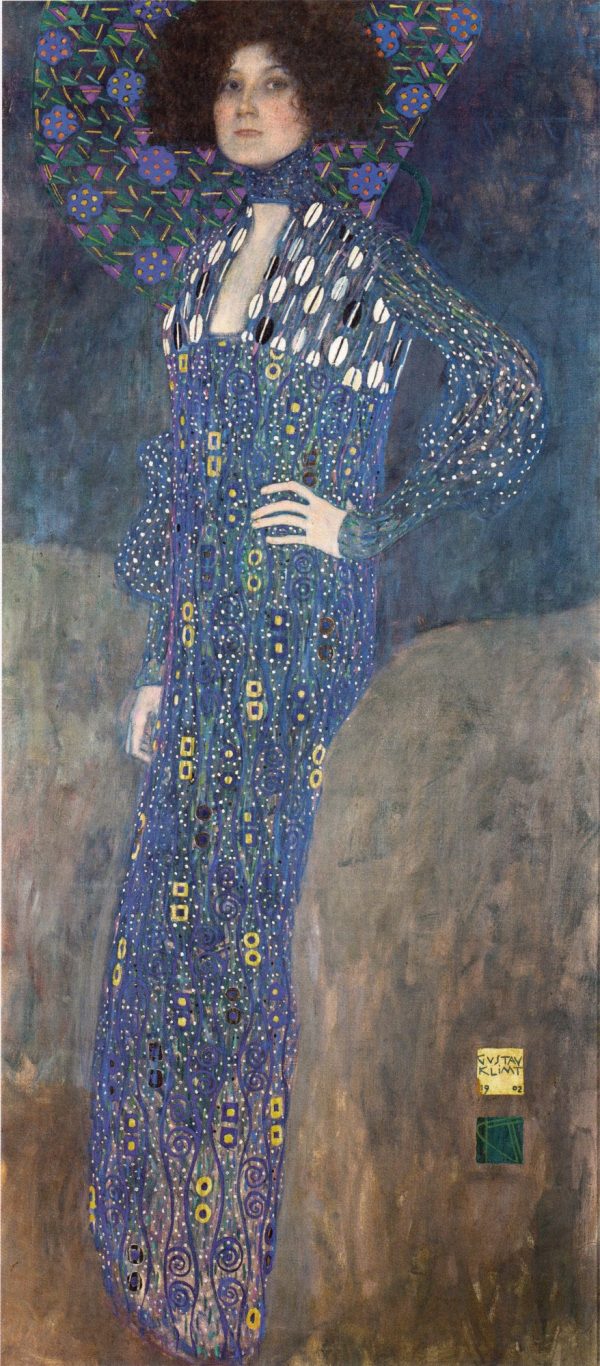
Art Nouveau, the “new art”, swept through Europe between about 1890 and 1910. Tired of copying old styles, artists and designers looked to plants, flowers and flowing hair for a new language of curving lines, flat colour and ornament. It was everywhere at once: posters on Paris streets, the entrances of the Métro, jewellery, furniture and buildings. In Vienna it took the name Secession, and in painting it gave us Gustav Klimt’s gold, Alphonse Mucha’s goddesses with their halos of hair, and the rhythmic, almost ritual figures of Ferdinand Hodler.
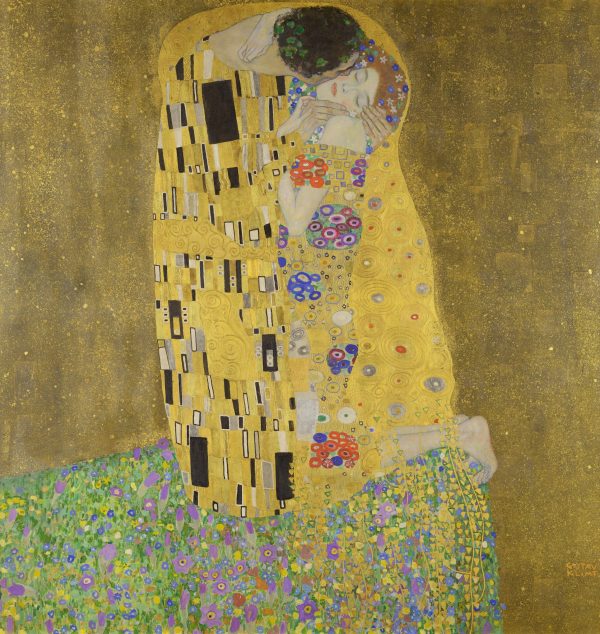
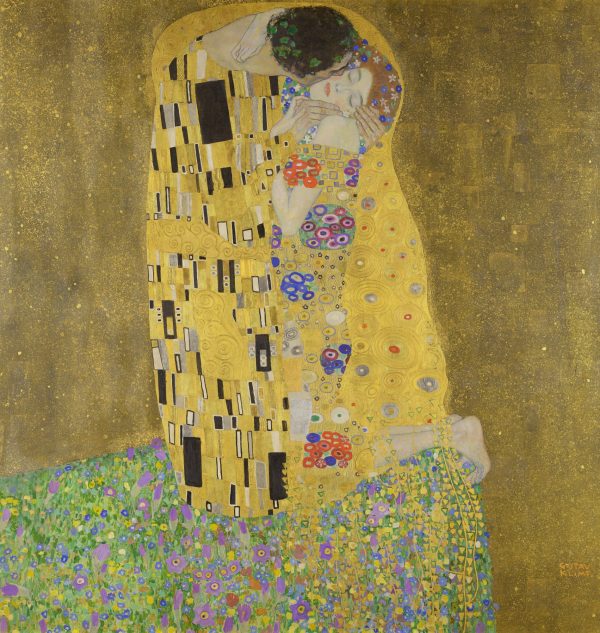
Two lovers dissolving into a field of gold leaf and pattern, the defining image of Vienna around 1900. Belvedere, Vienna. Read the story.
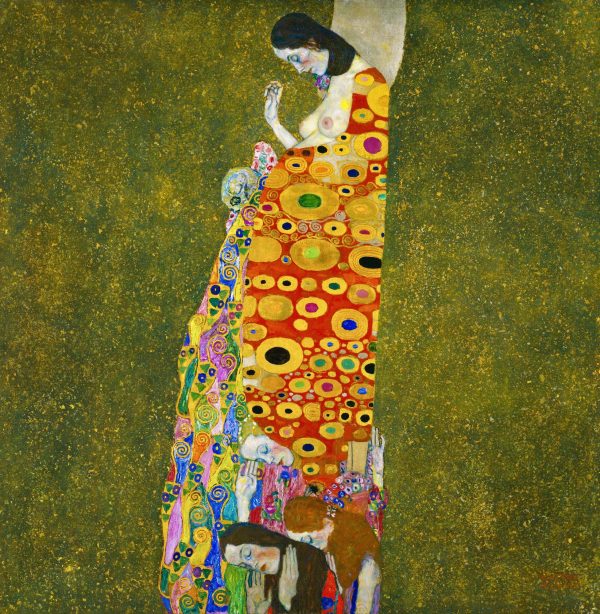
The Woman in Gold, seized by the Nazis and returned to her family after a famous legal fight. Neue Galerie, New York. Read the story.
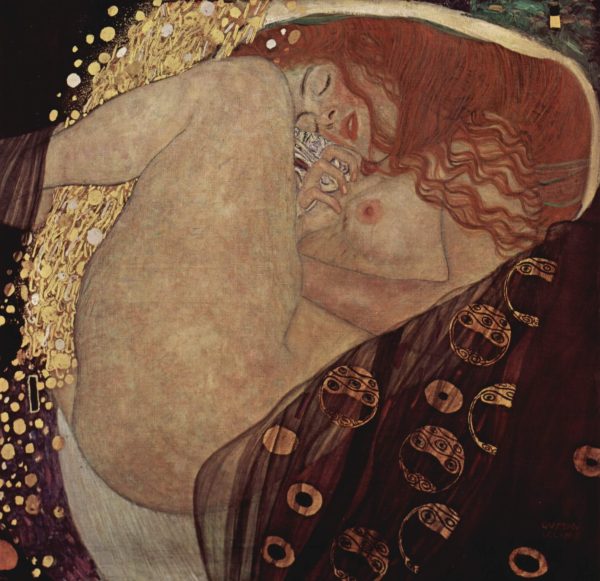
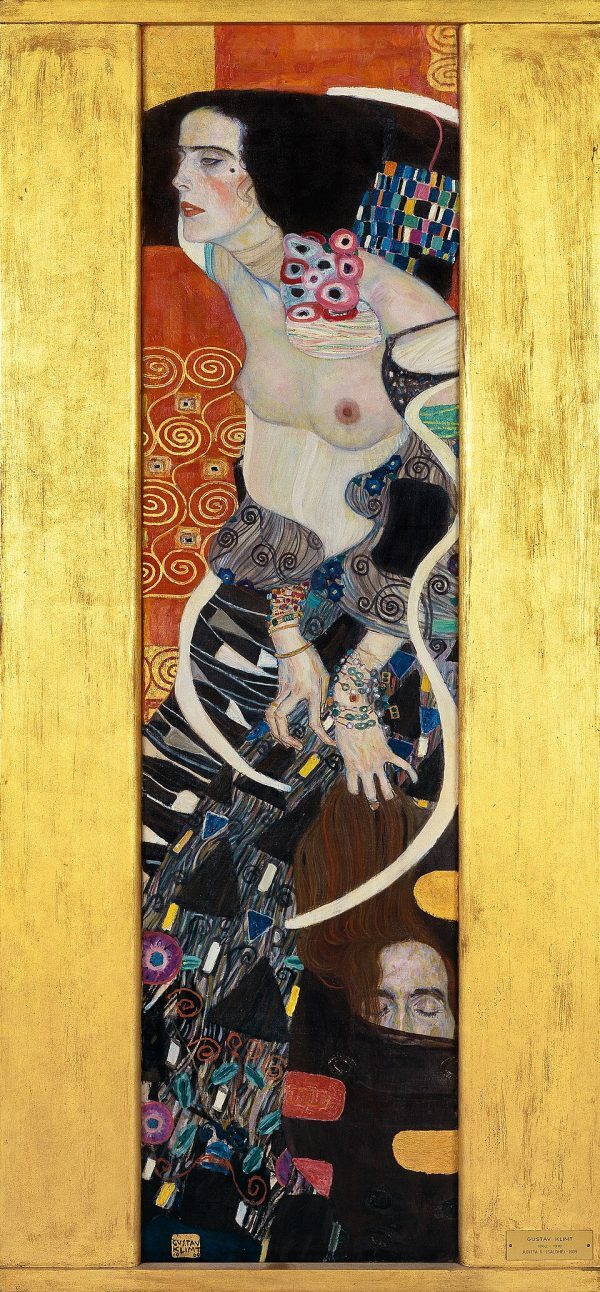
The biblical heroine as a Viennese femme fatale, in a gold frame made by Klimt’s brother. Belvedere, Vienna. Read the story.
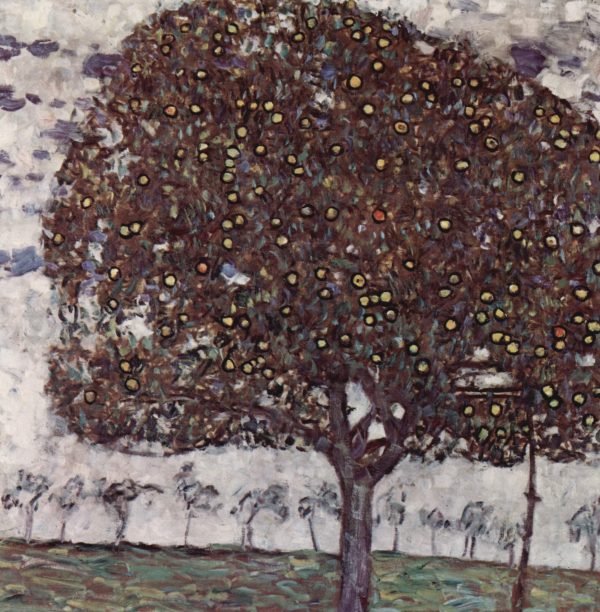
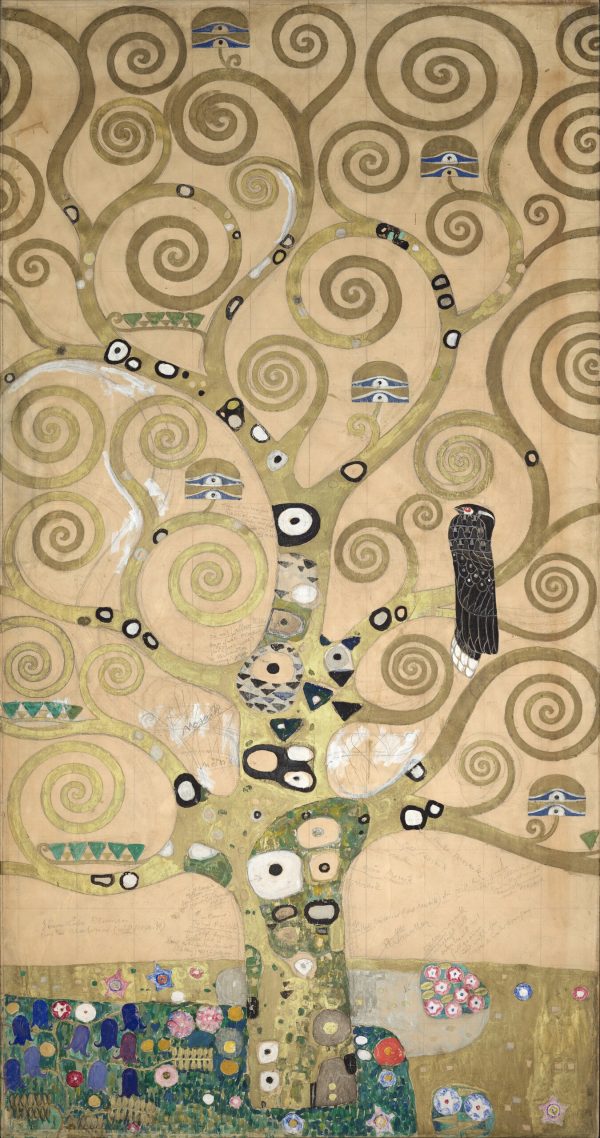
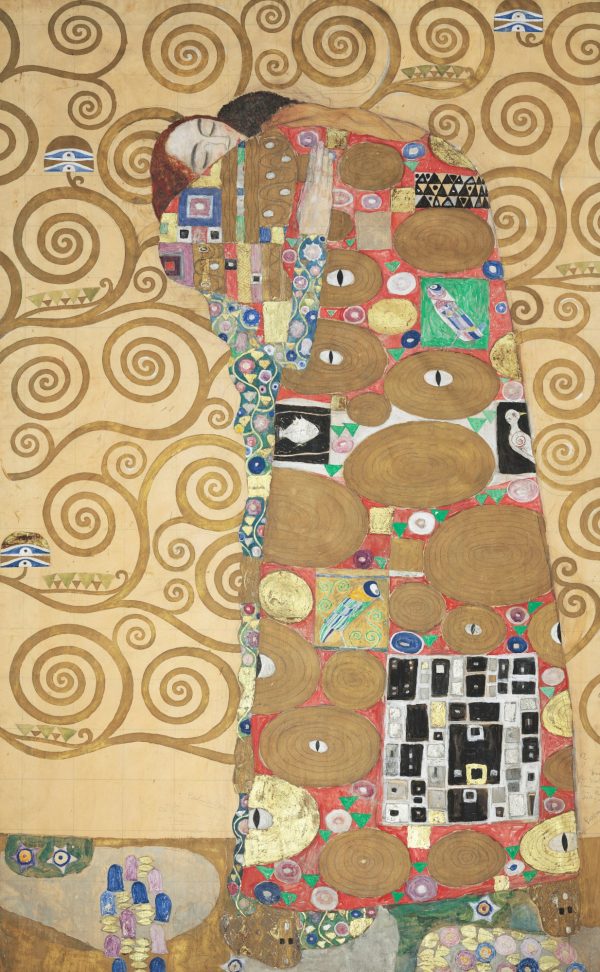
Endless spiralling branches designed for a dining room in Brussels, Art Nouveau ornament at its purest.
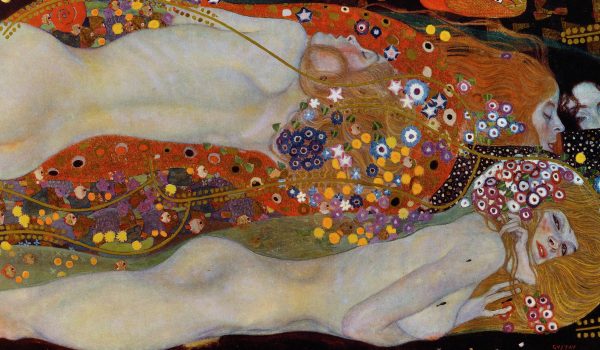
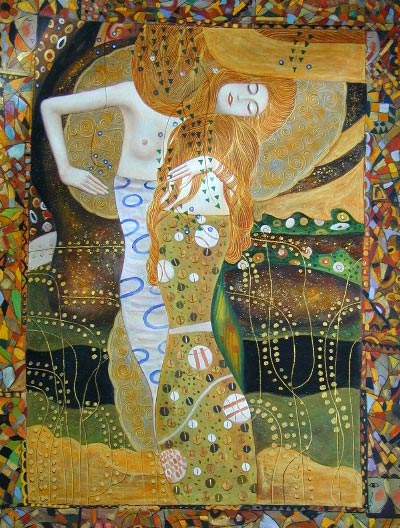
Water spirits drifting through green and gold, all long hair and flowing line. Belvedere, Vienna. Read the story.
A woman with a cloud of curling hair smokes a cigarette, made as an advertisement for a brand of cigarette paper. One of the posters that made Mucha the face of Art Nouveau in Paris.
The Carthaginian priestess from Flaubert’s novel, framed by ornament and drifting smoke. Mucha’s decorative style turned literature into design.
The Virgin as a floating vision among lilies above a young girl in folk costume, painted for a church that was never built.
The last of the twenty huge canvases of the Slav Epic, Mucha’s life’s work on the history of the Slavic peoples.
Sleeping figures on black cloth, and in the middle a man woken by a shrouded figure of death. Banned from an exhibition in Geneva, it made Hodler famous in Paris. Kunstmuseum Bern.
From the series of paintings Hodler made at the bedside of the woman he loved as she died of cancer, one of the most moving records in modern art.
The Larsson family eating outdoors at their home in Sundborn, from the pictures of family life that shaped the Scandinavian idea of home. Nationalmuseum, Stockholm.
A woman stretched on a sofa, her white dress curving like a wave. The American painter’s answer to Art Nouveau line. Metropolitan Museum of Art, New York.
Explore the painters on our artist pages for Gustav Klimt, Alphonse Mucha and Ferdinand Hodler. Every Art Nouveau painting in our shop is in the public domain and can be ordered as a hand-painted oil reproduction on canvas, in the size you choose.
Compare the movement through its artists, subjects, handling of light and colour, then choose a composition with the right visual weight for your space.
Look across the works above for recurring choices in composition, brushwork, colour and subject. Those relationships are more useful than treating a movement as one fixed look.
Open the featured artist links to see how individual painters interpreted Art Nouveau differently, then compare their available works.
Consider viewing distance, wall proportions and orientation. Standard sizes and framing options appear on each artwork page, with custom dimensions available.
A practical starting point for understanding the movement and ordering a hand-painted reproduction.
Movements describe shared historical ideas and visual approaches, but artists still worked individually. The introduction and artist links above explain the most relevant context.
No. The originals remain with their owners or museums. ByMuseum offers newly hand-painted oil reproductions made to order on canvas.
No. Each work is painted by hand with oil colour, so the finished surface has real brushwork and natural variation rather than a mechanically printed image.
Yes. Select a listed size or contact ByMuseum for custom dimensions that preserve the composition’s proportions.
Visit the complete art movements timeline or browse artists A–Z.
Enter the curated collections or browse every hand-painted oil reproduction.

Man Writing a Letter
Gabriel Metsu, c. 1664
The gallery list
Every painting is already 50% off. Join the list and we will send you an extra $15 code, plus first access to new collections.
No spam. Unsubscribe anytime. · Privacy Policy
Welcome
Your $15 code is on its way. Explore the gallery while you wait.