Loading cart…
No products in the cart.

Art movement · 1870–1900
Impressionism began in France in the late 19th century, around the 1870s, when a group of artists rejected the strict rules of academic painting and chose to paint modern life as they…
In April 1874 a group of painters rejected by the official Salon put on their own exhibition in Paris, in the former studio of the photographer Nadar. A critic mocked one canvas by Claude Monet, Impression, Sunrise, and called them all “Impressionists”. The name stuck. Over eight exhibitions until 1886, Monet, Renoir, Degas, Pissarro, Sisley, Morisot and Caillebotte changed painting for good: they worked outdoors, quickly, with visible strokes of bright colour, and they painted the modern world around them, from boating parties to railway stations.
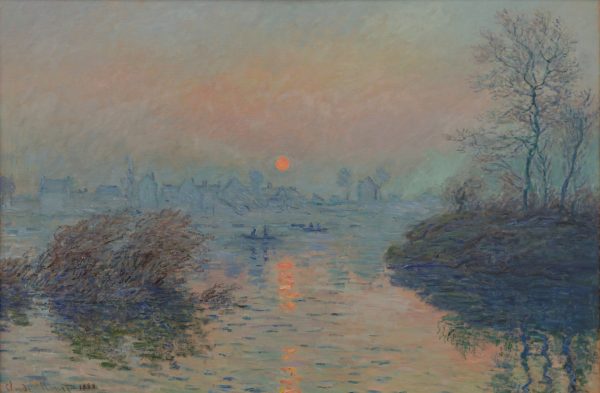
An orange sun over the port of Le Havre: the painting that gave the movement its name. Musée Marmottan Monet, Paris. Read the story.
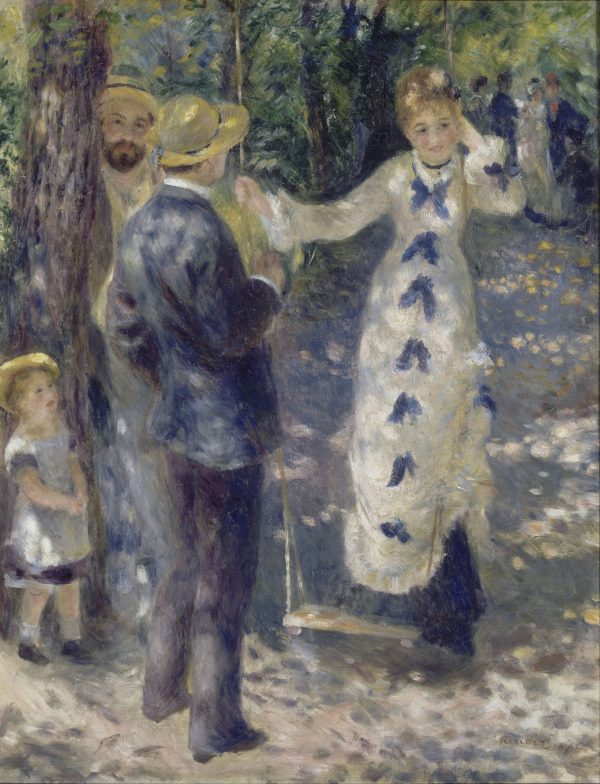
A Sunday dance in Montmartre, dappled with sunlight through the trees. Musée d’Orsay, Paris. Read the story.
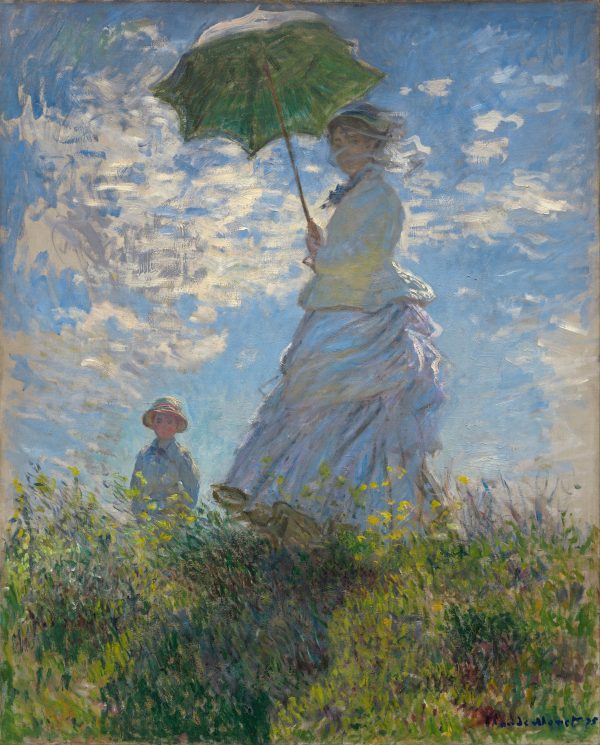
Monet’s wife and son on a windy hill, seen from below against the sky. National Gallery of Art, Washington. Read the story.
Friends lingering over lunch on a balcony by the Seine. Phillips Collection, Washington. Read the story.
The surface of his pond at Giverny, with no shore and no horizon. Art Institute of Chicago. Read the story.
Young ballerinas stretch, scratch and wait while the old ballet master leans on his stick. Degas painted dancers more than any other subject. Read the story.
A woman staring into a glass of absinthe in a Paris café, a picture so bleak that critics in London called it a scandal. Musée d’Orsay, Paris. Read the story.
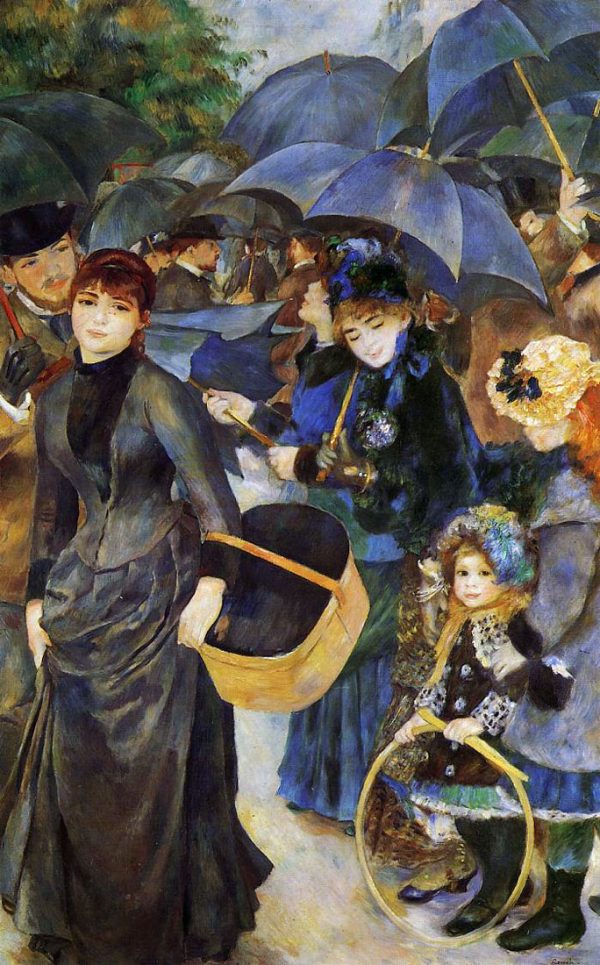
Umbrellas on a wet crossroads of Haussmann’s new Paris, as crisp as a photograph. Art Institute of Chicago. Read the story.
Three workmen planing a parquet floor in a Paris apartment. The Salon rejected it as vulgar, so Caillebotte showed it with the Impressionists. Musée d’Orsay, Paris.
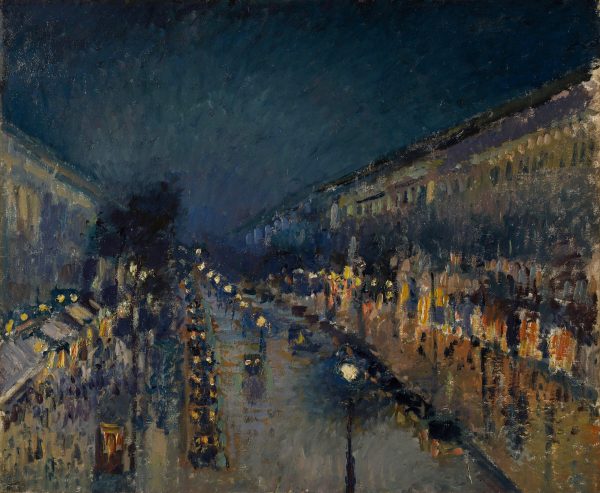
Gaslights and shop windows shimmering on a wet boulevard, his only night scene in a series painted from a hotel window. National Gallery, London.
The painter’s sister watching over her sleeping baby through a veil of white gauze. Shown at the first Impressionist exhibition of 1874. Musée d’Orsay, Paris.
A barmaid gazes past us while the mirror behind her fills with the crowd. Manet never exhibited with the Impressionists, but he was their hero. The Courtauld, London. Read the story.
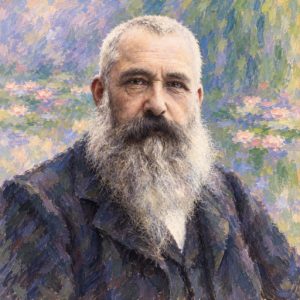
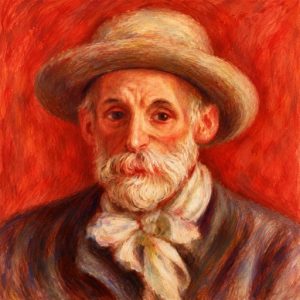
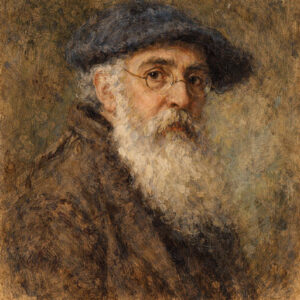
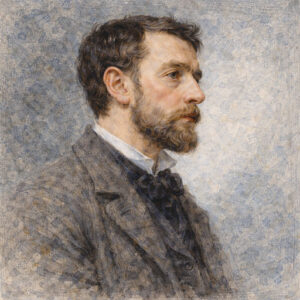
Meet the painters in our guide to the most famous Impressionist artists, read more stories in famous Impressionist paintings, or visit the artist pages for Monet and Renoir. Every Impressionist painting in our shop is in the public domain and can be ordered as a hand-painted oil reproduction on canvas, in the size you choose.
Impressionism is the most loved art movement in the world: light, colour and everyday life painted with quick, visible brushstrokes. Those brushstrokes are exactly what a hand-painted reproduction keeps.
Claude Monet, Pierre-Auguste Renoir, Edgar Degas and Édouard Manet.
Woman with a Parasol, Impression, Sunrise, Luncheon of the Boating Party and A Bar at the Folies-Bergère.
Gardens and water scenes calm a bedroom; busy café and city scenes bring life to a living or dining room.
Quick answers about Impressionism and ordering a hand-painted reproduction.
See our guide to the most famous Impressionist paintings and the key Impressionist artists.
From Monet's Impression, Sunrise, mocked by a critic at the first group exhibition in Paris in 1874.
No. Each work is painted by hand with oil colour, so the finished surface has real brushwork and natural variation rather than a mechanically printed image.
Yes. Select a listed size or contact ByMuseum for custom dimensions that preserve the composition’s proportions.
Visit the complete art movements timeline or browse artists A–Z.
Enter the curated collections or browse every hand-painted oil reproduction.

Man Writing a Letter
Gabriel Metsu, c. 1664
The gallery list
Every painting is already 50% off. Join the list and we will send you an extra $15 code, plus first access to new collections.
No spam. Unsubscribe anytime. · Privacy Policy
Welcome
Your $15 code is on its way. Explore the gallery while you wait.