Loading cart…
No products in the cart.

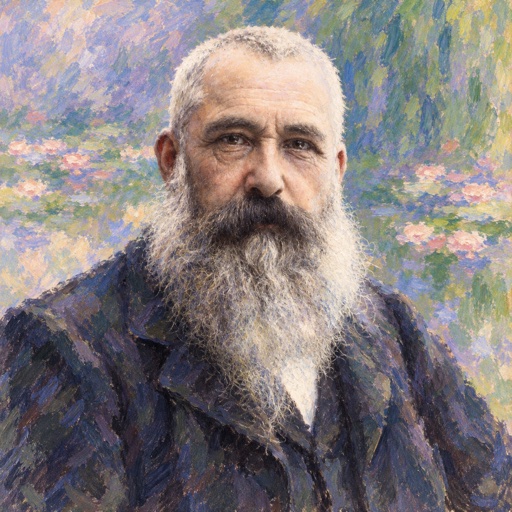
French painter · Impressionism
1840 – 1926
Claude Monet (1840 to 1926) gave Impressionism its name and spent thirty years painting his water lilies. Explore his most famous paintings and order any of them hand-painted in oil.
Claude Monet was born in Paris in 1840 and grew up in Le Havre, where the painter Eugène Boudin taught him to work outdoors, in front of the subject. In 1874 he and his friends held their own exhibition in Paris, and a critic named the whole group after one of his canvases: Impressionism. For the rest of his life Monet chased one thing, the way light changes from hour to hour. He painted the same haystacks, poplars and cathedral front again and again, and from 1883 he built a house and a water garden at Giverny that became his only subject for thirty years. He died there in December 1926, at 86.
An orange sun over the port of Le Havre, painted in a few quick strokes. The painting that gave Impressionism its name. Musée Marmottan Monet, Paris. Read the story.
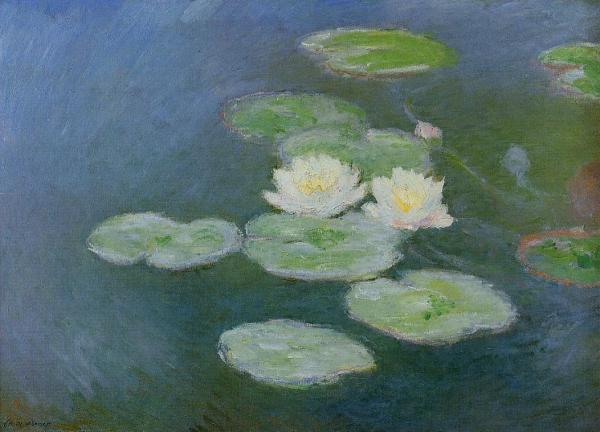
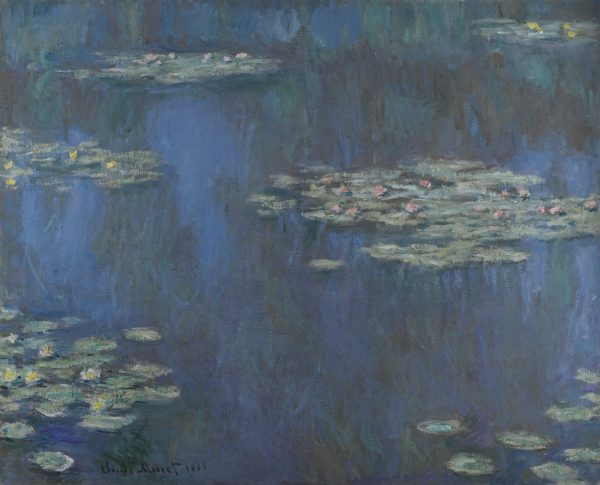
The surface of his pond at Giverny, with no shore and no horizon, only flowers, sky and reflections. He painted about 250 of them. Art Institute of Chicago. Read the story.
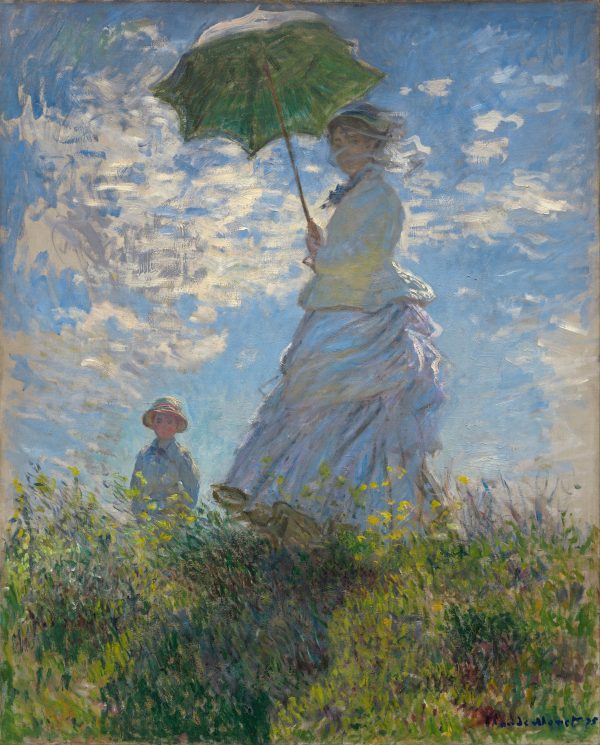
His wife Camille and their son Jean on a windy hill, seen from below against a bright summer sky. National Gallery of Art, Washington. Read the story.
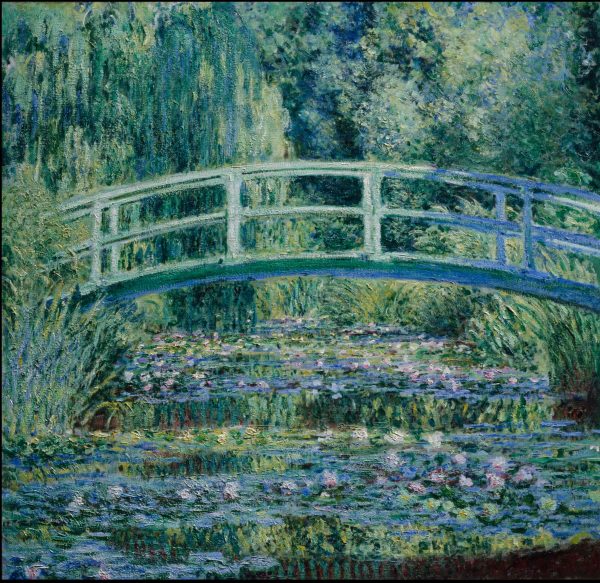
The green footbridge he built over his lily pond, the image most people think of when they hear the name Monet. Read the story.
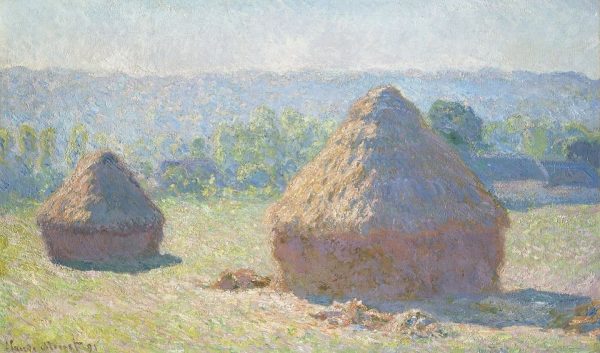
Two stacks of wheat in a field near Giverny, from the series that proved the subject did not matter, only the light. Musée d’Orsay, Paris. Read the story.
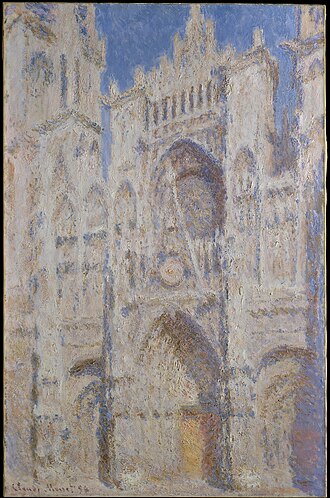
The west front of a Gothic cathedral turned into a wall of glowing colour. He painted it more than thirty times, from a room across the square. Musée d’Orsay, Paris. Read the story.
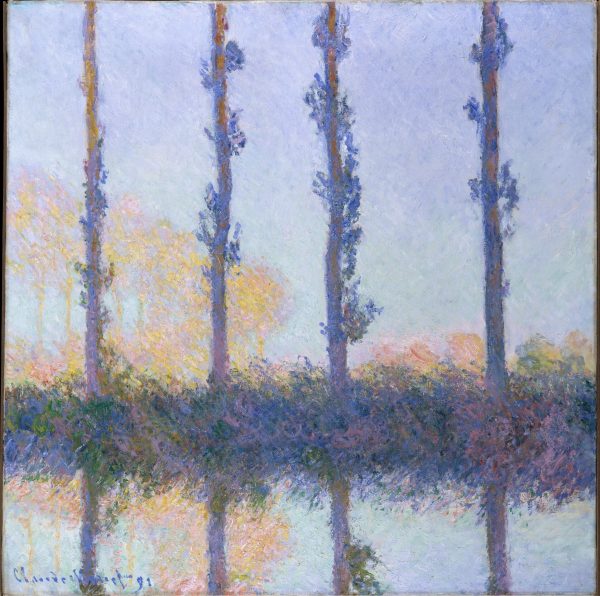
A line of tall poplars along a river near Giverny. When the trees were about to be cut down, Monet paid the buyer to wait until he had finished painting them. Philadelphia Museum of Art. Read the story.
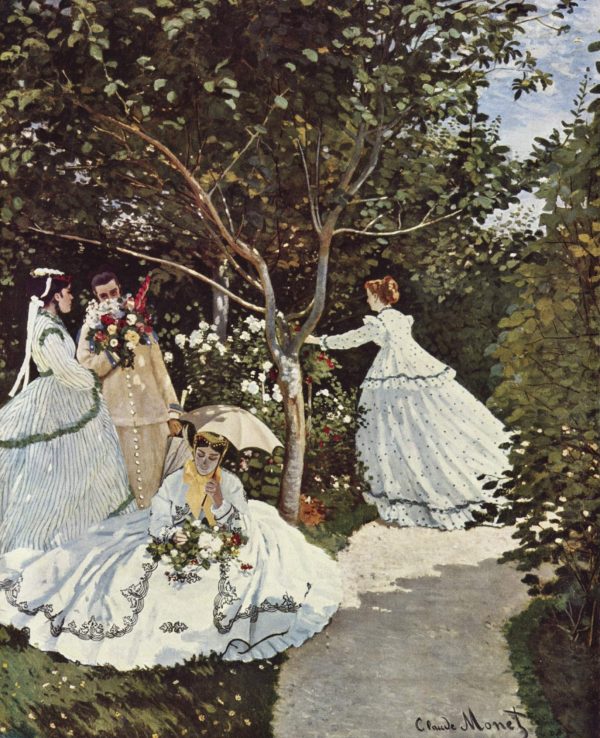
Four women in white dresses in dappled sunlight, painted outdoors on a canvas so tall that Monet dug a trench to lower it and reach the top. Musée d’Orsay, Paris. Read the story.
A floating café and bathing spot on the Seine, painted side by side with Renoir. Its broken strokes on the water are where Impressionism really begins. Metropolitan Museum of Art, New York. Read the story.
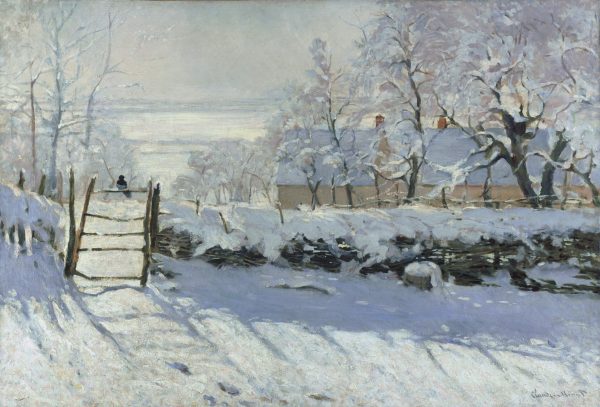
A single black bird on a gate in a field of snow full of blue and violet shadows. The official Salon rejected it. Musée d’Orsay, Paris. Read the story.
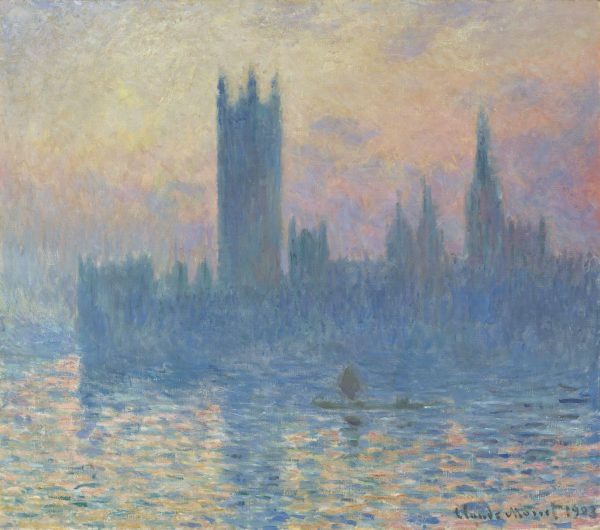
Westminster as a dark shape in a burning London fog, from the series he painted from a window of St Thomas’ Hospital across the Thames. National Gallery of Art, Washington.
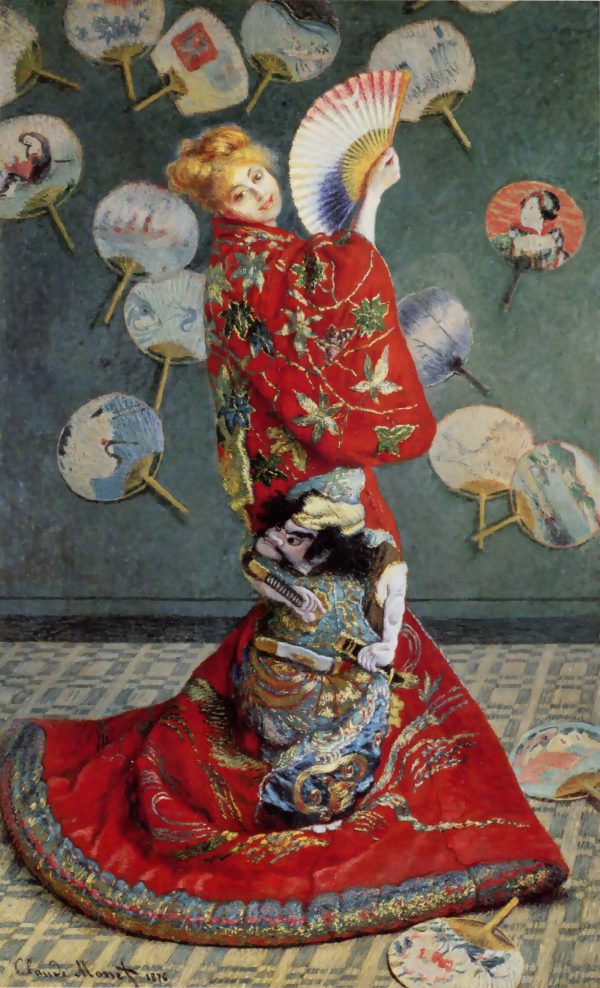
Camille in a red kimono, wearing a blond wig and holding a fan, against a wall of Japanese fans. Monet’s playful answer to the craze for Japan. Museum of Fine Arts, Boston.
Monet worked outdoors, quickly, with short strokes of pure colour placed side by side rather than mixed on the palette, so that they blend in your eye and seem to vibrate. Shadows are blue and violet, never black. In his series he set up several canvases at once and moved from one to the next as the light changed. In his last years cataracts clouded his sight, and the late water lilies become almost abstract.
Monet died in 1926, so his paintings are in the public domain and Monet reproductions are easy to find. Good ones are harder. His surface is built from short, broken strokes of separate colour that only blend when you step back. If a copy looks smooth and blended up close, the light has gone out of it.
Every painting on this page can be ordered as a hand-painted oil reproduction, painted on canvas by our artists in the size you choose. You can see finished canvases next to the originals on our samples page. Before you buy from anyone, read how to choose an oil painting reproduction.
Monet painted the same places again and again to catch changing light: water lilies, haystacks, cathedrals, poppy fields. A hand-painted reproduction keeps his broken, flickering brushwork, which is the whole point of an Impressionist painting.
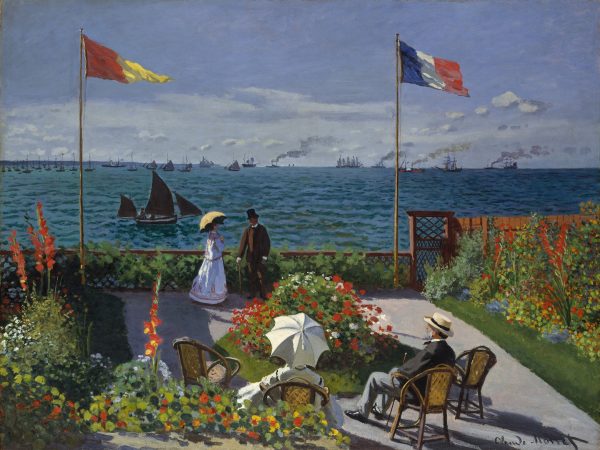
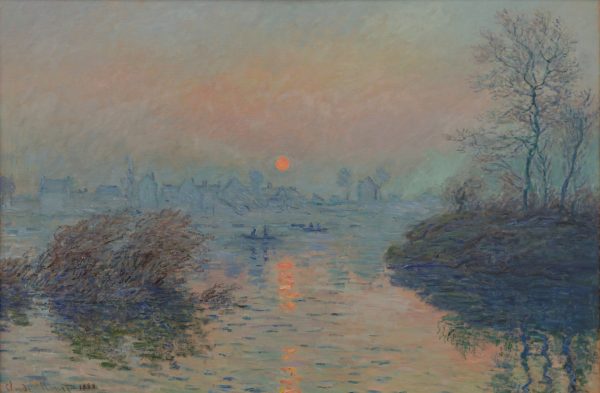
Woman with a Parasol, Impression, Sunrise, Garden at Sainte-Adresse and the Water Lilies and Japanese Bridge are the Monets collectors choose most.
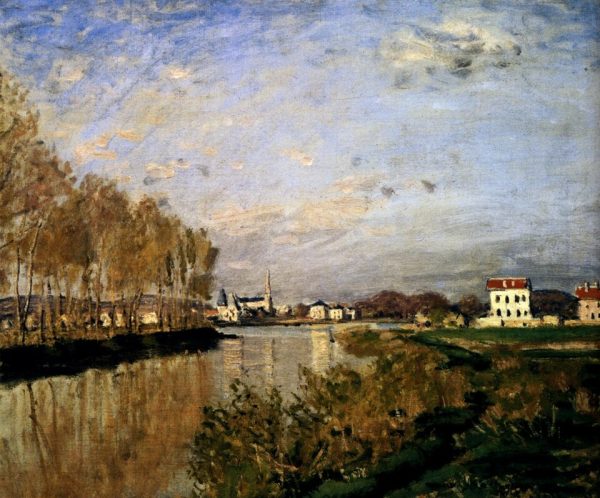
Water lilies and gardens bring calm to bedrooms and quiet corners. Busy river and harbour scenes, like The Port at Argenteuil, work well in living rooms and hallways.
Monet's paintings come together from a few steps away. If the painting will be seen from across a room, a larger size lets the brushwork read the way he intended.
Quick answers for anyone choosing a Claude Monet reproduction.
Impression, Sunrise (1872). A critic mocked its title in 1874, and the name Impressionism stuck. Read its story.
Our guide to Claude Monet's paintings walks through his best-known series, and Monet vs Renoir compares him with his closest friend.
Yes. Monet died in 1926 and his paintings are in the public domain.
No. A trained painter rebuilds the image with oil paint on artist canvas, preserving visible brushwork, layered colour and surface variation.
Yes. Choose a listed dimension or contact ByMuseum when your wall requires a custom size that keeps the painting’s original proportions.
Browse curated painting collections, compare art movements, or visit the complete painting shop.

Man Writing a Letter
Gabriel Metsu, c. 1664
The gallery list
Every painting is already 50% off. Join the list and we will send you an extra $15 code, plus first access to new collections.
No spam. Unsubscribe anytime. · Privacy Policy
Welcome
Your $15 code is on its way. Explore the gallery while you wait.