Loading cart…
No products in the cart.

Original price was: $518.00.$259.00Current price is: $259.00.
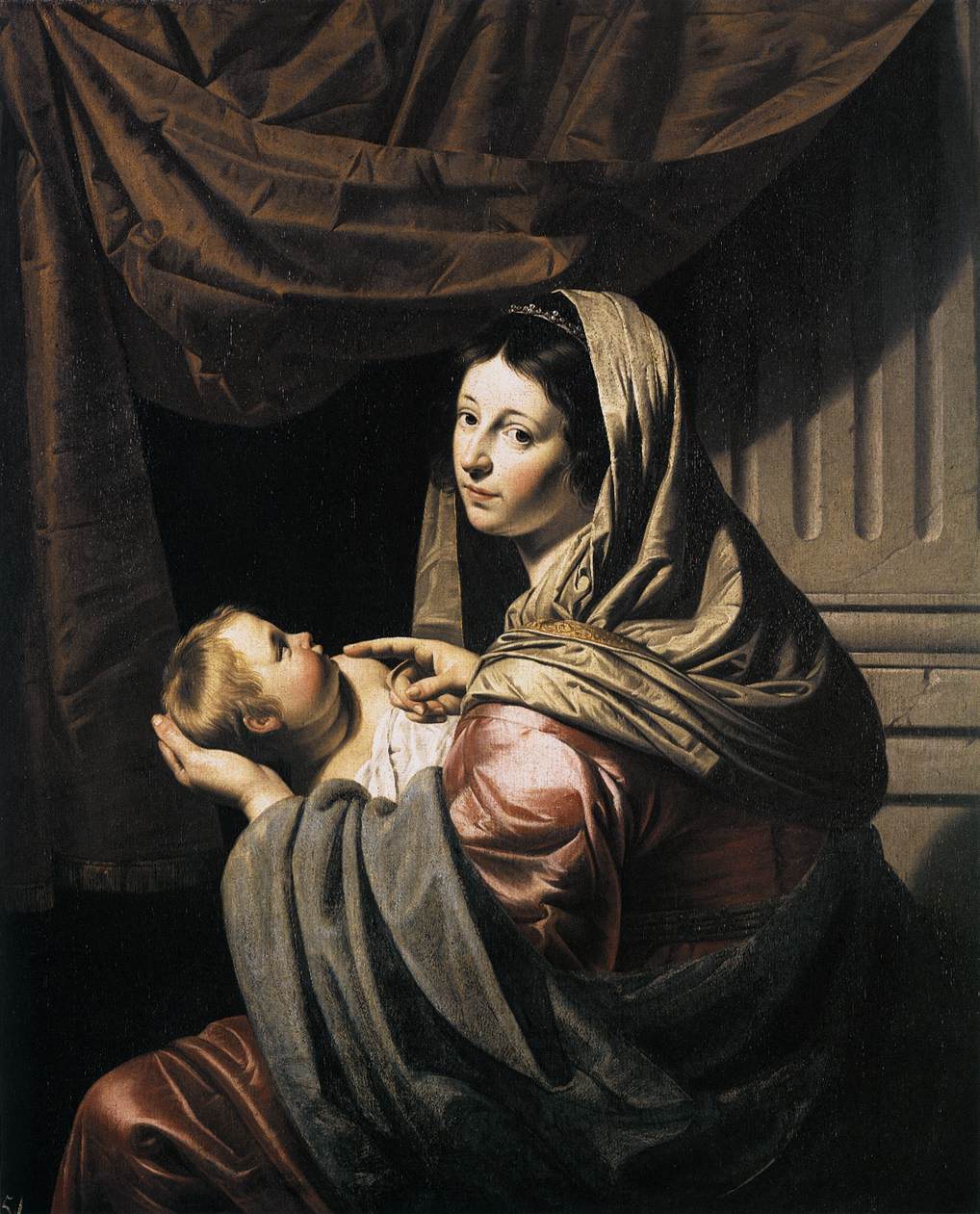
Virgin and Child by Jan van Bijlert, offered as a hand-painted oil reproduction on canvas that keeps the tenderness and quiet light of the original composition.
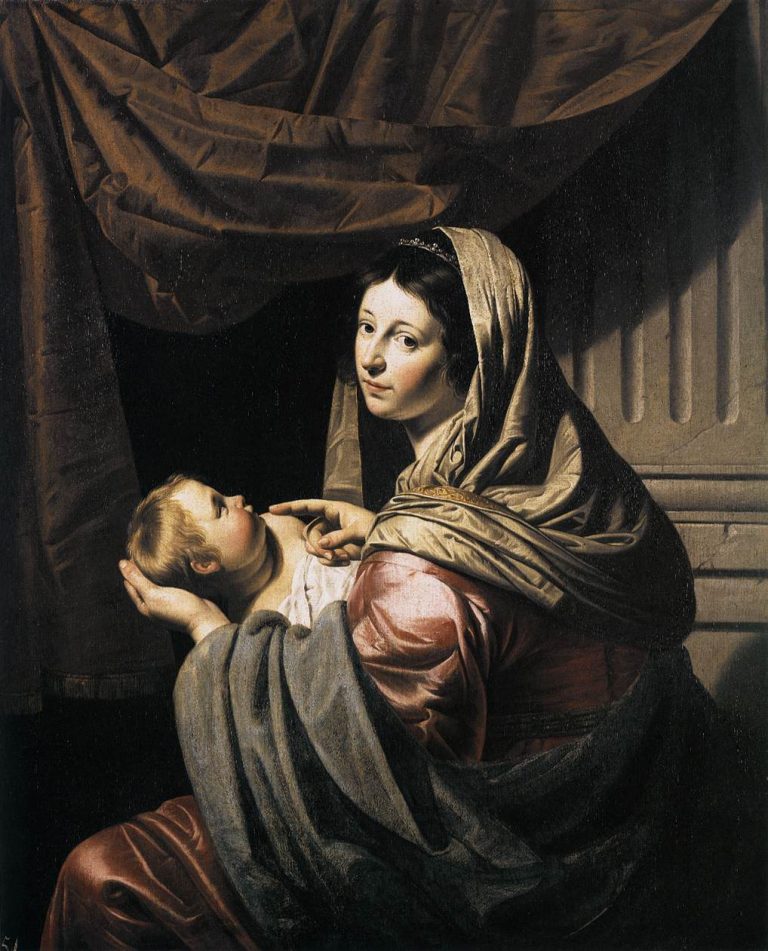
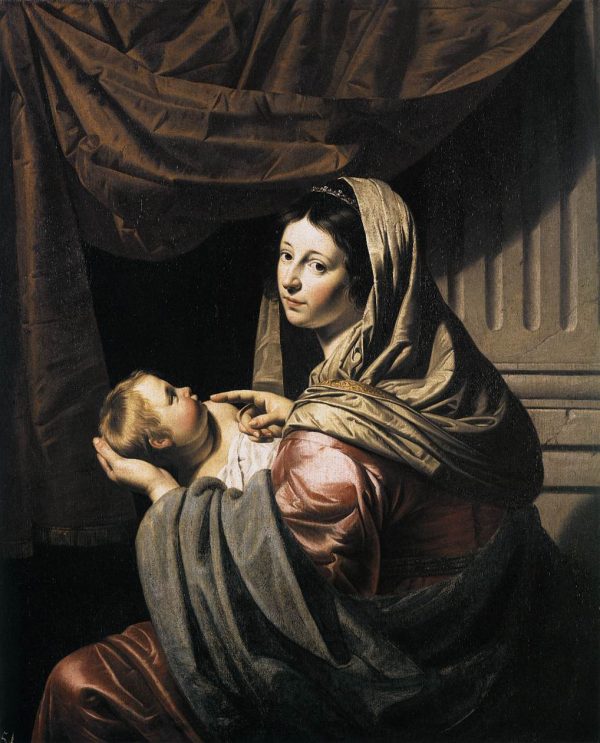
For centuries, viewers before this quiet devotional image have found in it a study in tenderness made visible through paint: the mother figure absorbed in her child, the eyes half lowered, the whole scene pitched somewhere between intimacy and reverence. Dutch collectors of the seventeenth century prized exactly this kind of composed stillness, and later observers have continued to read the painting as a demonstration of how much feeling could be carried by careful arrangement of form alone.
Jan van Bijlert built the picture around a deliberate architecture of shapes. The Virgin and Child occupy the pictorial center with an authority that does not need surrounding detail to support it; the space around the figures is kept spare, so that every fold of drapery and every turn of a hand carries weight. Light falls with a Baroque insistence, gathering on the faces and the exposed skin of the infant while the background recedes into shadow, a technique that owes something to the Utrecht Caravaggisti among whom Bijlert trained before settling into his own, gentler idiom.
The color in the original is restrained rather than showy: warm flesh tones set against deep, muted drapery, with the transitions between them handled through subtle shifts of value rather than hard outline. This softness of edge, paired with firm underlying structure, gives the image its particular calm, the sense of a moment held rather than staged. It belongs to the mature phase of the career of Bijlert, when the dramatic chiaroscuro of his early training had settled into a quieter, more devotional register suited to private contemplation rather than public spectacle.
Bringing that same balance of structure and atmosphere back into oil is the task each ByMuseum painter takes on. Working from the original palette and composition, a trained artist builds this oil painting reproduction layer by layer on artist-grade canvas, so the raised texture of impasto and the visible pull of the brush remain part of the finished surface rather than being flattened into print. The result functions as a hand-painted replica in the fullest sense: an object made by hand, not a page reproduced by machine, carrying the same tactile presence as a studio-painted canvas.
What continues to hold attention in this image is its restraint, the way so much devotion is expressed through so little visible effort, and owning a painted version of that restraint means keeping a genuine physical object in the room rather than a flat copy of one.
Empty walls flatten a room. A classical artwork restores structure and visual hierarchy. One painting defines the space, anchors furniture, and establishes identity.
Worldwide shipping included. Each painting is produced to order and safely packed for international transport.
All payments are encrypted and processed through trusted payment providers.
Real brushwork, layered oil paint, and durable pigments on museum-quality canvas.
If the result does not meet expectations, return it for a full refund.


Your artwork is painted on premium cotton canvas, then shipped safely rolled in a rigid tube with extra blank canvas border — ready for stretching or framing locally.
Select a handcrafted frame and we’ll deliver your painting fully assembled, protected, and ready to hang.
For safe shipping, framing is available up to a maximum size. Larger sizes will automatically disable the frame option.


Choose “Stretched” to receive your canvas mounted on wooden stretcher bars — perfect if you’ll frame it later or display it as-is.
Gallery Wrap is a deeper, 1.5" style stretcher. The canvas wraps around the sides and is stapled on the back for a clean, modern, frameless look.
We ship with UPS, FedEx, or DHL straight to your door. You’ll receive a tracking number as soon as your order leaves our studio. Typical delivery is 5 to 7 days after dispatch; large, framed, or stretched pieces may take longer depending on the safest shipping route.


Unframed canvases are protected with a film, carefully rolled, and secured inside a rigid shipping tube.

Stretched, Gallery Wrapped, and Framed paintings are wrapped, cushioned with foam protection, and boxed for safe transit.