Loading cart…
No products in the cart.

Original price was: $518.00.$259.00Current price is: $259.00.
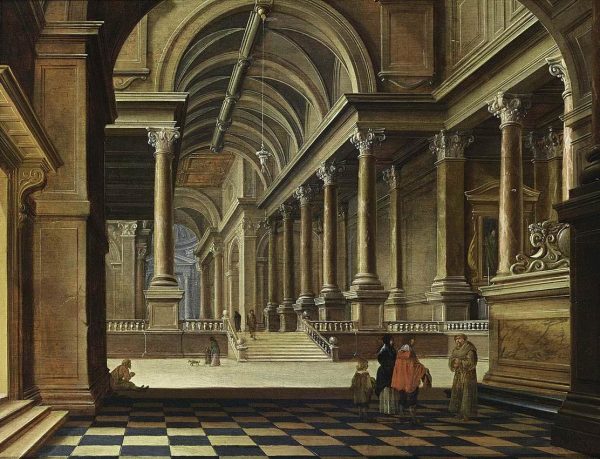
This hand-painted reproduction of Interior of an Imaginary Church by Bartholomeus Van Bassen recreates his soaring invented nave in oil, with the cool stone palette and filtered light preserved in visible brushwork.
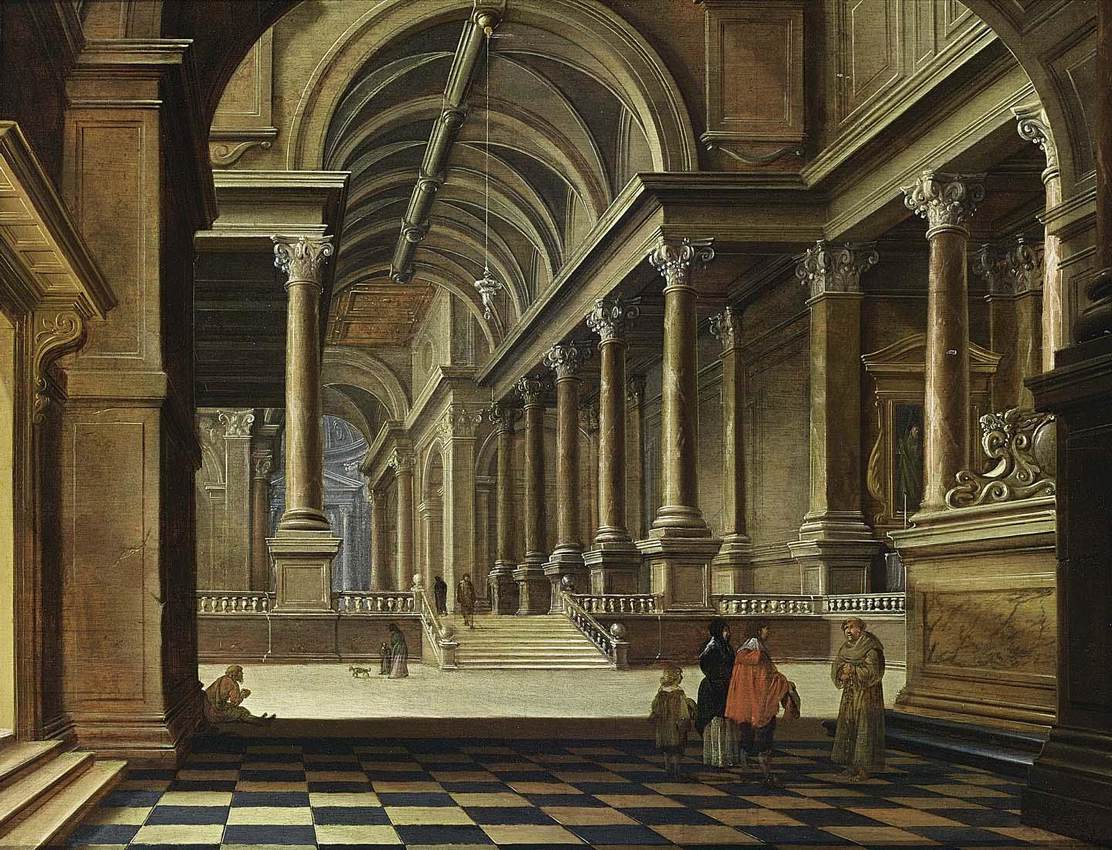
In the seventeenth century, Dutch and Flemish specialists in architectural painting rarely painted the churches they saw around them. They built spaces from imagination, drawing on the rules of linear perspective and a lifetime spent studying real vaulting and stonework to invent structures that felt entirely credible while existing nowhere at all. Bartholomeus Van Bassen worked within this tradition at the height of its confidence, and Interior of an Imaginary Church shows him constructing a sacred space so convincingly proportioned that it reads as documentary even though it is pure design.
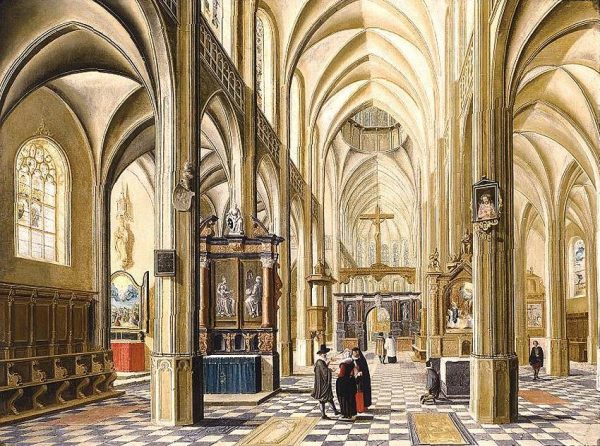
The composition opens onto a soaring nave, its columns rising into vaulted ceilings that recede through a sequence of arcades toward a distant, light-filled chancel. Small figures move through the foreground and middle distance, some in conversation, some simply passing through, and their scale against the architecture does the real work of the picture: it converts a drawing exercise in perspective into a lived, breathable interior. The palette stays deliberately restrained, built from cool stone greys that Van Bassen warms with filtered daylight falling unevenly across floor and pier, so that the architecture itself becomes the subject of the light rather than merely its backdrop.
What makes the picture worth close looking is the precision underneath it. Every column, arch, and receding line follows a single controlled perspective system, and that discipline gives the whole scene a measured stillness that architectural painting of this period prized above drama. The picture belongs to the period when Van Bassen, already established among the leading architectural painters working in the Dutch and Flemish sphere, had turned his draftsmanship toward these invented sacred interiors, testing how far constructed geometry could carry emotional weight on its own.
A ByMuseum hand-painted oil painting reproduction of this work is built by a trained painter working directly from the original composition, matching the cool grey tonal structure and the specific way light breaks across the vaulting rather than approximating it. Because it is hand-painted by a professional artist rather than printed, the canvas carries real brushwork and surface texture, visible impasto at the light-struck edges of the architecture and thinner, more transparent passages in the shadowed recesses, the same layered variation in paint handling that gives the original its sense of depth. For a buyer who examines surface and condition closely, this is the detail that a printed reproduction cannot offer: an actual painted object, built up in oil, that ages and reads like a painting rather than an image of one.
Empty walls flatten a room. A classical artwork restores structure and visual hierarchy. One painting defines the space, anchors furniture, and establishes identity.
Worldwide shipping included. Each painting is produced to order and safely packed for international transport.
All payments are encrypted and processed through trusted payment providers.
Real brushwork, layered oil paint, and durable pigments on museum-quality canvas.
If the result does not meet expectations, return it for a full refund.


Your artwork is painted on premium cotton canvas, then shipped safely rolled in a rigid tube with extra blank canvas border — ready for stretching or framing locally.
Select a handcrafted frame and we’ll deliver your painting fully assembled, protected, and ready to hang.
For safe shipping, framing is available up to a maximum size. Larger sizes will automatically disable the frame option.


Choose “Stretched” to receive your canvas mounted on wooden stretcher bars — perfect if you’ll frame it later or display it as-is.
Gallery Wrap is a deeper, 1.5" style stretcher. The canvas wraps around the sides and is stapled on the back for a clean, modern, frameless look.
We ship with UPS, FedEx, or DHL straight to your door. You’ll receive a tracking number as soon as your order leaves our studio. Typical delivery is 5 to 7 days after dispatch; large, framed, or stretched pieces may take longer depending on the safest shipping route.


Unframed canvases are protected with a film, carefully rolled, and secured inside a rigid shipping tube.

Stretched, Gallery Wrapped, and Framed paintings are wrapped, cushioned with foam protection, and boxed for safe transit.
Baroque
Bartholomeus Van Bassen
Baroque
Bartholomeus Van Bassen