Loading cart…
No products in the cart.


No painter captured the grandeur of the American West with more breathtaking scale and luminosity than Albert Bierstadt (1830–1902), the German-American master whose monumental landscapes defined America’s visual frontier. A key figure of the Hudson River School and Rocky Mountain School, Bierstadt’s paintings helped define America’s visual identity during the era of westward expansion.
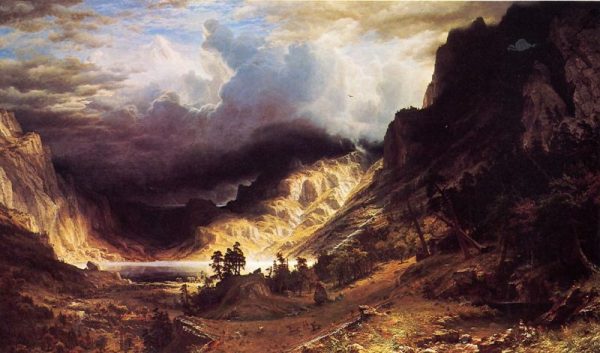
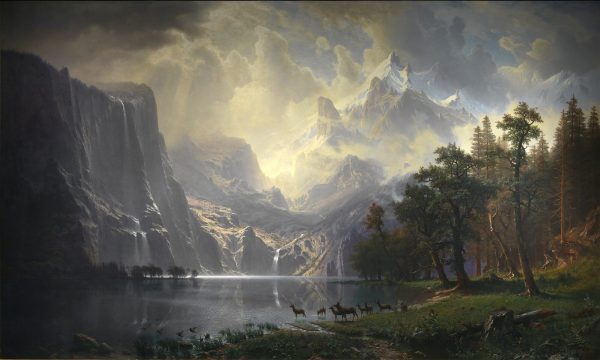
Bierstadt paintings are distinguished by dramatic lighting effects, sweeping panoramic compositions, and meticulous naturalistic detail that transport viewers into pristine wilderness. His masterworks — Among the Sierra Nevada, Storm in the Rocky Mountains, The Last of the Buffalo, and Yosemite Valley — combine Romantic sublimity with precise observation of mountains, waterfalls, and atmospheric effects.
Bierstadt’s monumental canvases made the American West accessible to Eastern audiences and remain iconic images of the American landscape tradition. Hand-painted Albert Bierstadt oil painting reproductions bring the luminous skies, towering peaks, and vast horizons of his Hudson River School masterpieces to life with the rich texture and depth that only oil on canvas can provide.
Compare subject, palette and orientation across the available works, then choose the painting whose atmosphere fits the room rather than selecting by fame alone.
Open the paintings above and compare the dominant figure, landscape or interior, the direction of light and the amount of open space around the focal subject.
Explore Hudson River School to compare Albert Bierstadt with painters who shared related ideas, techniques or historical influences.
Use the proportions of the original composition when selecting a size. Framing and gallery-wrap options appear on each artwork page, and custom dimensions are available.
Practical guidance for exploring the artist and ordering a hand-painted oil reproduction.
The historical originals remain with their owners or museums. ByMuseum creates a new, made-to-order oil reproduction of the selected composition.
No. A trained painter rebuilds the image with oil paint on artist canvas, preserving visible brushwork, layered colour and surface variation.
Yes. Choose a listed dimension or contact ByMuseum when your wall requires a custom size that keeps the painting’s original proportions.
Use the movement and related-artist links on this page, or browse the complete artists A–Z directory.
Each painting is inspected and carefully packed. Available rolled, gallery-wrapped and framed presentations are shown with the artwork options.
Browse curated painting collections, compare art movements, or visit the complete painting shop.