Loading cart…
No products in the cart.

Original price was: $518.00.$259.00Current price is: $259.00.
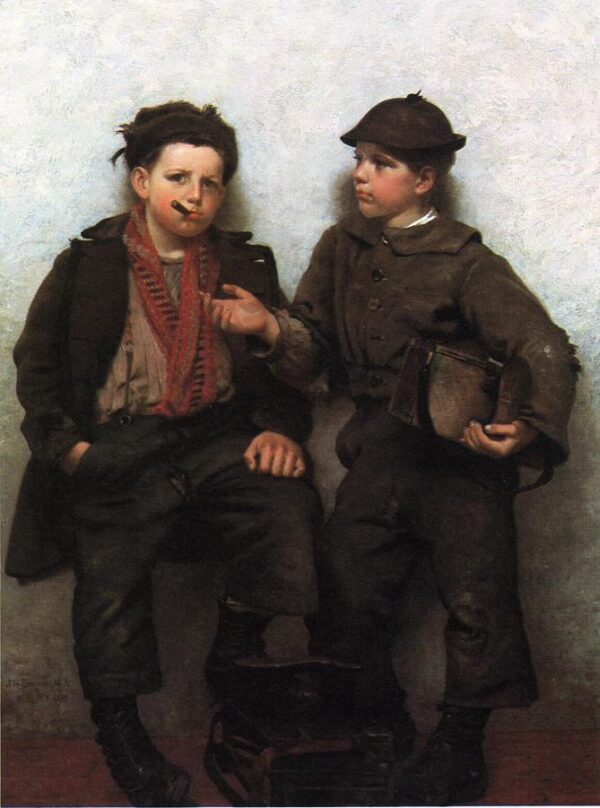
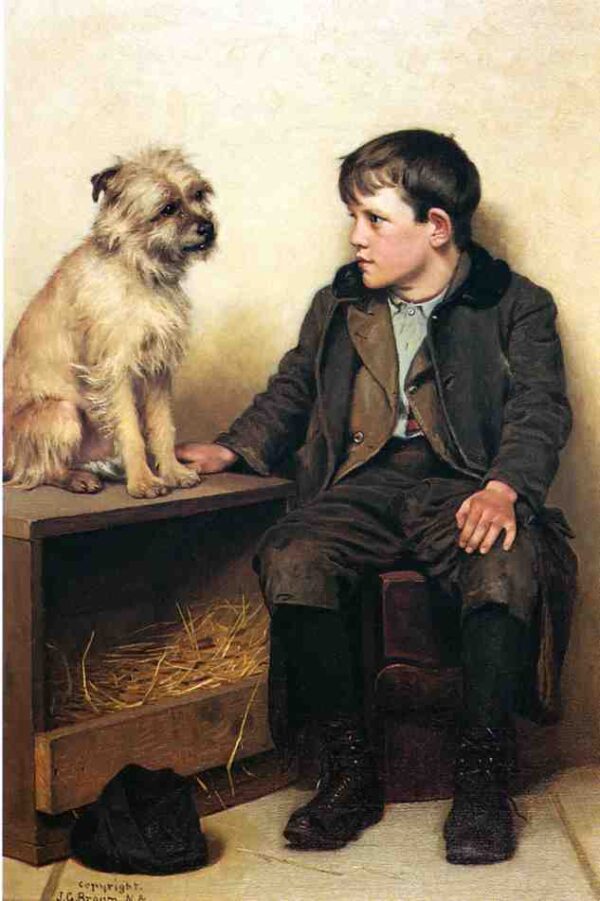
A Joint Investment by John G Brown is reproduced in hand-painted oil on canvas, preserving the tender absorption of its two street children and the depth of the original brushwork.
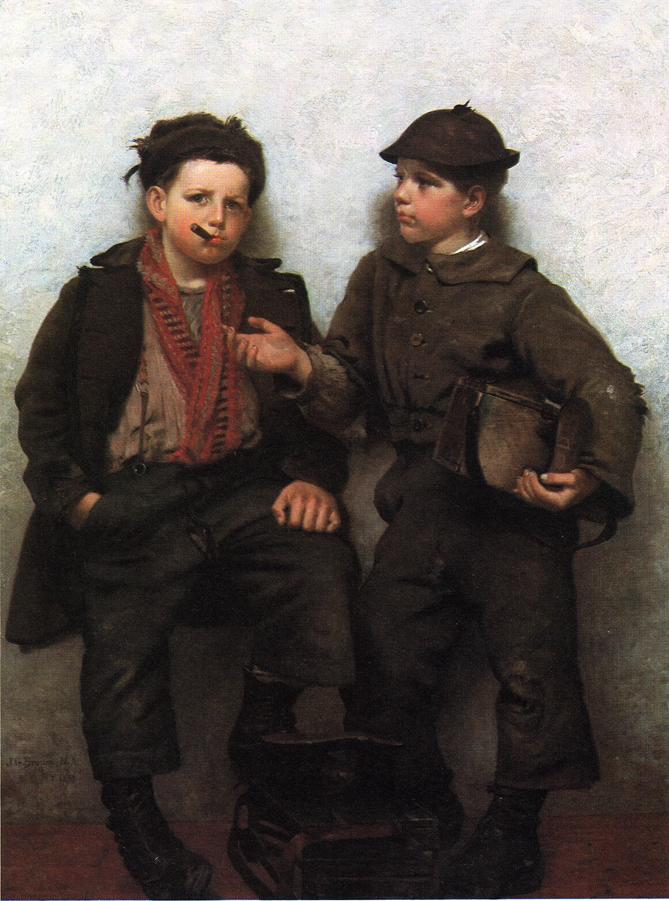
Two street children huddle over a game of dice in this warm genre scene, their absorbed expressions telling the whole story of the title. John G Brown found his enduring subject in the working children of nineteenth century American cities, bootblacks, newsboys, and match sellers caught in unguarded moments of play or labor, and here the small transaction of chance and wager becomes an occasion for real tenderness rather than sentiment for its own sake.
The composition is built close and low, drawing the viewer down to the level of the children so that their faces, not the surrounding street, carry the weight of the picture. Light falls selectively across cheeks, knuckles, and worn fabric, leaving the background in a soft, unresolved haze that keeps attention fixed on the exchange between the two figures. Brown handles flesh tones with a jeweler quality of care, building up warm underlayers before adding the final touches of highlight, while the clothing is treated more broadly, with visible, confident strokes that suggest texture without over describing it.
This contrast between finished and loose passages is characteristic of Brown work in the 1870s and 1880s, when his reputation as a painter of street children was at its height and demand for these genre scenes ran well ahead of supply. The picture rewards close looking: the tonal shifts across the boys hands, the restrained palette of browns, ochres, and muted blues, and the quiet psychological charge of two children absorbed entirely in each other and their game.
Reproducing a painting like this asks for the same patience the original demanded. Our painters work in oil on canvas, matching the palette passage by passage and preserving the distinction between the tightly modeled faces and the freer handling of the surrounding cloth and shadow, so the finished hand-painted oil painting reproduction carries the same visual rhythm as the source work. Brushwork is built up in actual layers of paint rather than simulated, which means the surface catches light the way an oil painting should, with raised ridges where the brush pressed harder and thin, worked passages where it barely touched the canvas. A museum quality reproduction of this kind depends on getting that relationship right, and it is where a trained eye distinguishes a painted copy from a mechanical one. What carries across is not just the drawing and the color scheme but the physical logic of how the paint was applied, the order in which passages were built, and the balance between description and suggestion that gives the original its quiet authority.
Empty walls flatten a room. A classical artwork restores structure and visual hierarchy. One painting defines the space, anchors furniture, and establishes identity.
Worldwide shipping included. Each painting is produced to order and safely packed for international transport.
All payments are encrypted and processed through trusted payment providers.
Real brushwork, layered oil paint, and durable pigments on museum-quality canvas.
If the result does not meet expectations, return it for a full refund.


Your artwork is painted on premium cotton canvas, then shipped safely rolled in a rigid tube with extra blank canvas border — ready for stretching or framing locally.
Select a handcrafted frame and we’ll deliver your painting fully assembled, protected, and ready to hang.
For safe shipping, framing is available up to a maximum size. Larger sizes will automatically disable the frame option.


Choose “Stretched” to receive your canvas mounted on wooden stretcher bars — perfect if you’ll frame it later or display it as-is.
Gallery Wrap is a deeper, 1.5" style stretcher. The canvas wraps around the sides and is stapled on the back for a clean, modern, frameless look.
We ship with UPS, FedEx, or DHL straight to your door. You’ll receive a tracking number as soon as your order leaves our studio. Typical delivery is 4–5 business days after dispatch; large, framed, or stretched pieces may take longer depending on the safest shipping route.


Unframed canvases are protected with a film, carefully rolled, and secured inside a rigid shipping tube.

Stretched, Gallery Wrapped, and Framed paintings are wrapped, cushioned with foam protection, and boxed for safe transit.