Loading cart…
No products in the cart.

Original price was: $518.00.$259.00Current price is: $259.00.
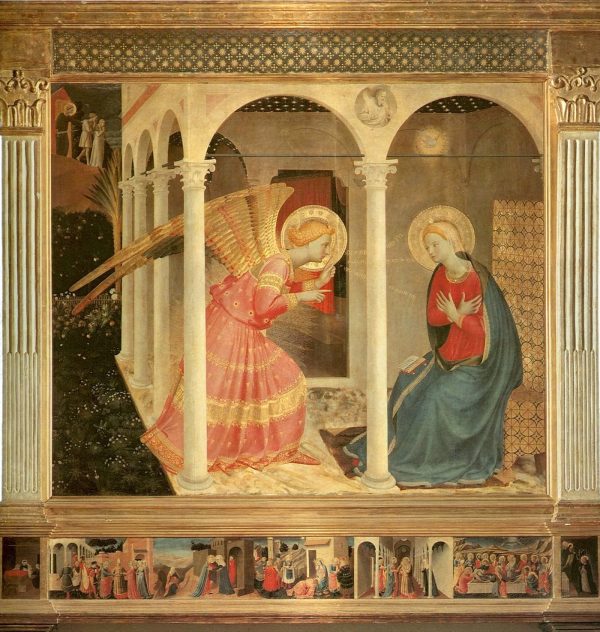
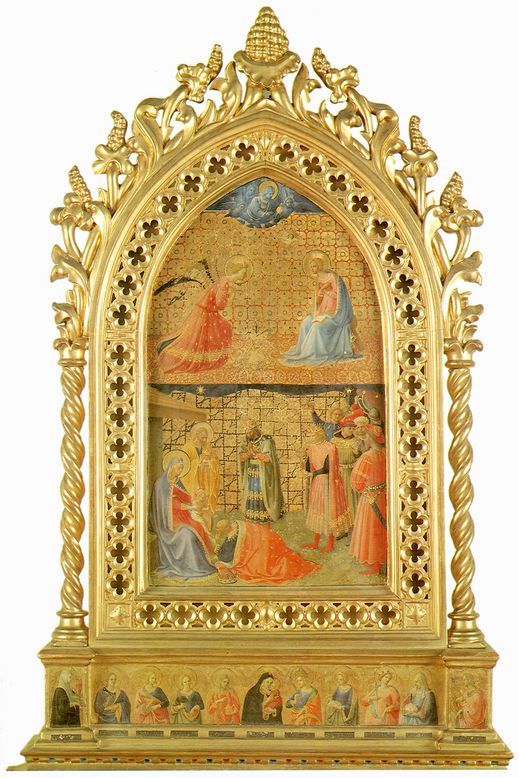
A hand-painted replica of Annunciation and Adoration of the Magi by Fra Angelico, rendered in oil on canvas with the layered colour and gold detail of the original panel.
Viewers have long returned to this double composition for the way it compresses two moments of revelation into a single frame, and later commentary on the painting tends to circle back to the same observation: that its calm surface rewards patience more than quick admiration. Scholars writing on early Renaissance devotional panels often single it out as a clear instance of how pictorial order can carry theological meaning without resorting to drama.
The panel joins the Annunciation, set within an arcaded portico, to the Adoration of the Magi unfolding in the landscape beyond, so that the eye moves from an enclosed, intimate event to an open, public one. Gabriel and the Virgin occupy a shallow architectural space rendered with the geometric clarity typical of Fra Angelico, its columns and arches establishing a rhythm that steadies the whole composition. Beyond this threshold, the procession of the Magi threads through a rocky, golden-lit terrain, their figures diminishing in scale to suggest depth without abandoning the flattened, decorative gold that marks the work as belonging to the final flowering of the Gothic tradition even as it absorbs new Renaissance interest in spatial logic.
Colour is handled with restraint: rose, blue, and ochre recur across both scenes, binding them visually even as the subjects differ, while fine touches of gold leaf catch light along haloes and drapery edges. This balance of structure and warmth belongs to the period in the career of Fra Angelico when he was moving between panel painting and fresco, refining a visual language built on legible form and quiet luminosity rather than expressive gesture. The transitions between figure and ground are handled with a control that keeps the narrative readable at a glance, yet the smaller passages, a fold of cloth, a shift in flesh tone, reward closer looking.
The ByMuseum version of this panel is painted by hand in oil on canvas by trained artists working from close study of the original, an oil painting reproduction rather than a printed facsimile. What survives the transfer is the specific relationship between colour and structure: the rose and ochre balance, the measured spacing of the architecture, the gold accents applied with the same attentiveness to placement that the original demands. Because each hand-painted replica is built up in layered pigment and individual brushwork, no two canvases are identical, and the surface retains the texture of paint rather than the flatness of print, so the object on the wall behaves like a painting rather than a copy of one.
Empty walls flatten a room. A classical artwork restores structure and visual hierarchy. One painting defines the space, anchors furniture, and establishes identity.
Worldwide shipping included. Each painting is produced to order and safely packed for international transport.
All payments are encrypted and processed through trusted payment providers.
Real brushwork, layered oil paint, and durable pigments on museum-quality canvas.
If the result does not meet expectations, return it for a full refund.


Your artwork is painted on premium cotton canvas, then shipped safely rolled in a rigid tube with extra blank canvas border — ready for stretching or framing locally.
Select a handcrafted frame and we’ll deliver your painting fully assembled, protected, and ready to hang.
For safe shipping, framing is available up to a maximum size. Larger sizes will automatically disable the frame option.


Choose “Stretched” to receive your canvas mounted on wooden stretcher bars — perfect if you’ll frame it later or display it as-is.
Gallery Wrap is a deeper, 1.5" style stretcher. The canvas wraps around the sides and is stapled on the back for a clean, modern, frameless look.
We ship with UPS, FedEx, or DHL straight to your door. You’ll receive a tracking number as soon as your order leaves our studio. Typical delivery is 5 to 7 days after dispatch; large, framed, or stretched pieces may take longer depending on the safest shipping route.


Unframed canvases are protected with a film, carefully rolled, and secured inside a rigid shipping tube.

Stretched, Gallery Wrapped, and Framed paintings are wrapped, cushioned with foam protection, and boxed for safe transit.