Loading cart…
No products in the cart.

Original price was: $518.00.$259.00Current price is: $259.00.
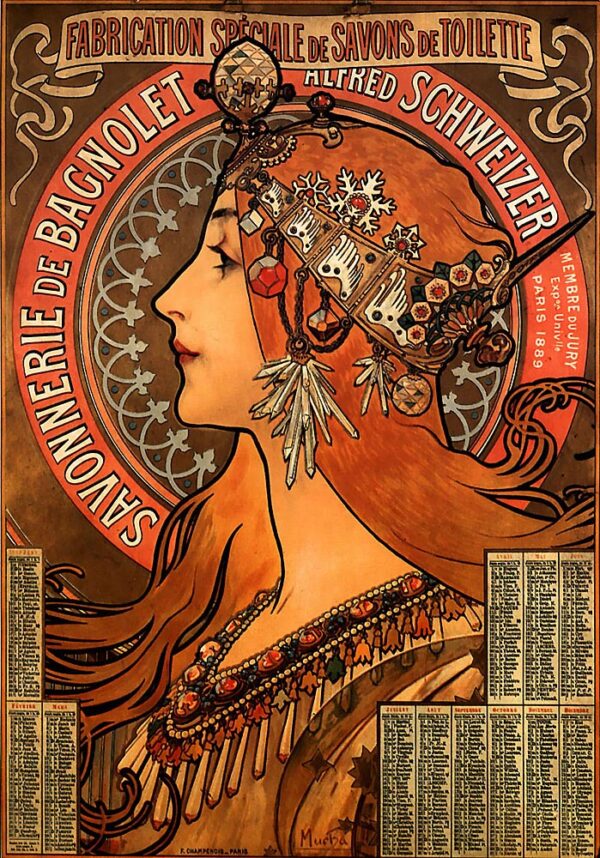
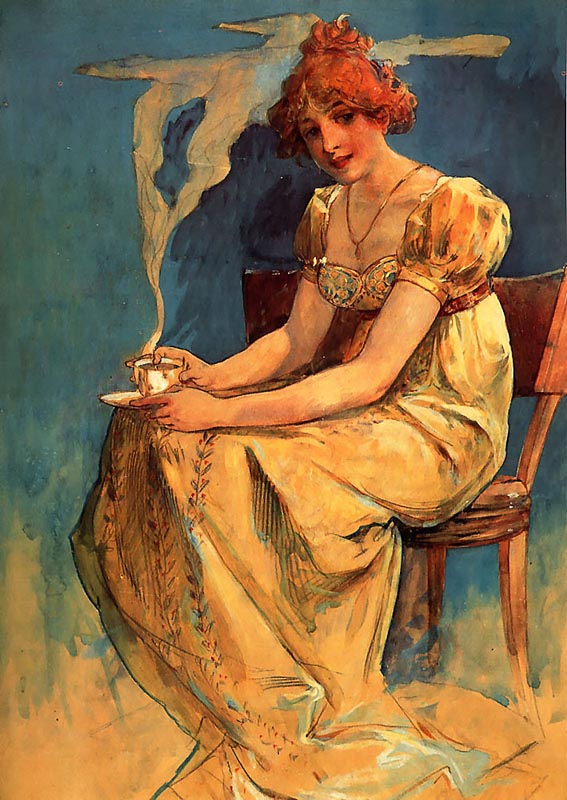
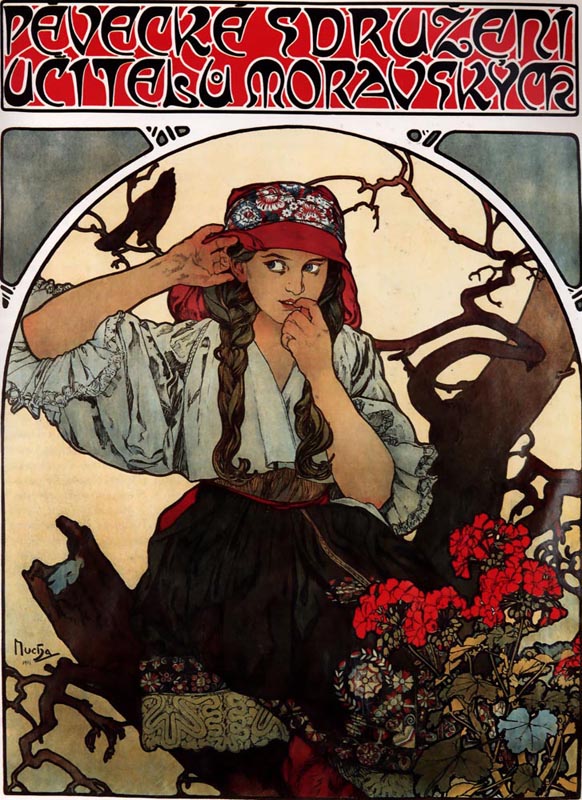
A hand-painted oil on canvas of Benedictine by Mucha, where a poised female figure dissolves into warm botanical ornament across the whole surface.
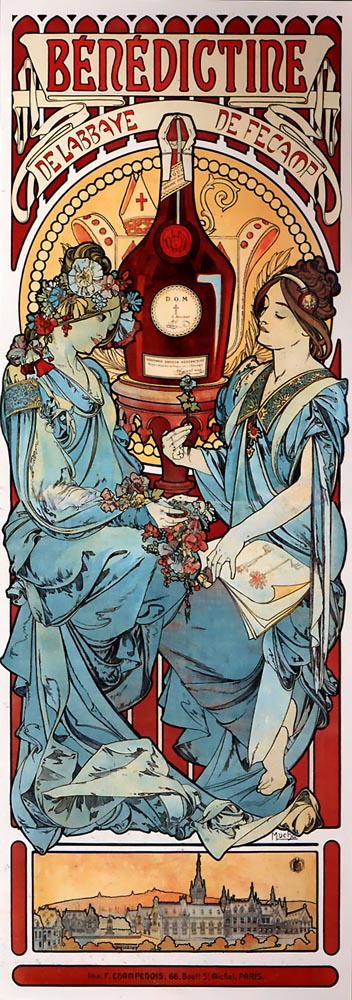
Over the years, Benedictine has settled into the popular memory as one of the defining images of commercial Art Nouveau, a design people recognise even when they cannot place its origin. That recognition rests on the canvas itself, on choices that still hold up under close looking rather than on reputation alone.
The composition sets a single female figure inside a dense frame of organic ornament, her posture calm and upright, her costume folded so completely into the surrounding pattern that the line between body and background nearly disappears. This was the working method Mucha refined during his years designing for Paris theatres and commercial clients: treat the whole surface as one continuous field of interest rather than a figure set against a backdrop. The eye is meant to travel, not settle.
Colour does the same work as line here. Warm golds, soft ochres, and muted greens are graded into each other in long tonal passages rather than snapped together with contrast, which is part of why the image reads as harmonious before it reads as promotional. The design was made to sell a liqueur, yet it carries the full vocabulary that made Mucha a name still cited whenever people talk about a famous artwork from the poster era: interlaced curves, stylised plant forms, a female figure absorbed into her own decoration.
Our reproduction is painted by hand in oil on canvas, not printed, so the layered warmth of the palette and the texture of individual brushstrokes come through with a depth that flat formats only approximate. A trained artist works from the original design, matching its tones and preserving the visible surface of oil paint, which gives the finished piece the weight of an object rather than an image on a wall.
It suits a reader of design history as easily as a room that wants one warm, patterned focal point, and it works as a gift for anyone drawn to the period without needing to say so out loud.
Empty walls flatten a room. A classical artwork restores structure and visual hierarchy. One painting defines the space, anchors furniture, and establishes identity.
Worldwide shipping included. Each painting is produced to order and safely packed for international transport.
All payments are encrypted and processed through trusted payment providers.
Real brushwork, layered oil paint, and durable pigments on museum-quality canvas.
If the result does not meet expectations, return it for a full refund.


Your artwork is painted on premium cotton canvas, then shipped safely rolled in a rigid tube with extra blank canvas border — ready for stretching or framing locally.
Select a handcrafted frame and we’ll deliver your painting fully assembled, protected, and ready to hang.
For safe shipping, framing is available up to a maximum size. Larger sizes will automatically disable the frame option.


Choose “Stretched” to receive your canvas mounted on wooden stretcher bars — perfect if you’ll frame it later or display it as-is.
Gallery Wrap is a deeper, 1.5" style stretcher. The canvas wraps around the sides and is stapled on the back for a clean, modern, frameless look.
We ship with UPS, FedEx, or DHL straight to your door. You’ll receive a tracking number as soon as your order leaves our studio. Typical delivery is 5 to 7 days after dispatch; large, framed, or stretched pieces may take longer depending on the safest shipping route.


Unframed canvases are protected with a film, carefully rolled, and secured inside a rigid shipping tube.

Stretched, Gallery Wrapped, and Framed paintings are wrapped, cushioned with foam protection, and boxed for safe transit.