Loading cart…
No products in the cart.

Original price was: $518.00.$259.00Current price is: $259.00.
A hand-painted oil reproduction of Comanche Giving Arrows to the Medicine Rock by George Catlin, its restrained palette and layered brushwork recreated by hand on canvas for lasting presence on your wall.
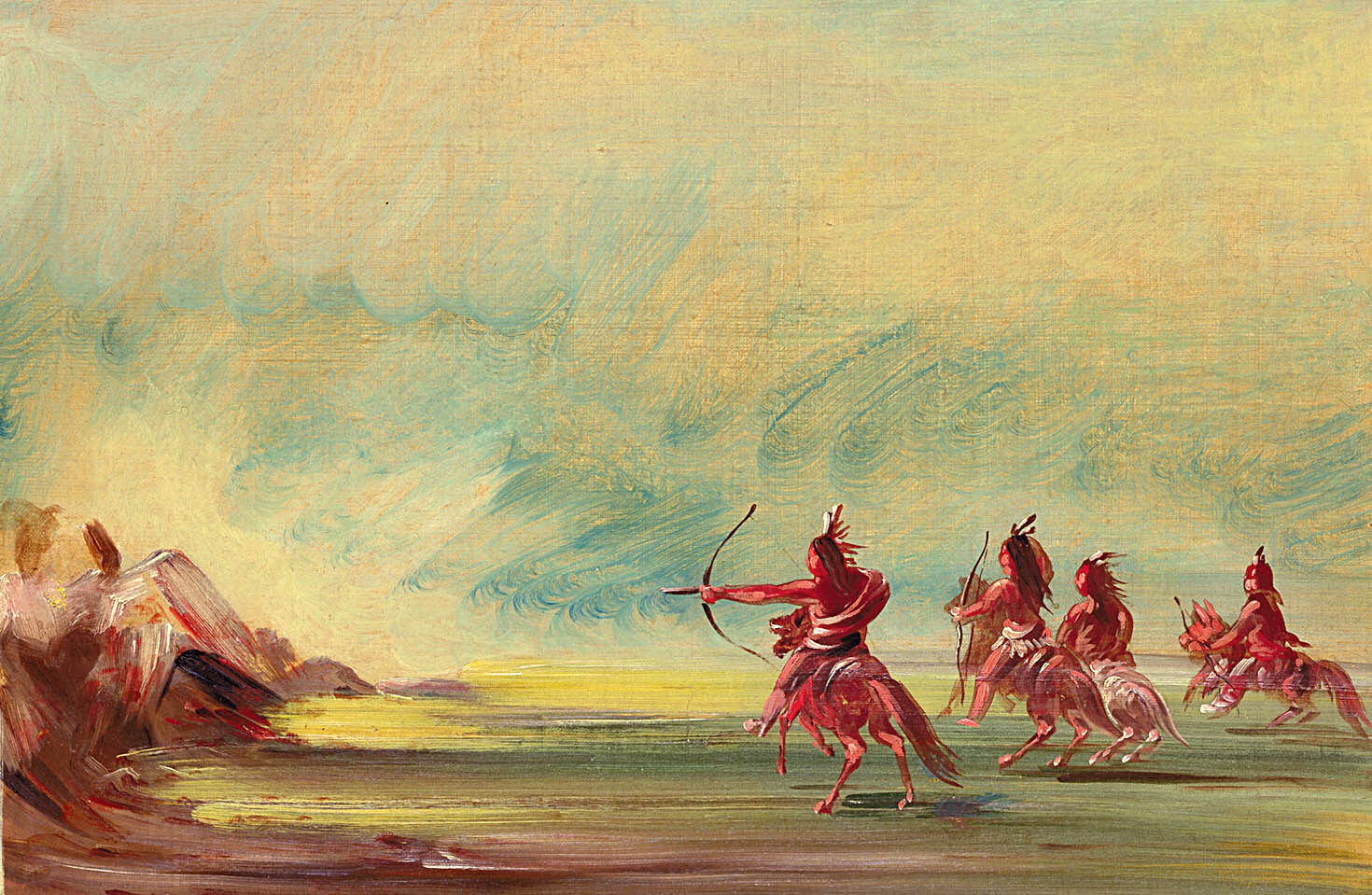
A single raised arm holds a bundle of arrows toward a weathered stone, and that gesture, small against the wide plain and pale sky, sets the entire scene in motion. Catlin builds the whole painting outward from this offering, a moment of ceremony rendered with the plain attentiveness of someone who had actually stood among the Comanche and watched such rites performed.
The composition belongs to the extended body of work Catlin produced during his travels among the Plains tribes in the 1830s, when he set out to record Native American life before, as he believed, it would be irrevocably altered by contact with settlers. Here the ritual act of leaving arrows at a sacred rock becomes both ethnographic record and quiet human drama. The horizon sits low, the sky given generous room, and the figures are arranged with a directness that owes more to reportage than to academic staging. Catlin was not a classically trained painter in the manner of his European contemporaries, and that is part of the strength of the picture: the brushwork is economical, the modelling of the horses and riders built from confident, unfussy strokes rather than elaborate glazing.
Colour is kept close to the earth, ochres and warm greys against a sky rendered in thin, even passages, so that the medicine rock itself, pale and upright, reads as the one fixed point in a scene otherwise full of movement. The tonal restraint gives the painting an atmosphere of held breath, appropriate to a subject that is, after all, an act of reverence.
ByMuseum recreates this scene as a hand-painted oil painting reproduction, worked by a trained artist directly onto artist-grade canvas rather than printed or mechanically reproduced. The palette is matched by eye against the original, the brushwork built up in layers of oil colour so the surface carries genuine texture, the same ridges and worked edges a painter leaves behind. Anyone commissioning a fine art reproduction of this kind receives an object with real depth and variation across its surface, not a flat facsimile. The result rewards the same slow looking the original demands, because a painted surface, unlike a printed one, keeps changing character as the light in a room shifts through the day. Owning a version of this scene, rendered in the same patient medium Catlin used, is a way of keeping that attention alive on your own wall.
Empty walls flatten a room. A classical artwork restores structure and visual hierarchy. One painting defines the space, anchors furniture, and establishes identity.
Worldwide shipping included. Each painting is produced to order and safely packed for international transport.
All payments are encrypted and processed through trusted payment providers.
Real brushwork, layered oil paint, and durable pigments on museum-quality canvas.
If the result does not meet expectations, return it for a full refund.


Your artwork is painted on premium cotton canvas, then shipped safely rolled in a rigid tube with extra blank canvas border — ready for stretching or framing locally.
Select a handcrafted frame and we’ll deliver your painting fully assembled, protected, and ready to hang.
For safe shipping, framing is available up to a maximum size. Larger sizes will automatically disable the frame option.


Choose “Stretched” to receive your canvas mounted on wooden stretcher bars — perfect if you’ll frame it later or display it as-is.
Gallery Wrap is a deeper, 1.5" style stretcher. The canvas wraps around the sides and is stapled on the back for a clean, modern, frameless look.
We ship with UPS, FedEx, or DHL straight to your door. You’ll receive a tracking number as soon as your order leaves our studio. Typical delivery is 4–5 business days after dispatch; large, framed, or stretched pieces may take longer depending on the safest shipping route.


Unframed canvases are protected with a film, carefully rolled, and secured inside a rigid shipping tube.

Stretched, Gallery Wrapped, and Framed paintings are wrapped, cushioned with foam protection, and boxed for safe transit.