Loading cart…
No products in the cart.

Original price was: $518.00.$259.00Current price is: $259.00.
A hand-painted oil reproduction of Dance of the Chiefs, Mouth of the Teton River by George Catlin, painted on canvas to preserve the brushwork and structure of the original scene.
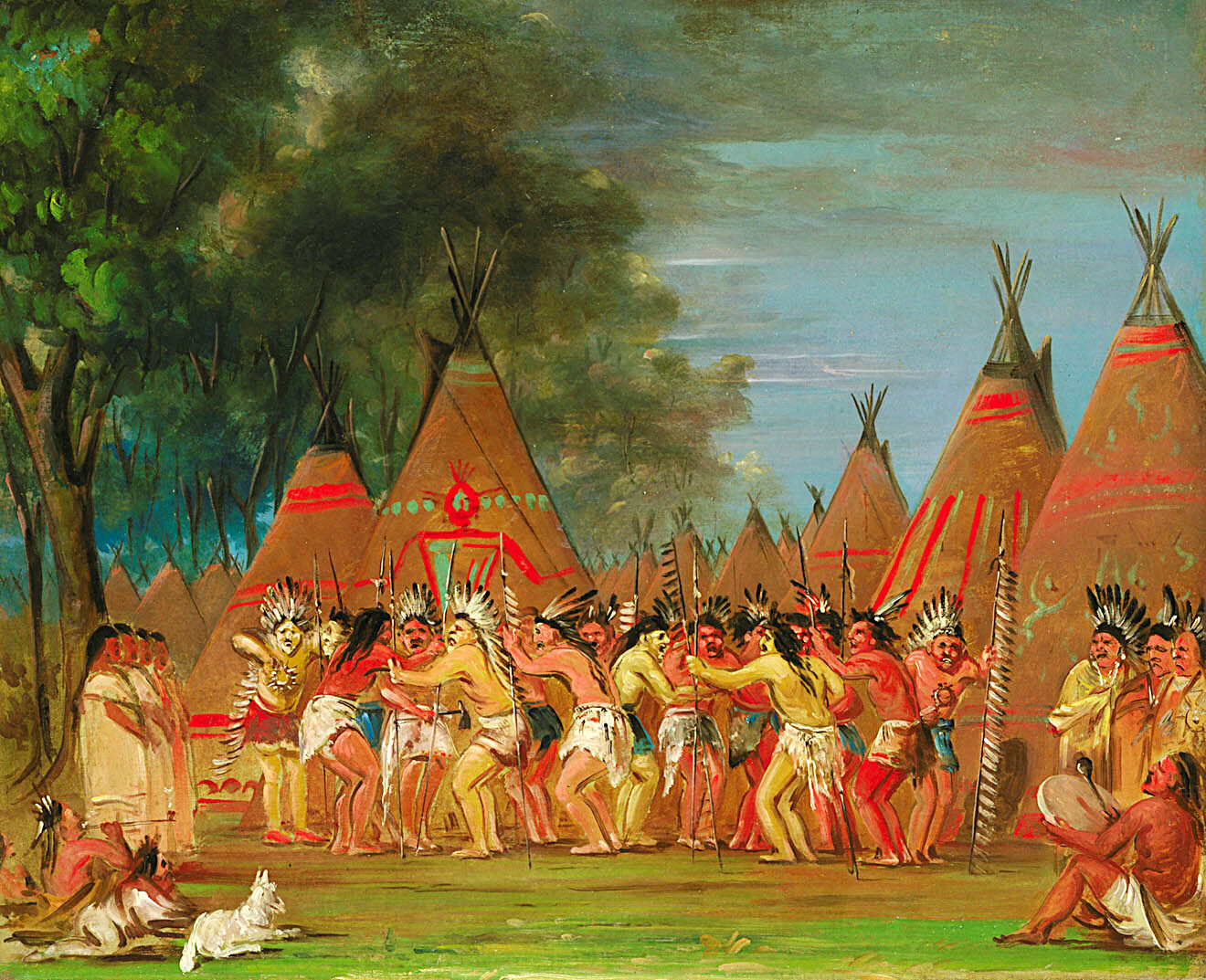
Most of the paintings George Catlin made among the Plains tribes are single figures, portraits set against plain backgrounds, built to record a likeness for the historical archive he was assembling. Dance of the Chiefs, Mouth of the Teton River is different. It is a scene of collective movement, several figures caught in a shared rhythm rather than one sitter posed for the record, and that shift changes everything about how the canvas works.
The composition spreads its weight across a wide, low horizon, with the dancers grouped near the center and the land and sky given equal room to breathe. Catlin was working fast in these years, traveling the upper Missouri and painting what he saw before it could be lost to disease, displacement, or simple neglect by the wider public. That urgency shows in the directness of the brushwork: little fuss, few corrections, a painter more interested in getting the moment down than in polishing it. The palette leans on earth tones, ochres and browns and muted blues, broken by the brighter accents of paint and ornament on the dancers themselves.
What holds the eye is the sense of motion built from stillness. Figures are frozen mid-step, arms raised, bodies turned, and the painter lets the spaces between them carry as much meaning as the figures do. Light falls evenly across the scene rather than dramatizing any one point, which keeps attention moving around the group instead of settling on a single face. It is a document as much as a picture, and the two roles do not compete; each strengthens the other.
ByMuseum artists recreate this canvas as a hand-painted oil painting reproduction, worked in oil on artist-grade canvas rather than printed. Each piece is hand-painted by a professional artist who studies the original palette, the placement of figures, and the texture of the paint surface, then rebuilds the image layer by layer so the brushwork and the weight of the oil color remain visible up close. The result is a painted object with real depth to its surface, not a flat reproduction of one.
A scene like this has kept its hold on viewers for close to two centuries, not because it is polished but because it recorded something true at the moment it was slipping away. Owning a painted version of that record, rather than a printed copy, keeps that same weight of intent on your own wall.
Empty walls flatten a room. A classical artwork restores structure and visual hierarchy. One painting defines the space, anchors furniture, and establishes identity.
Worldwide shipping included. Each painting is produced to order and safely packed for international transport.
All payments are encrypted and processed through trusted payment providers.
Real brushwork, layered oil paint, and durable pigments on museum-quality canvas.
If the result does not meet expectations, return it for a full refund.


Your artwork is painted on premium cotton canvas, then shipped safely rolled in a rigid tube with extra blank canvas border — ready for stretching or framing locally.
Select a handcrafted frame and we’ll deliver your painting fully assembled, protected, and ready to hang.
For safe shipping, framing is available up to a maximum size. Larger sizes will automatically disable the frame option.


Choose “Stretched” to receive your canvas mounted on wooden stretcher bars — perfect if you’ll frame it later or display it as-is.
Gallery Wrap is a deeper, 1.5" style stretcher. The canvas wraps around the sides and is stapled on the back for a clean, modern, frameless look.
We ship with UPS, FedEx, or DHL straight to your door. You’ll receive a tracking number as soon as your order leaves our studio. Typical delivery is 4–5 business days after dispatch; large, framed, or stretched pieces may take longer depending on the safest shipping route.


Unframed canvases are protected with a film, carefully rolled, and secured inside a rigid shipping tube.

Stretched, Gallery Wrapped, and Framed paintings are wrapped, cushioned with foam protection, and boxed for safe transit.