Loading cart…
No products in the cart.

Original price was: $599.00.$299.00Current price is: $299.00.
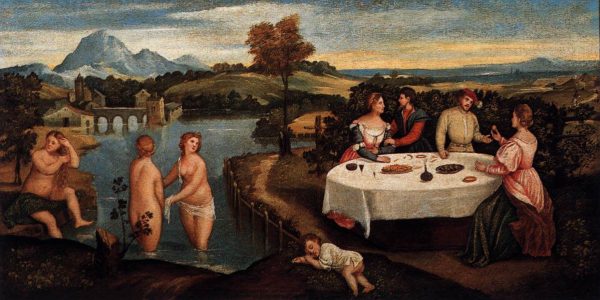
A hand-painted oil reproduction of Dives and Lazarus by Veronese Bonifacio, bringing Venetian light and tonal contrast to canvas with genuine brushwork and depth.
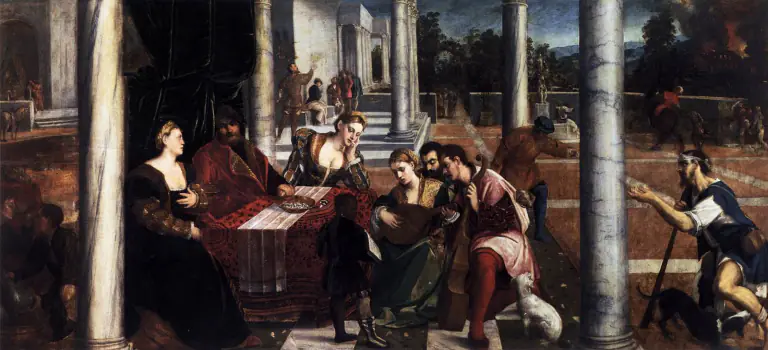
In the workshops of sixteenth-century Venice, biblical parables were often painted less as sermons than as opportunities for spectacle, and Dives and Lazarus belongs to that tradition. The picture emerges from the milieu of Bonifacio de Pitati, the Veronese-born painter who established himself in Venice and became known simply as Veronese Bonifacio, absorbing the citial glow and material richness that defined painting in the lagoon city during those decades. The parable of the rich man and the beggar at his gate gave the artist license to contrast luxury with deprivation within a single frame, a theme suited to an age fascinated by both worldly display and moral instruction.
The composition sets the two figures in deliberate opposition, their positions and gestures establishing a visual argument before any narrative detail is read. Warm light falls across draped fabric and laid tables on one side, while cooler shadow gathers around the figure denied entry, and this division of tone does much of the storytelling. Bonifacio handles the transition between these zones with a controlled, almost musical rhythm, letting the eye travel from the brightly lit foreground into quieter recesses of the scene without losing coherence.
What holds the picture together, on closer viewing, is the discipline of the paint handling itself: broad passages of colour are laid in with confidence, then enlivened by smaller touches of highlight and shadow that reward sustained attention. This is characteristic of Venetian practice in the period, where colour and light, rather than line alone, carried the weight of meaning. Bonifacio worked at a moment when Venice prized this kind of luminous, textured surface, and the painting reflects that broader artistic climate as much as it reflects an individual hand.
The ByMuseum version of this fine art reproduction is painted, not printed, by a trained artist working in oil on artist-grade canvas, matching the original palette tone for tone and preserving the rhythm of light and shadow that structures the composition. Particular care goes into the transitions between illuminated and shadowed passages, since this is where the picture does its quiet persuasive work, and into the visible brushwork that gives the surface its material presence. The result is an oil painting reproduction that keeps faith with the original relationships of colour and weight rather than merely approximating them, so what reaches the wall is a painted object with its own depth and texture, not a flattened copy.
Empty walls flatten a room. A classical artwork restores structure and visual hierarchy. One painting defines the space, anchors furniture, and establishes identity.
Worldwide shipping included. Each painting is produced to order and safely packed for international transport.
All payments are encrypted and processed through trusted payment providers.
Real brushwork, layered oil paint, and durable pigments on museum-quality canvas.
If the result does not meet expectations, return it for a full refund.


Your artwork is painted on premium cotton canvas, then shipped safely rolled in a rigid tube with extra blank canvas border — ready for stretching or framing locally.
Select a handcrafted frame and we’ll deliver your painting fully assembled, protected, and ready to hang.
For safe shipping, framing is available up to a maximum size. Larger sizes will automatically disable the frame option.


Choose “Stretched” to receive your canvas mounted on wooden stretcher bars — perfect if you’ll frame it later or display it as-is.
Gallery Wrap is a deeper, 1.5" style stretcher. The canvas wraps around the sides and is stapled on the back for a clean, modern, frameless look.
We ship with UPS, FedEx, or DHL straight to your door. You’ll receive a tracking number as soon as your order leaves our studio. Typical delivery is 5 to 7 days after dispatch; large, framed, or stretched pieces may take longer depending on the safest shipping route.


Unframed canvases are protected with a film, carefully rolled, and secured inside a rigid shipping tube.

Stretched, Gallery Wrapped, and Framed paintings are wrapped, cushioned with foam protection, and boxed for safe transit.

Man Writing a Letter
Gabriel Metsu, c. 1664
The gallery list
Every painting is already 50% off. Join the list and we will send you an extra $15 code, plus first access to new collections.
No spam. Unsubscribe anytime. · Privacy Policy
Welcome
Your $15 code is on its way. Explore the gallery while you wait.