Loading cart…
No products in the cart.

Original price was: $518.00.$259.00Current price is: $259.00.
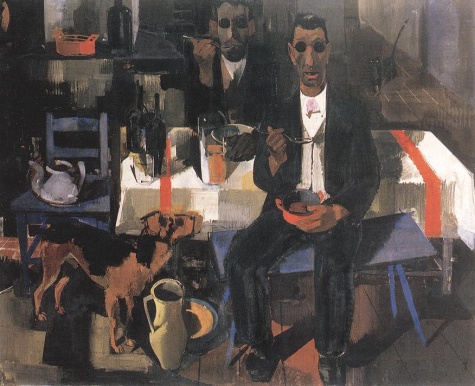
Double Portrait by Vilmos Aba-Novak sets two sitters within one shared frame, its blunt, confident brushwork giving quiet psychological weight to a rare turn toward intimate portraiture.

Some time in the interwar decades, when Vilmos Aba-Novak was moving between the rural subjects that had made his name and the more ambitious figure compositions of his mature years, he turned his attention to a pair of sitters placed together within a single frame. Double portraiture was not his usual territory; he was better known for market crowds, circus performers, and the sunburned faces of Hungarian village life. That he chose, at some point, to slow down and study two people in close proximity says something about where his interests were heading, toward the private register of human connection rather than the public theatre of the group scene.
The composition rests on proximity itself. Two figures share the same pictorial space, their placement suggesting a relationship the viewer is left to interpret, whether familial, marital, or simply circumstantial. Aba-Novak does not explain the bond; he paints it. His brush moves with the directness that marks his best work, laying colour in confident, almost blunt strokes that build the faces from planes of warm and cool tone rather than careful blending. The palette favours the earthy, sunbaked hues typical of his output, applied with enough texture that the paint itself seems to hold the heat of the sitters skin.
What separates this canvas from a formal society portrait is its refusal of polish. The gaze of each figure carries weight without straining for effect, and the psychological charge comes from restraint rather than drama. Painted during a period when Aba-Novak was absorbing the lessons of both Expressionism and the mural tradition he would later pursue, the work shows an artist testing how much feeling a face could hold without resorting to exaggeration.
A painting like this rewards close looking precisely because it withholds easy answers, and that quality survives the transfer from original to hand-painted oil painting reproduction when the work is made by a trained painter rather than run through a printer. Our artists study the original brushwork stroke by stroke, matching the warmth of the skin tones and the rough, immediate texture of the paint surface so that the finished canvas is a handmade oil painting in its own right, not a flat facsimile. Every plane of colour is laid by hand, preserving the ridges and pauses of the original mark-making.
Owning a version of this double portrait means living with a work that still asks the same quiet question it asked when Aba-Novak first set it down: what passes between two people who share a frame. What you receive includes:
Empty walls flatten a room. A classical artwork restores structure and visual hierarchy. One painting defines the space, anchors furniture, and establishes identity.
Worldwide shipping included. Each painting is produced to order and safely packed for international transport.
All payments are encrypted and processed through trusted payment providers.
Real brushwork, layered oil paint, and durable pigments on museum-quality canvas.
If the result does not meet expectations, return it for a full refund.


Your artwork is painted on premium cotton canvas, then shipped safely rolled in a rigid tube with extra blank canvas border — ready for stretching or framing locally.
Select a handcrafted frame and we’ll deliver your painting fully assembled, protected, and ready to hang.
For safe shipping, framing is available up to a maximum size. Larger sizes will automatically disable the frame option.


Choose “Stretched” to receive your canvas mounted on wooden stretcher bars — perfect if you’ll frame it later or display it as-is.
Gallery Wrap is a deeper, 1.5" style stretcher. The canvas wraps around the sides and is stapled on the back for a clean, modern, frameless look.
We ship with UPS, FedEx, or DHL straight to your door. You’ll receive a tracking number as soon as your order leaves our studio. Typical delivery is 4–5 business days after dispatch; large, framed, or stretched pieces may take longer depending on the safest shipping route.


Unframed canvases are protected with a film, carefully rolled, and secured inside a rigid shipping tube.

Stretched, Gallery Wrapped, and Framed paintings are wrapped, cushioned with foam protection, and boxed for safe transit.