Loading cart…
No products in the cart.

Original price was: $599.00.$299.00Current price is: $299.00.
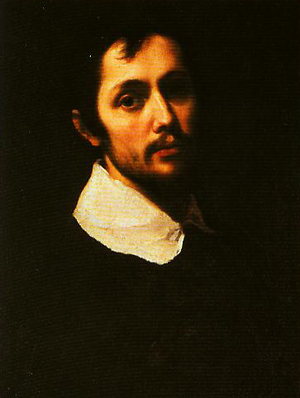
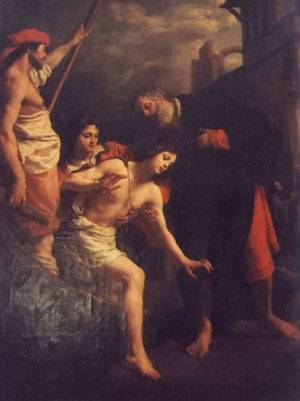
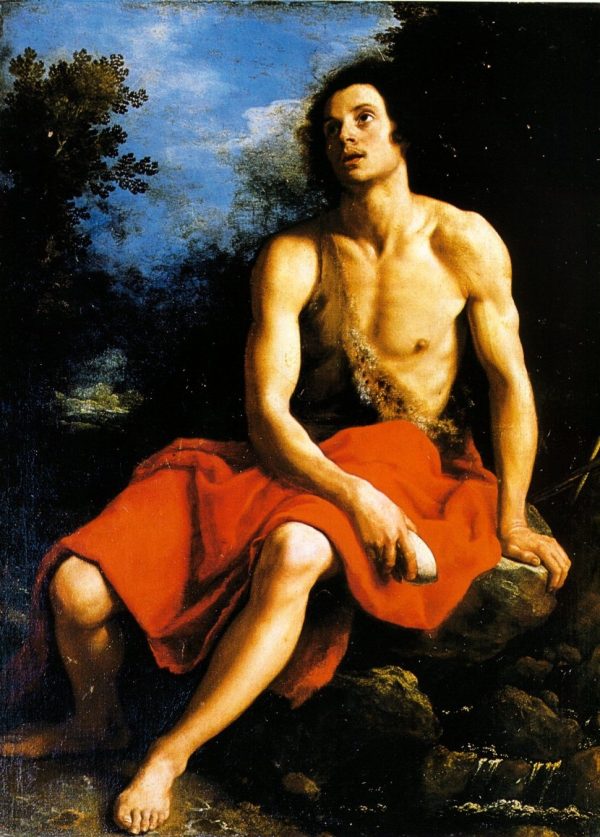
A double portrait of Francesco and Caterina de Medici, painted with the polished naturalism that set Cristofano Allori apart from his Mannerist predecessors, now available as a hand-painted oil on canvas reproduction.

Florentine portraiture of the late sixteenth and early seventeenth centuries prized decorum above all, and this double portrait of Francesco and Caterina de Medici works within that discipline while quietly testing its limits. Where an earlier generation of court painters had favored rigid frontality and flattened surfaces, this canvas moves toward something softer and more observant, a picture that still honors rank but no longer hides the people beneath it.
The composition sets the two sitters in careful balance, their costume, posture, and expression weighted with equal deliberateness so that neither figure overwhelms the other. This is portraiture built to satisfy dynastic expectation: the fall of fabric, the set of the shoulders, the directness of the gaze all speak to status considered and arranged. Yet the handling of light, graded finely across faces and cloth, and the harmonious relationships of tone throughout the palette, point to a sensibility less interested in display for its own sake than in the specific presence of the two people before him.
Cristofano Allori worked at a moment when Florentine Mannerism was giving way to a more naturalistic, psychologically alert mode of painting, and his portraits register that shift clearly. He retained the polish and surface refinement his patrons required while allowing individual character to surface through subtle means: a tilt of the head, an unforced steadiness in the eyes, tonal shifts built up through patient glazing rather than sharp contrast. The result is a picture that commemorates its sitters without reducing them to emblems of their family name.
A hand-painted oil painting reproduction of this work sets out to recover exactly that quality. Working as an oil on canvas reproduction rather than a printed copy, the ByMuseum painter builds up the same layered glazes and graded light by hand, matching the palette tone by tone and preserving the texture and brushwork that give the original its quiet authority. What arrives is a painted object, not a facsimile, made by the same slow accumulation of oil colour that Allori himself relied on.
Four centuries on, the picture still holds attention because it asks to be looked at rather than merely recognized, and a version painted in the same medium carries that demand into a private room. What you receive:
Empty walls flatten a room. A classical artwork restores structure and visual hierarchy. One painting defines the space, anchors furniture, and establishes identity.
Worldwide shipping included. Each painting is produced to order and safely packed for international transport.
All payments are encrypted and processed through trusted payment providers.
Real brushwork, layered oil paint, and durable pigments on museum-quality canvas.
If the result does not meet expectations, return it for a full refund.


Your artwork is painted on premium cotton canvas, then shipped safely rolled in a rigid tube with extra blank canvas border — ready for stretching or framing locally.
Select a handcrafted frame and we’ll deliver your painting fully assembled, protected, and ready to hang.
For safe shipping, framing is available up to a maximum size. Larger sizes will automatically disable the frame option.


Choose “Stretched” to receive your canvas mounted on wooden stretcher bars — perfect if you’ll frame it later or display it as-is.
Gallery Wrap is a deeper, 1.5" style stretcher. The canvas wraps around the sides and is stapled on the back for a clean, modern, frameless look.
We ship with UPS, FedEx, or DHL straight to your door. You’ll receive a tracking number as soon as your order leaves our studio. Typical delivery is 5 to 7 days after dispatch; large, framed, or stretched pieces may take longer depending on the safest shipping route.


Unframed canvases are protected with a film, carefully rolled, and secured inside a rigid shipping tube.

Stretched, Gallery Wrapped, and Framed paintings are wrapped, cushioned with foam protection, and boxed for safe transit.
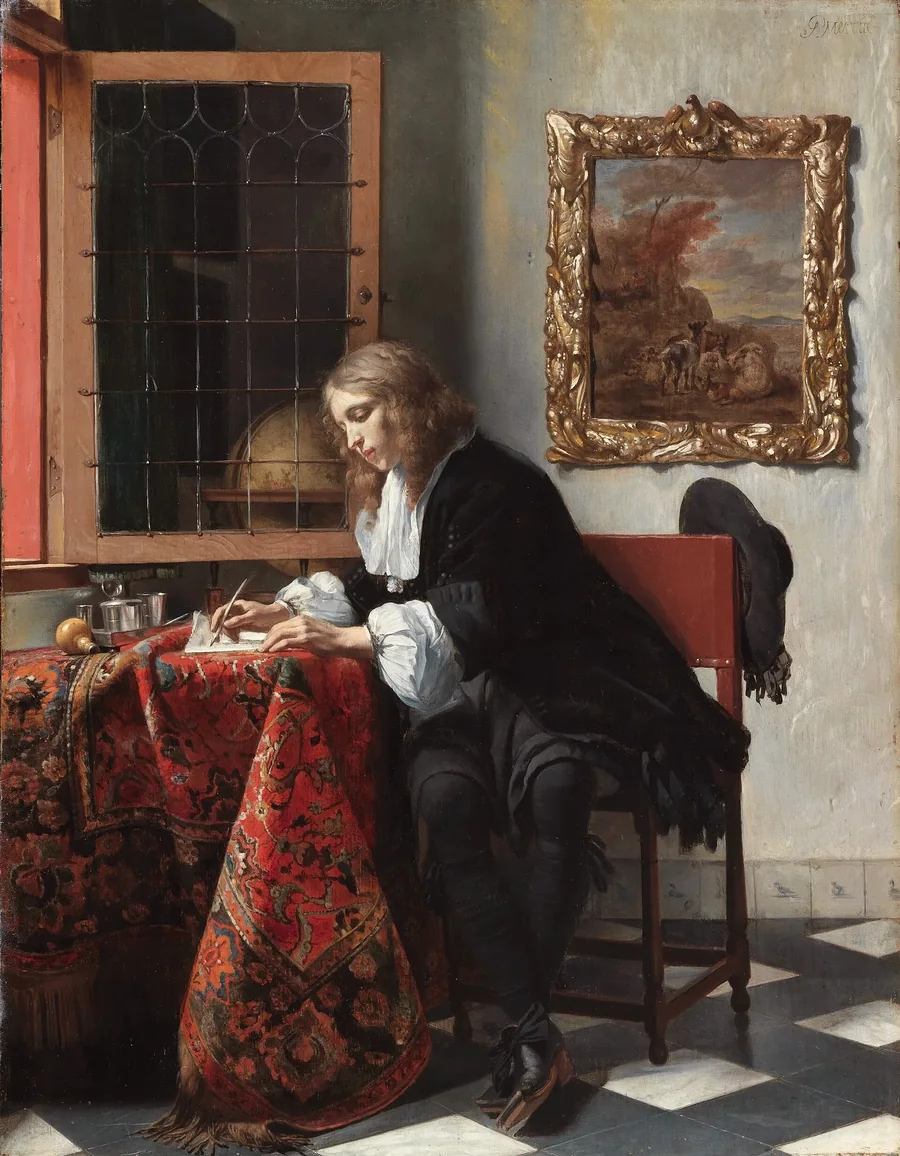
Man Writing a Letter
Gabriel Metsu, c. 1664
The gallery list
Every painting is already 50% off. Join the list and we will send you an extra $15 code, plus first access to new collections.
No spam. Unsubscribe anytime. · Privacy Policy
Welcome
Your $15 code is on its way. Explore the gallery while you wait.