Loading cart…
No products in the cart.

Original price was: $599.00.$299.00Current price is: $299.00.
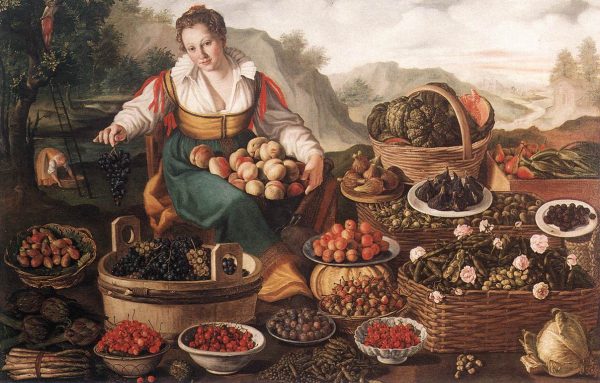
A hand-painted oil on canvas reproduction of Fruit Seller by Vincenzo Campi, its market abundance and steady light rendered true to the original palette.
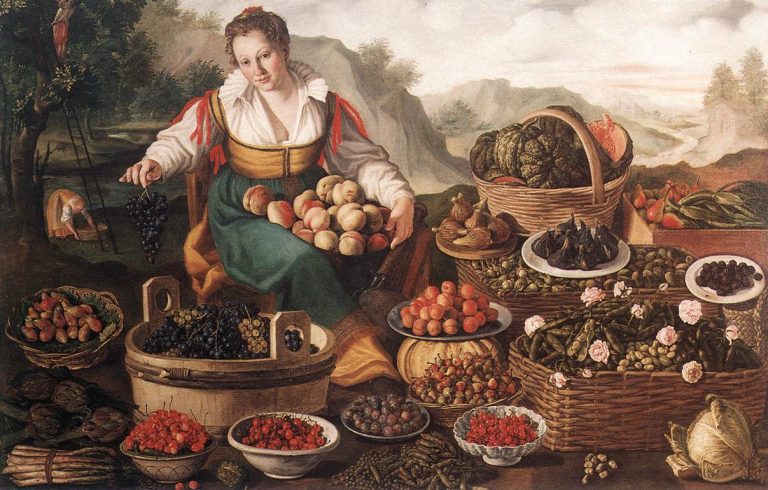
In the later decades of the sixteenth century, painters working in Cremona and Milan began turning their attention to the marketplace itself, to the stalls of fish, meat, and produce that fed the city, and to the men and women who sold them. Vincenzo Campi worked within this circle, and Fruit Seller belongs to that period of his career when ordinary trade became a subject worthy of a large canvas. The painting was less a portrait of one person than a study of abundance, of how a table piled with produce could carry as much visual weight as any grand narrative scene.
The composition centres on a figure surrounded by fruit rendered with a naturalism that borders on the scientific. Grapes, melons, pears, and peaches are set down with careful attention to their weight and ripeness, each one catching light differently depending on its skin and shape. Campi built the scene from close observation, likely working from the produce itself rather than convention, and the result has an almost documentary clarity. The palette runs from deep greens and dusty purples to warm golds, all handled with a directness that gives the still life its own kind of monumentality.
What separates this work from a simple genre scene is the tension between the human figure and the sheer material presence of the goods. Faces in these market paintings are often broad and weathered, painted with the same unsentimental eye as the produce beside them, so that seller and merchandise share the same visual honesty. Light falls evenly across the scene, avoiding dramatic shadow in favour of a steady, almost shop-window clarity that lets every object declare itself. It is a picture built on accumulation rather than narrative, and that accumulation is exactly what gives it force.
Reproducing this kind of density in paint is no small task, and ByMuseum artists take it on by hand, working in oil on artist-grade canvas rather than reaching for a printed substitute. Each oil painting reproduction is built up in layers to keep the texture of the fruit, the grain of the wood, and the weight of the figure true to the original palette. Because it is an oil on canvas reproduction, brush marks stay visible in the surface, giving the piece a depth no flat print can offer.
A canvas like this suits a kitchen, a dining room, or any space where food and hospitality are already part of the room, and it works equally well as a gift for someone drawn to the history of everyday life rather than myth or portraiture. It asks to be looked at slowly.
Empty walls flatten a room. A classical artwork restores structure and visual hierarchy. One painting defines the space, anchors furniture, and establishes identity.
Worldwide shipping included. Each painting is produced to order and safely packed for international transport.
All payments are encrypted and processed through trusted payment providers.
Real brushwork, layered oil paint, and durable pigments on museum-quality canvas.
If the result does not meet expectations, return it for a full refund.


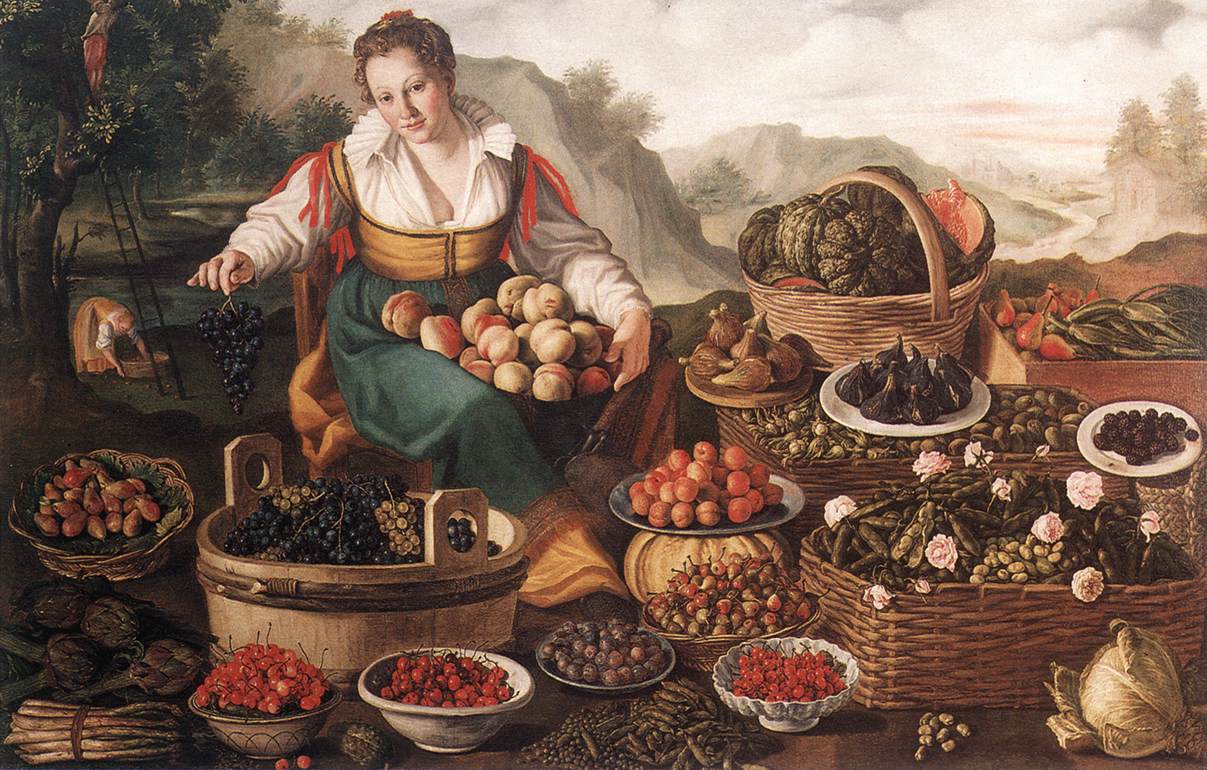
Your artwork is painted on premium cotton canvas, then shipped safely rolled in a rigid tube with extra blank canvas border — ready for stretching or framing locally.
Select a handcrafted frame and we’ll deliver your painting fully assembled, protected, and ready to hang.
For safe shipping, framing is available up to a maximum size. Larger sizes will automatically disable the frame option.


Choose “Stretched” to receive your canvas mounted on wooden stretcher bars — perfect if you’ll frame it later or display it as-is.
Gallery Wrap is a deeper, 1.5" style stretcher. The canvas wraps around the sides and is stapled on the back for a clean, modern, frameless look.
We ship with UPS, FedEx, or DHL straight to your door. You’ll receive a tracking number as soon as your order leaves our studio. Typical delivery is 5 to 7 days after dispatch; large, framed, or stretched pieces may take longer depending on the safest shipping route.


Unframed canvases are protected with a film, carefully rolled, and secured inside a rigid shipping tube.

Stretched, Gallery Wrapped, and Framed paintings are wrapped, cushioned with foam protection, and boxed for safe transit.