Loading cart…
No products in the cart.

Original price was: $518.00.$259.00Current price is: $259.00.
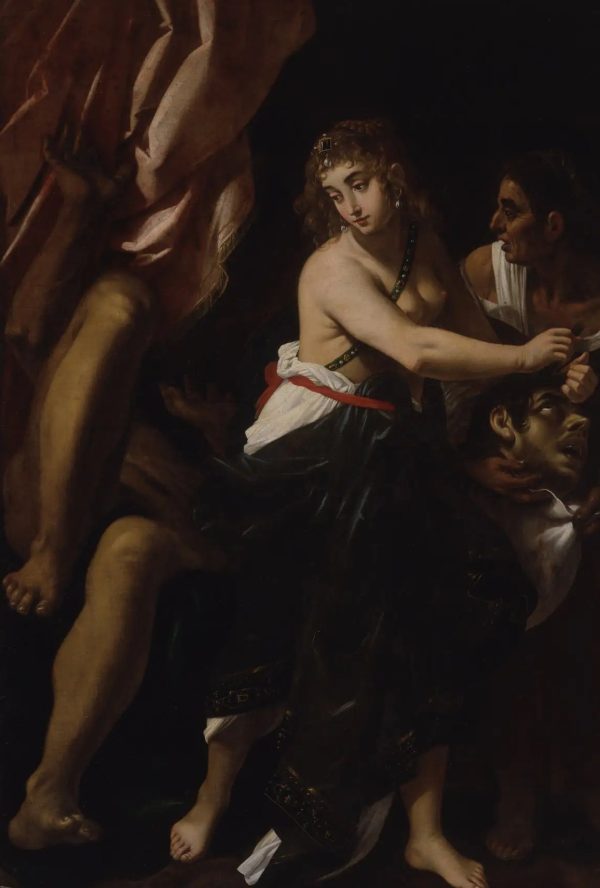
Giovanni Baglione sets warm flesh tones against near-black shadow in this Caravaggesque scene of Judith and Holofernes, offered as a hand-painted oil painting reproduction on canvas.
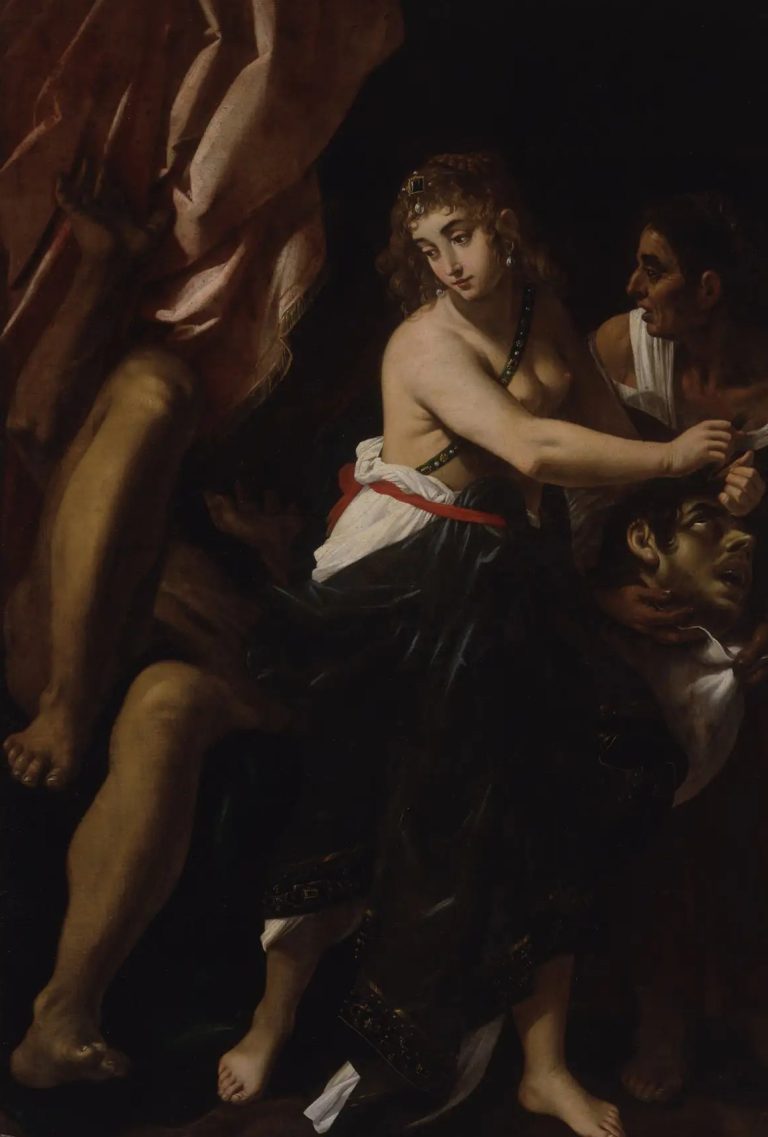
Deep brown shadow meets pale flesh and a slash of red drapery. That is the first thing the eye takes in, before the subject even resolves: a ground so dark it nearly swallows the figures, against which Judith rises in warm, lit tones that seem almost lifted out of the canvas by contrast alone. The colours do the work of the story before the narrative does, which is exactly why this painting holds a wall so well.
Judith and the Head of Holofernes shows the biblical heroine just after the act, holding the severed head of the Assyrian general as proof of what she has done. Her expression is steady rather than triumphant, and Baglione builds her figure with the same firm, direct modelling that Caravaggio had made the standard in Rome around this date. Light falls from one side in a single concentrated beam, picking out the skin of her hands and face while the rest of the scene recedes into a near-black ground. There is little decoration here and no soft transition; forms are cut clean by the light, and the whole picture reads as a single dramatic instant rather than a settled composition.
This is Baglione working close to the height of Roman Caravaggism, absorbing its tonal severity and its taste for psychological weight over ornament. The palette stays narrow on purpose: umbers, dull reds, and pale flesh tones, laid thickly where the light strikes and thinned almost to nothing in shadow. That restraint is what gives the picture its theatrical charge, and it is also what makes the surface rewarding to study up close, since so much of the meaning sits in how the paint itself is handled rather than in incident or detail.
ByMuseum artists paint this hand-painted oil painting reproduction by hand in oil on canvas, working from the original palette so the deep umbers and the lit passages of flesh keep their weight and contrast. Brushwork is built up in layers rather than printed flat, so the surface carries real texture where the paint is thick and real depth where it is thin, much as a hand-painted replica of a seventeenth-century Roman painting should. The result is a painted object you can stand close to and read the way you would the original, not a flat facsimile of it.
Live with it for a while and it keeps giving something back. The shadow that looked simply black at first will show its browns and greens on a slow evening. The line of the arm will seem steadier some days, more tense on others, depending on the light in the room. That slow change is part of what a hand-painted canvas offers that a print cannot.
Empty walls flatten a room. A classical artwork restores structure and visual hierarchy. One painting defines the space, anchors furniture, and establishes identity.
Worldwide shipping included. Each painting is produced to order and safely packed for international transport.
All payments are encrypted and processed through trusted payment providers.
Real brushwork, layered oil paint, and durable pigments on museum-quality canvas.
If the result does not meet expectations, return it for a full refund.


Your artwork is painted on premium cotton canvas, then shipped safely rolled in a rigid tube with extra blank canvas border — ready for stretching or framing locally.
Select a handcrafted frame and we’ll deliver your painting fully assembled, protected, and ready to hang.
For safe shipping, framing is available up to a maximum size. Larger sizes will automatically disable the frame option.


Choose “Stretched” to receive your canvas mounted on wooden stretcher bars — perfect if you’ll frame it later or display it as-is.
Gallery Wrap is a deeper, 1.5" style stretcher. The canvas wraps around the sides and is stapled on the back for a clean, modern, frameless look.
We ship with UPS, FedEx, or DHL straight to your door. You’ll receive a tracking number as soon as your order leaves our studio. Typical delivery is 5 to 7 days after dispatch; large, framed, or stretched pieces may take longer depending on the safest shipping route.


Unframed canvases are protected with a film, carefully rolled, and secured inside a rigid shipping tube.

Stretched, Gallery Wrapped, and Framed paintings are wrapped, cushioned with foam protection, and boxed for safe transit.