Loading cart…
No products in the cart.

Original price was: $518.00.$259.00Current price is: $259.00.
A hand-painted oil reproduction of Kut tee o tub bee, How Did He Kill, a Noted Brave by George Catlin, capturing the directness and quiet detail of his Plains portraiture on canvas.
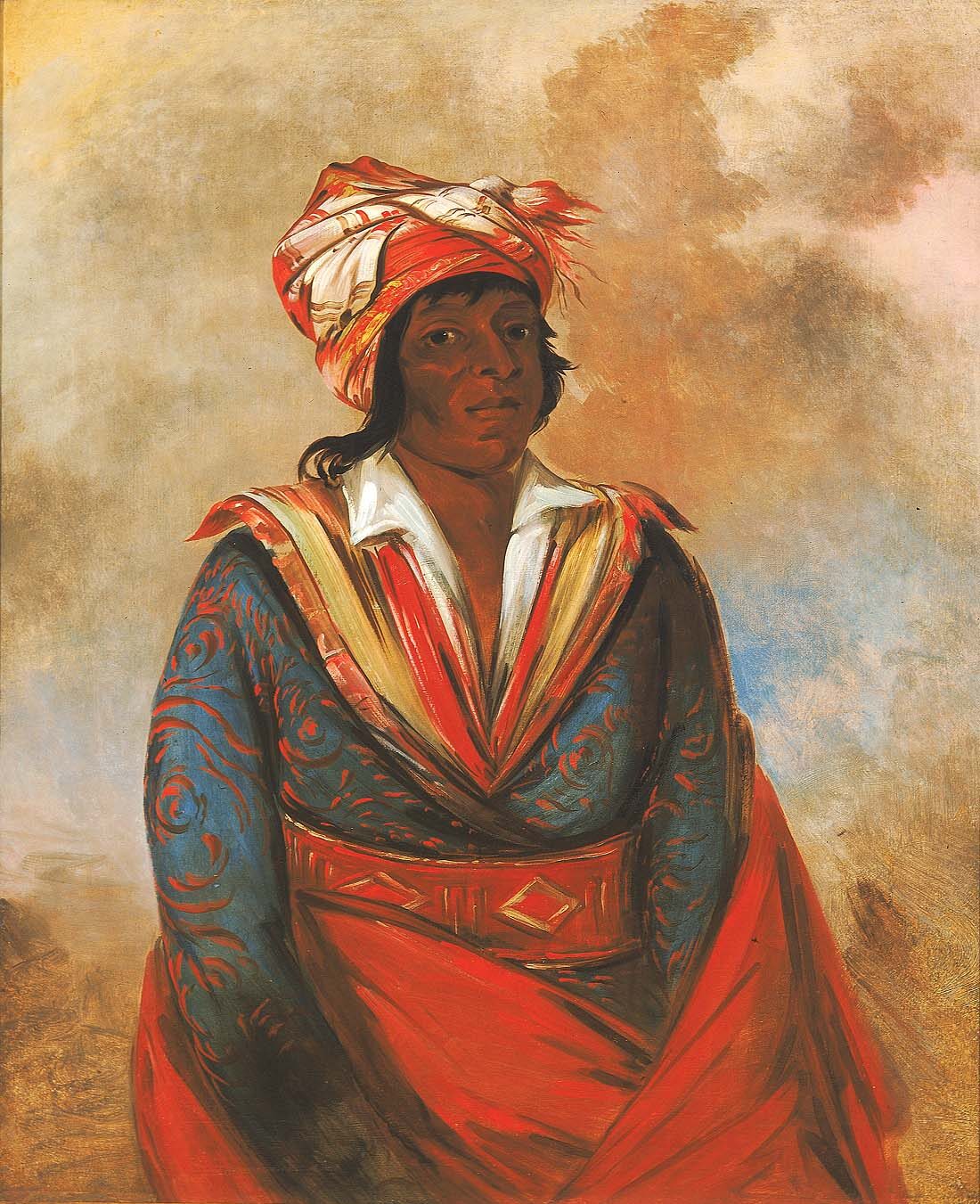
In the 1830s, George Catlin travelled through the American West and Plains with the intention of recording Native American leaders and warriors before the pressures of westward expansion could erase their world from memory. Kut tee o tub bee, How Did He Kill, a Noted Brave belongs to this ambitious project, one man working largely on his own initiative to build a visual record of a culture he believed was disappearing. The portrait was made on the spot, likely during one of the expeditions that took Catlin among the Choctaw and other Southern tribes, and it carries the directness of a painter working from life rather than from studio invention.
The composition centres firmly on the sitter, a warrior identified by name and reputation rather than treated as an anonymous type, and Catlin gives him a stillness that reads as dignity rather than passivity. Tonal range is kept relatively narrow, with the figure emerging from a muted ground through careful modelling of the face and the ornamentation he wears, so that attention settles on expression and bearing before it moves to costume detail. Edges are handled with a directness typical of Catlin, decisive rather than blended, which suits the urgency of a working method that had to keep pace with sitters who could not always be persuaded to stay long.
Chromatic accents, likely in the paint applied to skin or in feather and bead ornament, punctuate the otherwise restrained palette and carry much of the visual interest at close range. This economy of means, broad passages of quiet colour set against small, precise notes of detail, reflects both the conditions under which Catlin worked and his instinct for what mattered in a portrait meant to document as much as to please. The painting sits within the wider ethnographic ambition of his career, made at a moment when he understood himself to be a witness as much as an artist.
Reproducing this history in a fine art reproduction asks for the same directness that shaped the original. ByMuseum painters work by hand in oil on canvas, matching the restrained palette and the decisive, unblended edges that give the portrait its presence, so that the surface carries genuine brushwork and impasto rather than a flat printed image. The result is an oil painting reproduction built as a painted object, with the depth and slight unevenness of colour that come only from applied pigment, suited to a collector who looks closely at how a surface has been made and not only at what it depicts.
This is a painting for someone who values documentary portraiture and the history behind it as much as the image itself, whether hung as a single statement piece or placed among other studies of the period. It suits a room where close viewing is expected, a study or a library, where the small chromatic accents and the modelling of the face reward attention rather than being taken in from across a room.
Empty walls flatten a room. A classical artwork restores structure and visual hierarchy. One painting defines the space, anchors furniture, and establishes identity.
Worldwide shipping included. Each painting is produced to order and safely packed for international transport.
All payments are encrypted and processed through trusted payment providers.
Real brushwork, layered oil paint, and durable pigments on museum-quality canvas.
If the result does not meet expectations, return it for a full refund.


Your artwork is painted on premium cotton canvas, then shipped safely rolled in a rigid tube with extra blank canvas border — ready for stretching or framing locally.
Select a handcrafted frame and we’ll deliver your painting fully assembled, protected, and ready to hang.
For safe shipping, framing is available up to a maximum size. Larger sizes will automatically disable the frame option.


Choose “Stretched” to receive your canvas mounted on wooden stretcher bars — perfect if you’ll frame it later or display it as-is.
Gallery Wrap is a deeper, 1.5" style stretcher. The canvas wraps around the sides and is stapled on the back for a clean, modern, frameless look.
We ship with UPS, FedEx, or DHL straight to your door. You’ll receive a tracking number as soon as your order leaves our studio. Typical delivery is 4–5 business days after dispatch; large, framed, or stretched pieces may take longer depending on the safest shipping route.


Unframed canvases are protected with a film, carefully rolled, and secured inside a rigid shipping tube.

Stretched, Gallery Wrapped, and Framed paintings are wrapped, cushioned with foam protection, and boxed for safe transit.