Loading cart…
No products in the cart.


Hang Little Boat where the light shifts through the day, near a window or above a quiet reading chair, and the room takes on a settled, contemplative feel. It is a painting that rewards a second look rather than demanding a first one, which makes it suited to spaces where people actually sit and linger.
Imre Amos painted within the currents of European Expressionism, and this work carries the movement quiet toward figuration without losing its emotional charge. The boat sits within a composition built on balance rather than drama: forms are arranged so the eye moves easily from the central subject out into the surrounding space, and back again. Colour is handled with restraint, laid in passages that shift gradually rather than sharply, giving the picture a sense of air and depth around a simple, direct subject.
The brushwork moves between tight, considered detail near the boat and looser, more open handling toward the edges of the scene. That contrast gives the painting its structure: a place for the eye to rest, and a place for it to wander. It belongs to a body of work in which Amos treated ordinary subjects with a seriousness usually reserved for grander themes, and the painting still carries that quiet weight.
ByMuseum recreates this work as a hand-painted oil painting reproduction, built by a trained painter working in oil on artist-grade canvas rather than printed onto it. The palette is matched by eye, the brushwork is laid down stroke by stroke, and the finished surface carries the same texture and depth found in a painted original, which is what separates a museum quality reproduction from anything produced by machine.
Live with it for a while and the painting keeps giving back. Details that seem plain at first, a shift in tone along the water, a change of pressure in the brush, become more visible the longer it stays on the wall, and the picture never quite settles into being merely familiar.
Empty walls flatten a room. A classical artwork restores structure and visual hierarchy. One painting defines the space, anchors furniture, and establishes identity.
Worldwide shipping included. Each painting is produced to order and safely packed for international transport.
All payments are encrypted and processed through trusted payment providers.
Real brushwork, layered oil paint, and durable pigments on museum-quality canvas.
If the result does not meet expectations, return it for a full refund.


Your artwork is painted on premium cotton canvas, then shipped safely rolled in a rigid tube with extra blank canvas border — ready for stretching or framing locally.
Select a handcrafted frame and we’ll deliver your painting fully assembled, protected, and ready to hang.
For safe shipping, framing is available up to a maximum size. Larger sizes will automatically disable the frame option.


Choose “Stretched” to receive your canvas mounted on wooden stretcher bars — perfect if you’ll frame it later or display it as-is.
Gallery Wrap is a deeper, 1.5" style stretcher. The canvas wraps around the sides and is stapled on the back for a clean, modern, frameless look.
We ship with UPS, FedEx, or DHL straight to your door. You’ll receive a tracking number as soon as your order leaves our studio. Typical delivery is 5 to 7 days after dispatch; large, framed, or stretched pieces may take longer depending on the safest shipping route.


Unframed canvases are protected with a film, carefully rolled, and secured inside a rigid shipping tube.

Stretched, Gallery Wrapped, and Framed paintings are wrapped, cushioned with foam protection, and boxed for safe transit.
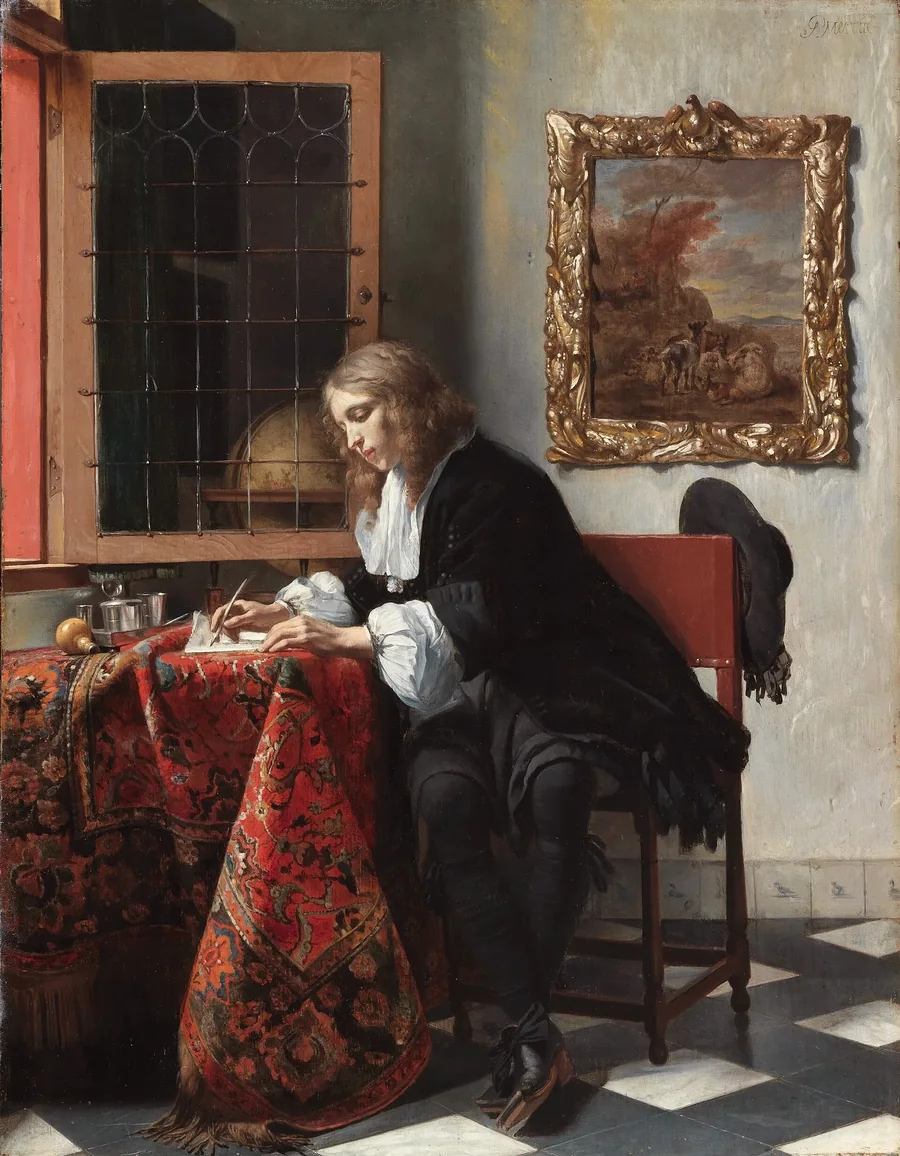
Man Writing a Letter
Gabriel Metsu, c. 1664
The gallery list
Every painting is already 50% off. Join the list and we will send you an extra $15 code, plus first access to new collections.
No spam. Unsubscribe anytime. · Privacy Policy
Welcome
Your $15 code is on its way. Explore the gallery while you wait.


