Loading cart…
No products in the cart.

Original price was: $599.00.$299.00Current price is: $299.00.
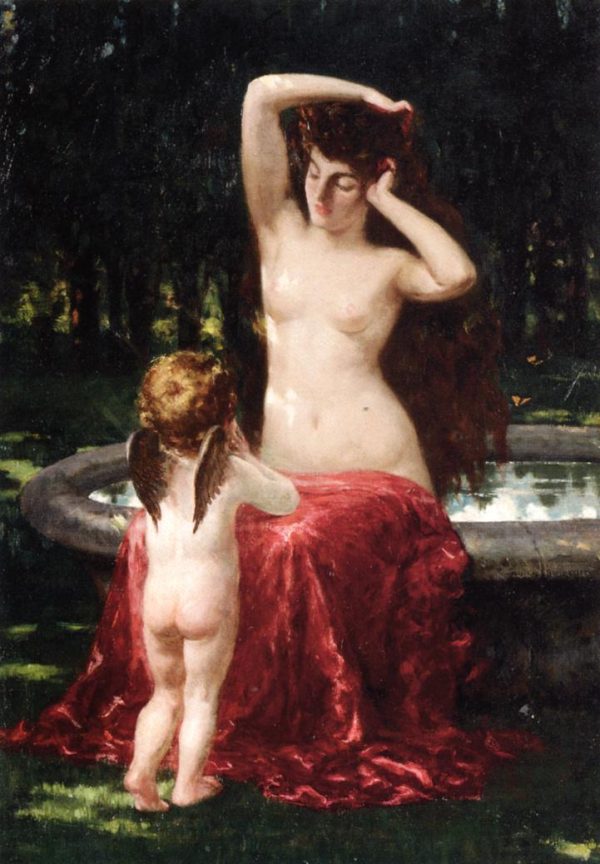
Painted by hand in soft, luminous colour, this oil on canvas reproduction of Nymph and Cupid by Beckwith rewards close, repeated looking.
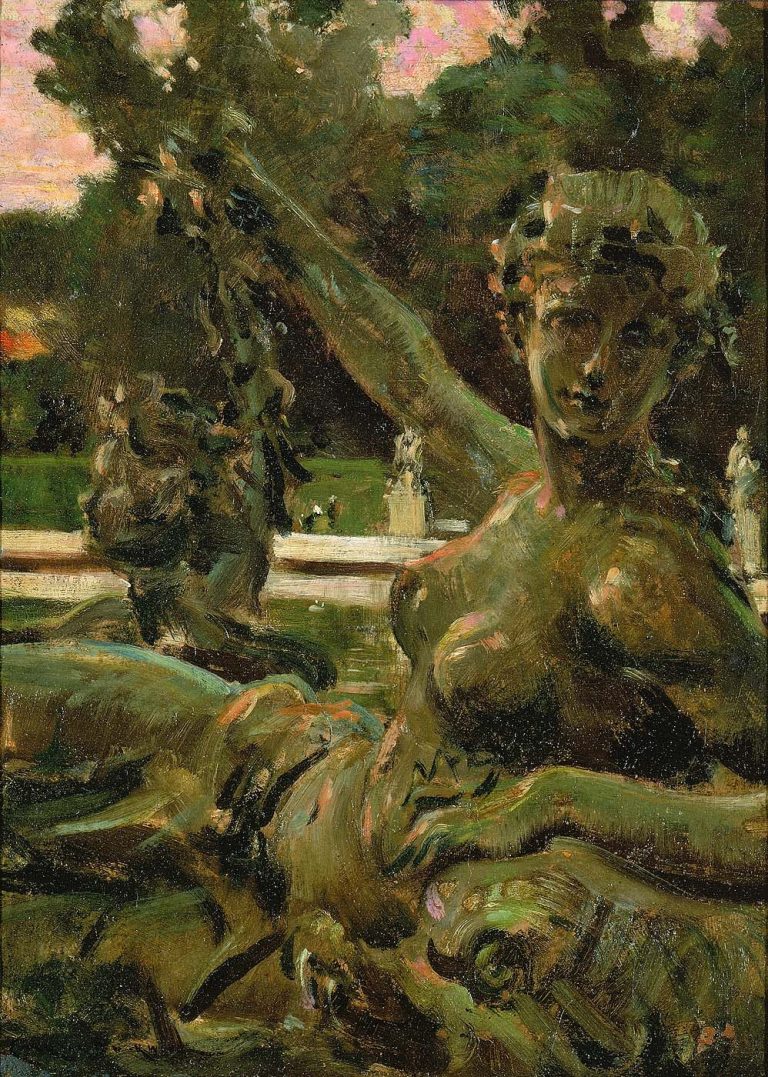
Look closely at the edges first, where the nymph softness of skin meets the cooler shadow behind her; you will notice the paint thins almost to nothing there, letting the ground tone breathe through. That is where the picture reveals itself as a working surface rather than a finished statement, built up in careful layers of glaze and scumble until the flesh seems lit from within. It is the kind of painting that rewards a second and third look, and that alone makes it worth having close at hand.
The subject, once the paint handling draws you in, is a familiar one from classical mythology: a nymph attended by the winged figure of Cupid, love personified as a companion rather than an intruder. Carroll Beckwith, trained in the rigorous academic manner of the later nineteenth century, uses the pairing to explore idealised female form within a framework that generations of European painters had already tested and refined. The two figures share a quiet, unforced intimacy, their postures answering each other across the canvas so that the eye moves easily between them.
What holds the composition together is the palette, kept soft and luminous rather than sharply contrasted, so that colour and light seem to arrive together instead of fighting for attention. Drapery falls in loose, breathing folds, modelled with the same patience Beckwith brought to the skin itself, and the brushwork throughout stays visible without ever calling attention to itself. This balance of graceful figuration and technical restraint marks the picture as the work of a painter fully at ease with the mythological register, confident enough to let subtlety do the work that drama might have done in less capable hands.
A ByMuseum reproduction of this work is not printed; it is painted, by a trained artist working in oil on canvas who studies the original layer by layer and rebuilds it by hand. Every passage of tonal subtlety, from the thinned shadow at the edge of a limb to the density of colour in the drapery, is matched on artist-grade canvas so the surface texture and brushwork survive the transfer. Whether you think of it as an oil painting reproduction or, more specifically, as an oil on canvas reproduction that preserves the depth of the original layered colour, the object that reaches your wall is a genuine painted canvas, not a copy of one.
Live with it for a while and it keeps offering small discoveries: a fold of drapery you had not noticed, a shift of light across the shoulder that changes with the hour. That slow unfolding is exactly what a hand-painted canvas can give that a flat print cannot.
Empty walls flatten a room. A classical artwork restores structure and visual hierarchy. One painting defines the space, anchors furniture, and establishes identity.
Worldwide shipping included. Each painting is produced to order and safely packed for international transport.
All payments are encrypted and processed through trusted payment providers.
Real brushwork, layered oil paint, and durable pigments on museum-quality canvas.
If the result does not meet expectations, return it for a full refund.



Your artwork is painted on premium cotton canvas, then shipped safely rolled in a rigid tube with extra blank canvas border — ready for stretching or framing locally.
Select a handcrafted frame and we’ll deliver your painting fully assembled, protected, and ready to hang.
For safe shipping, framing is available up to a maximum size. Larger sizes will automatically disable the frame option.


Choose “Stretched” to receive your canvas mounted on wooden stretcher bars — perfect if you’ll frame it later or display it as-is.
Gallery Wrap is a deeper, 1.5" style stretcher. The canvas wraps around the sides and is stapled on the back for a clean, modern, frameless look.
We ship with UPS, FedEx, or DHL straight to your door. You’ll receive a tracking number as soon as your order leaves our studio. Typical delivery is 5 to 7 days after dispatch; large, framed, or stretched pieces may take longer depending on the safest shipping route.


Unframed canvases are protected with a film, carefully rolled, and secured inside a rigid shipping tube.

Stretched, Gallery Wrapped, and Framed paintings are wrapped, cushioned with foam protection, and boxed for safe transit.