Loading cart…
No products in the cart.

Original price was: $599.00.$299.00Current price is: $299.00.
A hand-painted oil reproduction of Os ce o la, The Black Drink by George Catlin, matching the original palette and brushwork on canvas for a portrait of quiet, lasting presence.
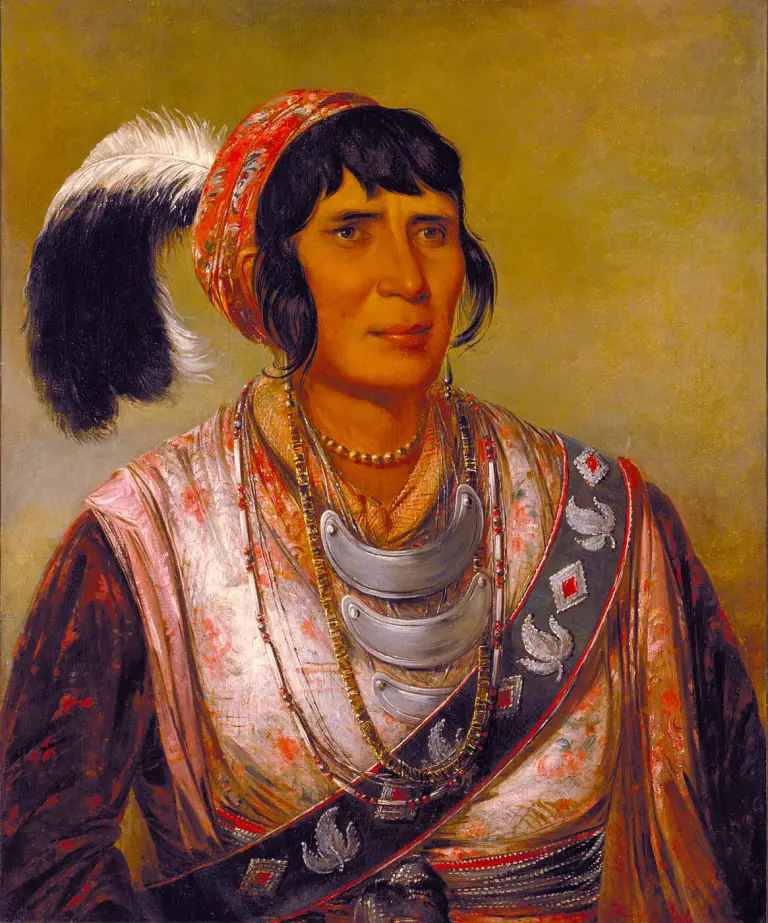
A single standing figure occupies most of the canvas here, close enough to the picture plane that a viewer standing before it meets the subject nearly at eye level, and the modest, portrait-scaled proportions of the work push the encounter toward intimacy rather than spectacle. There is no distant landscape to soften the confrontation, no crowd of incident to distract from the man himself; the frame holds him and little else, and that restraint is itself a decision about how the picture wants to be seen.
The subject is Osceola, painted by George Catlin during his travels among Native American nations in the 1830s, a period when Catlin set himself the task of recording Indigenous leaders and warriors before, as he feared, their ways of life were irrevocably altered. Here the sitter is presented with the marks of rank and distinction that gave him his standing: ornament, posture, and a level, composed gaze that Catlin renders without theatrical exaggeration. Light falls across the face and upper body in a way that models form firmly while leaving the background comparatively quiet, so that attention settles on bearing and expression rather than on surrounding detail.
Catlin worked quickly and often under difficult conditions in the field, and that urgency shows in a directness of brushwork that favours clarity of likeness over refinement of finish. The palette stays disciplined, built from earth tones and measured passages of colour that carry the ornament and skin tones without competing for attention, and the paint surface itself, built up in confident, visible strokes, has the immediacy of a work made from direct observation rather than invention. This economy of means is part of why the portrait has endured as a document as much as a picture, a famous artwork within the record Catlin left of a vanishing world.
The ByMuseum version of this hand-painted oil painting reproduction is built to carry that directness forward rather than smooth it away. A trained artist matches the original palette stroke for stroke, keeps the visible brushwork intact where Catlin worked quickly, and preserves the texture of the paint surface so the raised passages and the thinner, quieter areas both survive translation onto canvas. What is being reproduced is not simply the image but the manner of its making, and that fidelity is what separates a painted copy from a printed one.
Empty walls flatten a room. A classical artwork restores structure and visual hierarchy. One painting defines the space, anchors furniture, and establishes identity.
Worldwide shipping included. Each painting is produced to order and safely packed for international transport.
All payments are encrypted and processed through trusted payment providers.
Real brushwork, layered oil paint, and durable pigments on museum-quality canvas.
If the result does not meet expectations, return it for a full refund.


Your artwork is painted on premium cotton canvas, then shipped safely rolled in a rigid tube with extra blank canvas border — ready for stretching or framing locally.
Select a handcrafted frame and we’ll deliver your painting fully assembled, protected, and ready to hang.
For safe shipping, framing is available up to a maximum size. Larger sizes will automatically disable the frame option.


Choose “Stretched” to receive your canvas mounted on wooden stretcher bars — perfect if you’ll frame it later or display it as-is.
Gallery Wrap is a deeper, 1.5" style stretcher. The canvas wraps around the sides and is stapled on the back for a clean, modern, frameless look.
We ship with UPS, FedEx, or DHL straight to your door. You’ll receive a tracking number as soon as your order leaves our studio. Typical delivery is 5 to 7 days after dispatch; large, framed, or stretched pieces may take longer depending on the safest shipping route.


Unframed canvases are protected with a film, carefully rolled, and secured inside a rigid shipping tube.

Stretched, Gallery Wrapped, and Framed paintings are wrapped, cushioned with foam protection, and boxed for safe transit.

Man Writing a Letter
Gabriel Metsu, c. 1664
The gallery list
Every painting is already 50% off. Join the list and we will send you an extra $15 code, plus first access to new collections.
No spam. Unsubscribe anytime. · Privacy Policy
Welcome
Your $15 code is on its way. Explore the gallery while you wait.