Loading cart…
No products in the cart.

Original price was: $518.00.$259.00Current price is: $259.00.
A hand-painted oil reproduction of Pipe Dance, Assiniboine by George Catlin, its layered brushwork and quiet, even light bringing a documentary scene of Plains ceremony to a wall of the buyer.
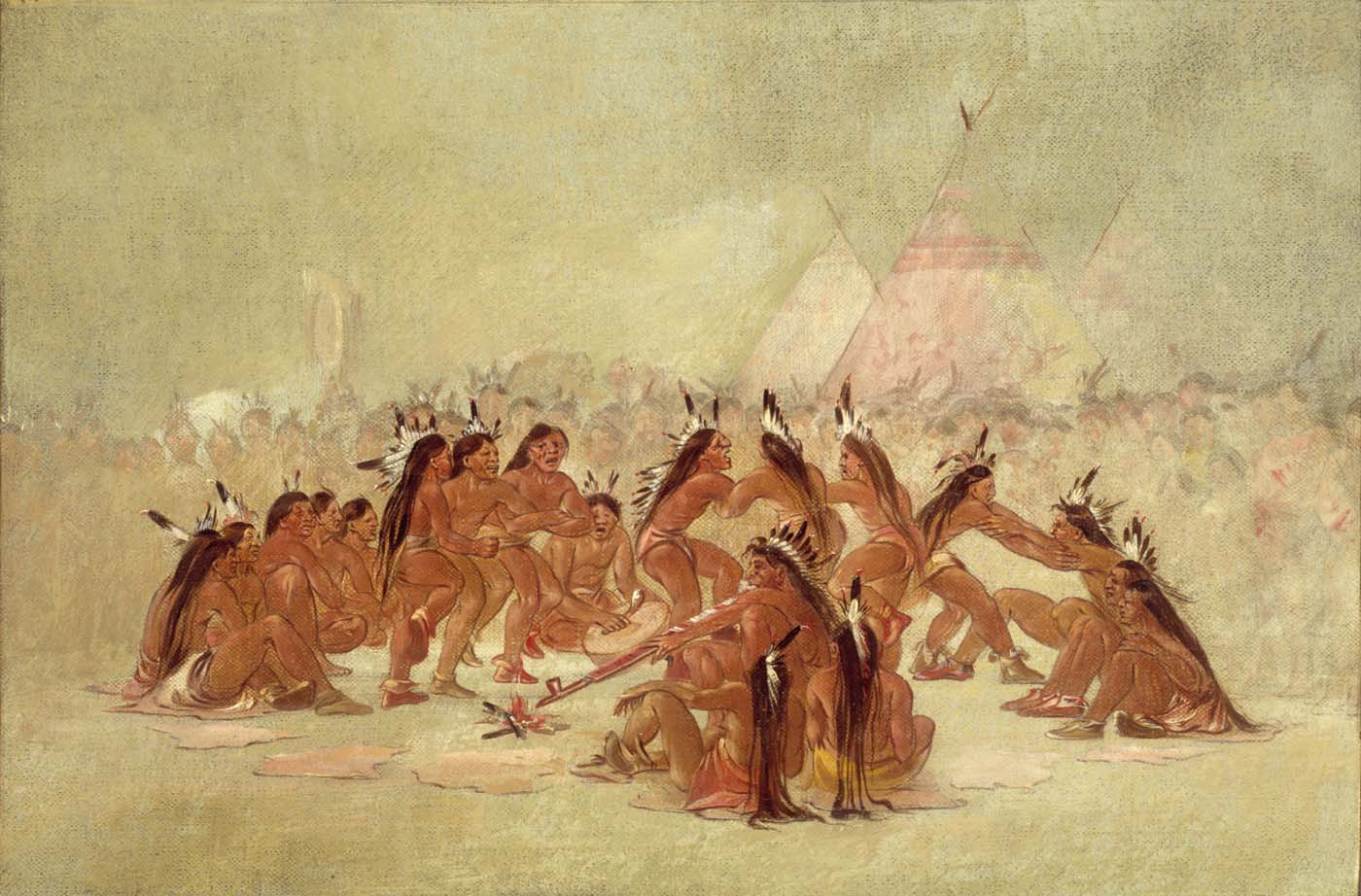
In the early 1830s, George Catlin travelled up the Missouri River into the territory of the Assiniboine people, determined to record the ceremonies of Plains nations before, as he feared, they vanished under the pressure of westward settlement. Pipe Dance, Assiniboine belongs to that campaign of documentary painting, made in the field rather than a studio, with the artist working quickly to preserve gesture, regalia, and the choreography of a ritual he had witnessed firsthand.
The composition gathers a circle of dancers around a central figure holding the ceremonial pipe, the arrangement built in stages that lead the eye from the foreground participants back through the group to the open landscape beyond. Catlin favours clear outline and flat, confident colour over painterly blending, a method suited to recording ornament, posture, and the specific cut of dress worn by each figure. Light falls evenly across the scene, giving equal weight to the dancers and the plain beyond them, so that the eye reads the event as a whole before settling on any single participant.
What holds the picture together is the discipline of that even attention: nothing is dramatised, and the dignity of the scene comes from Catlin recording what stood in front of him. The quieter passages of grass and sky give the eye somewhere to rest between the more detailed passages of costume and gesture, and that alternation is a large part of why the image still reads clearly at a distance.
ByMuseum reproduces Pipe Dance, Assiniboine as a hand-painted oil painting reproduction, worked by a trained painter in oil on artist-grade canvas rather than printed. The palette is matched by eye against the original, the outlines and layered colour built up in the same order Catlin himself might have used, so the surface carries real brushwork and texture rather than a flat photographic likeness. Buyers looking for a hand-painted replica of a documentary scene like this one will find the same figures, the same measured light, translated into a physical object with depth to its surface. Hung where the afternoon light crosses it at an angle, the raised paint catches shadow across the dancers and gives the composition a presence no flat print can offer, at home equally in a study lined with other historical subjects or on its own above a long wall where its horizontal sweep has room to breathe.
Empty walls flatten a room. A classical artwork restores structure and visual hierarchy. One painting defines the space, anchors furniture, and establishes identity.
Worldwide shipping included. Each painting is produced to order and safely packed for international transport.
All payments are encrypted and processed through trusted payment providers.
Real brushwork, layered oil paint, and durable pigments on museum-quality canvas.
If the result does not meet expectations, return it for a full refund.


Your artwork is painted on premium cotton canvas, then shipped safely rolled in a rigid tube with extra blank canvas border — ready for stretching or framing locally.
Select a handcrafted frame and we’ll deliver your painting fully assembled, protected, and ready to hang.
For safe shipping, framing is available up to a maximum size. Larger sizes will automatically disable the frame option.


Choose “Stretched” to receive your canvas mounted on wooden stretcher bars — perfect if you’ll frame it later or display it as-is.
Gallery Wrap is a deeper, 1.5" style stretcher. The canvas wraps around the sides and is stapled on the back for a clean, modern, frameless look.
We ship with UPS, FedEx, or DHL straight to your door. You’ll receive a tracking number as soon as your order leaves our studio. Typical delivery is 4–5 business days after dispatch; large, framed, or stretched pieces may take longer depending on the safest shipping route.


Unframed canvases are protected with a film, carefully rolled, and secured inside a rigid shipping tube.

Stretched, Gallery Wrapped, and Framed paintings are wrapped, cushioned with foam protection, and boxed for safe transit.