Loading cart…
No products in the cart.

Original price was: $599.00.$299.00Current price is: $299.00.
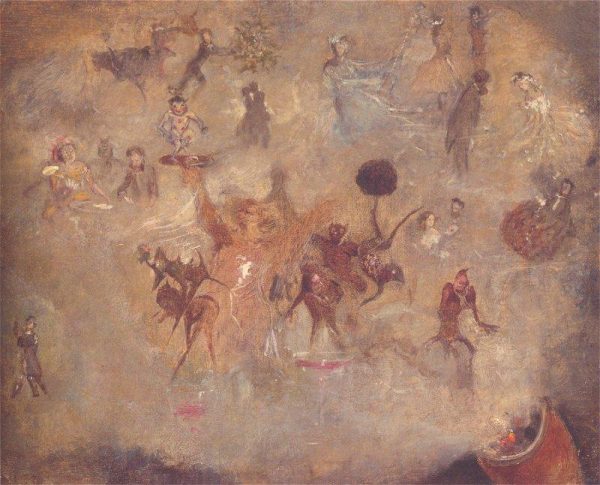
Pipe Dreams by John Anster Fitzgerald is a hand-painted oil-on-canvas reproduction. A figure reclines in a hazy dream scene where shapes appear to drift through the air.

A figure reclines in a hazy dream scene where shapes appear to drift through the air. The muted color and indistinct edges give the image a floating quality.
One detail provides the first point of entry: soft forms drift around the reclining figure. Nearby forms guide attention without detaching it from its setting. Their placement clarifies scale: a gesture or object stands apart from the background, while repeated shapes connect it with the wider scene.
The surface is organized through changes in light, shadow, and mark. Broad passages establish the principal shapes; smaller strokes define edges, folds, clothing, furniture, foliage, or other visible features. This variation matters because the image depends on clearly defined forms and areas that soften into the background. Keeping those contrasts helps the subject retain its visual character.
This hand-painted oil-on-canvas reproduction of Pipe Dreams by John Anster Fitzgerald carries the visible composition onto canvas through color and brushwork. The most prominent detail remains easy to locate, while nearby forms keep it connected to the broader composition. Layered tones and hand-painted marks preserve the visible character of the source image.
The scene reads as a whole and through the relationships between the main subject, nearby forms, and the background. Light and color distinguish these areas while keeping them within a coherent setting. Following attention from the focal area outward shows how visible elements contribute to the full arrangement. This balance of focus and surrounding detail gives the image its particular character beyond the broad subject in its title.
The indistinct shapes have varying degrees of clarity, from a more solid figure to softer passages nearby. This variation supports the dreamy impression without requiring a literal narrative.
Empty walls flatten a room. A classical artwork restores structure and visual hierarchy. One painting defines the space, anchors furniture, and establishes identity.
Worldwide shipping included. Each painting is produced to order and safely packed for international transport.
All payments are encrypted and processed through trusted payment providers.
Real brushwork, layered oil paint, and durable pigments on museum-quality canvas.
If the result does not meet expectations, return it for a full refund.


Your artwork is painted on premium cotton canvas, then shipped safely rolled in a rigid tube with extra blank canvas border — ready for stretching or framing locally.
Select a handcrafted frame and we’ll deliver your painting fully assembled, protected, and ready to hang.
For safe shipping, framing is available up to a maximum size. Larger sizes will automatically disable the frame option.


Choose “Stretched” to receive your canvas mounted on wooden stretcher bars — perfect if you’ll frame it later or display it as-is.
Gallery Wrap is a deeper, 1.5" style stretcher. The canvas wraps around the sides and is stapled on the back for a clean, modern, frameless look.
We ship with UPS, FedEx, or DHL straight to your door. You’ll receive a tracking number as soon as your order leaves our studio. Typical delivery is 5 to 7 days after dispatch; large, framed, or stretched pieces may take longer depending on the safest shipping route.


Unframed canvases are protected with a film, carefully rolled, and secured inside a rigid shipping tube.

Stretched, Gallery Wrapped, and Framed paintings are wrapped, cushioned with foam protection, and boxed for safe transit.

Man Writing a Letter
Gabriel Metsu, c. 1664
The gallery list
Every painting is already 50% off. Join the list and we will send you an extra $15 code, plus first access to new collections.
No spam. Unsubscribe anytime. · Privacy Policy
Welcome
Your $15 code is on its way. Explore the gallery while you wait.