Loading cart…
No products in the cart.

Original price was: $599.00.$299.00Current price is: $299.00.
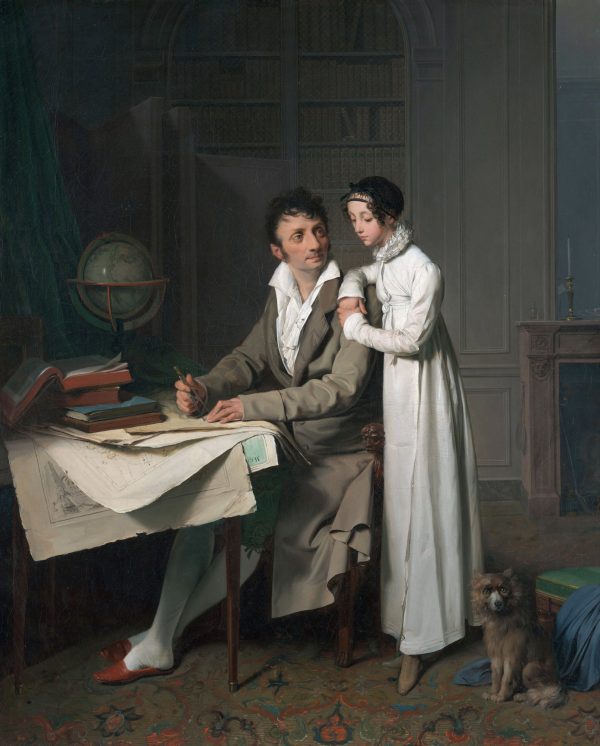
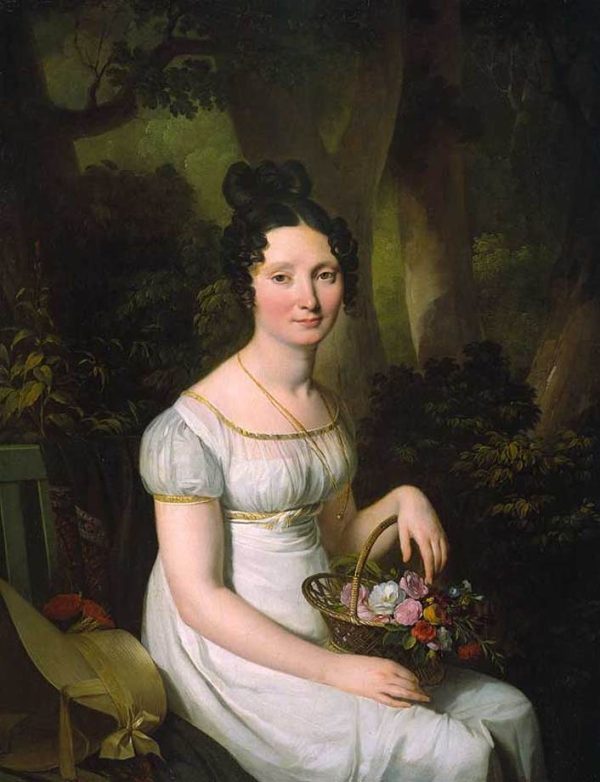
A hand-painted oil reproduction of Portrait of a Lady v by Boilly, recreating the calm precision of a French portrait tradition with layered pigment and individual brushwork.

In the years following the French Revolution, when Paris was rebuilding a social order that still wanted portraits of its women rendered with elegance and restraint, Louis Leopold Boilly turned his attention to a sitter whose identity has not survived alongside the canvas. What remains is the painting itself, a quiet study in bearing and likeness that belongs to a period when Boilly had moved from genre scenes toward the more intimate discipline of portraiture, absorbing lessons from Neoclassicism without surrendering to its coldest formulas.
The composition holds the sitter close to the surface, her presence given weight through careful placement rather than through elaborate setting. Boilly favours a restrained architecture of forms, letting the dominant shapes of head, shoulder, and drapery carry the picture while the intervals around them provide room for the eye to settle. Light falls with a controlled evenness across the face, the kind of illumination Boilly used throughout his career to model flesh with near-porcelain smoothness while keeping the surrounding tones subdued enough to preserve focus.
What distinguishes the work, and what has kept it among the recognisable examples of French portrait painting from this period, is the coherence between mood and structure. The picture reads as a famous painting not through drama but through its economy, every passage of colour and shadow contributing to a single, unified impression of the sitter. Boilly builds form through subtle transitions rather than hard outline, a technique that rewards close viewing and gives the surface a living quality even within its formal restraint.
Recreating this balance in an oil painting reproduction asks a trained painter to work slowly and with attention, matching the original palette tone by tone rather than approximating it from a distance. Each layer of pigment is built up by hand on artist-grade canvas, following the same sequence of underpainting and glazing that would have shaped the original surface, so that the brushwork retains its variation and the finished canvas carries the depth of real oil rather than the flatness of a printed image.
Empty walls flatten a room. A classical artwork restores structure and visual hierarchy. One painting defines the space, anchors furniture, and establishes identity.
Worldwide shipping included. Each painting is produced to order and safely packed for international transport.
All payments are encrypted and processed through trusted payment providers.
Real brushwork, layered oil paint, and durable pigments on museum-quality canvas.
If the result does not meet expectations, return it for a full refund.


Your artwork is painted on premium cotton canvas, then shipped safely rolled in a rigid tube with extra blank canvas border — ready for stretching or framing locally.
Select a handcrafted frame and we’ll deliver your painting fully assembled, protected, and ready to hang.
For safe shipping, framing is available up to a maximum size. Larger sizes will automatically disable the frame option.


Choose “Stretched” to receive your canvas mounted on wooden stretcher bars — perfect if you’ll frame it later or display it as-is.
Gallery Wrap is a deeper, 1.5" style stretcher. The canvas wraps around the sides and is stapled on the back for a clean, modern, frameless look.
We ship with UPS, FedEx, or DHL straight to your door. You’ll receive a tracking number as soon as your order leaves our studio. Typical delivery is 5 to 7 days after dispatch; large, framed, or stretched pieces may take longer depending on the safest shipping route.


Unframed canvases are protected with a film, carefully rolled, and secured inside a rigid shipping tube.

Stretched, Gallery Wrapped, and Framed paintings are wrapped, cushioned with foam protection, and boxed for safe transit.

Man Writing a Letter
Gabriel Metsu, c. 1664
The gallery list
Every painting is already 50% off. Join the list and we will send you an extra $15 code, plus first access to new collections.
No spam. Unsubscribe anytime. · Privacy Policy
Welcome
Your $15 code is on its way. Explore the gallery while you wait.