Loading cart…
No products in the cart.

Original price was: $599.00.$299.00Current price is: $299.00.
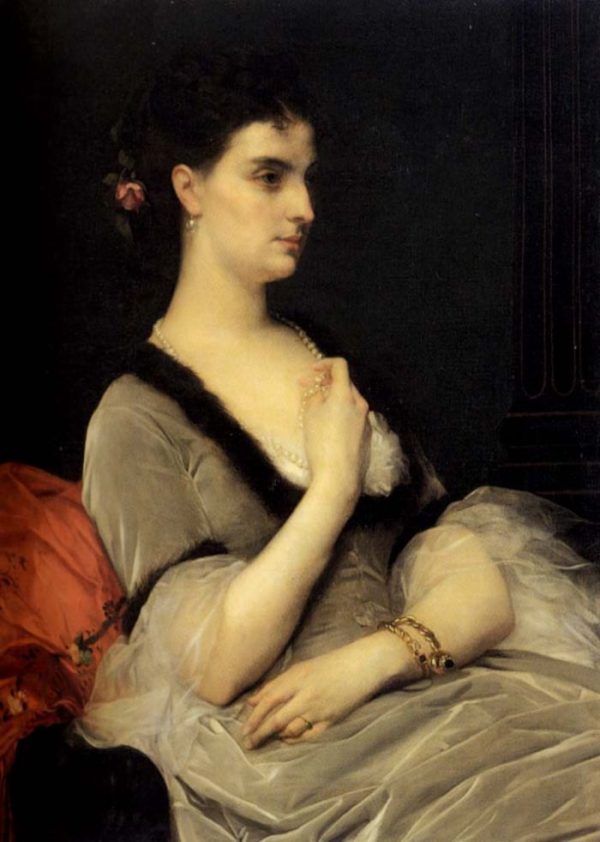
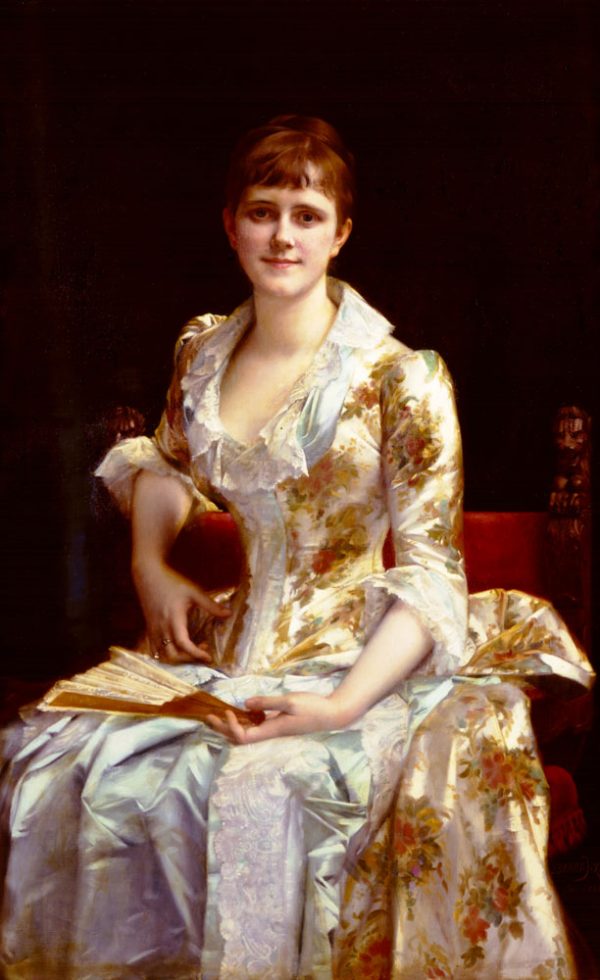
A hand-painted oil reproduction of Portrait of a Young Lady by Alexandre Cabanel, rendered in layered oils to bring this famous painting quiet presence on your wall.

Academic painting in nineteenth-century France prized polish, idealised form, and a smooth finish that concealed the labour behind it, and Portrait of a Young Lady sits comfortably within that tradition while narrowing its ambitions to a single figure treated with quiet exactness. Rather than the mythological or allegorical subjects that made his reputation, Cabanel here turns his attention to portraiture, where the demands of likeness temper the tendencies toward idealisation that mark his more famous compositions.
The sitter occupies the centre of the canvas in a pose built from measured stages, her presence anchored by the careful relationship between figure and surrounding space. Cabanel directs the eye through calibrated shifts in light and tone, reserving his sharpest definition for the face and upper body while letting the peripheral areas soften into restraint. This coordination of decisive and quiet passages, typical of the academic method he practised throughout his career, gives the picture a sense of depth that owes less to dramatic contrast than to disciplined control of value and edge.
Colour is handled with the same discipline, built up in thin, controlled layers that keep the surface even and the transitions gradual, a technique consistent with the training Cabanel received and later passed on as a professor at the Ecole des Beaux-Arts. The result reads as composed rather than spontaneous, a portrait made to reward slow looking rather than an instant impression. A hand-painted oil painting reproduction of this work translates that layered construction back into paint, with a trained artist working in oil on canvas to match the palette, rebuild the tonal transitions, and leave the surface with the texture of an object made by hand rather than a printed image. Owning a reproduction of this famous painting brings that same measured presence into a room built for close attention.
Living with the portrait rewards patience. The restrained handling that first reads as reticence gives way, over repeated viewing, to small decisions in the modelling of light and the placement of shadow that reveal how deliberately the composition was built.
| artists |
|---|
Empty walls flatten a room. A classical artwork restores structure and visual hierarchy. One painting defines the space, anchors furniture, and establishes identity.
Worldwide shipping included. Each painting is produced to order and safely packed for international transport.
All payments are encrypted and processed through trusted payment providers.
Real brushwork, layered oil paint, and durable pigments on museum-quality canvas.
If the result does not meet expectations, return it for a full refund.


Your artwork is painted on premium cotton canvas, then shipped safely rolled in a rigid tube with extra blank canvas border — ready for stretching or framing locally.
Select a handcrafted frame and we’ll deliver your painting fully assembled, protected, and ready to hang.
For safe shipping, framing is available up to a maximum size. Larger sizes will automatically disable the frame option.


Choose “Stretched” to receive your canvas mounted on wooden stretcher bars — perfect if you’ll frame it later or display it as-is.
Gallery Wrap is a deeper, 1.5" style stretcher. The canvas wraps around the sides and is stapled on the back for a clean, modern, frameless look.
We ship with UPS, FedEx, or DHL straight to your door. You’ll receive a tracking number as soon as your order leaves our studio. Typical delivery is 5 to 7 days after dispatch; large, framed, or stretched pieces may take longer depending on the safest shipping route.


Unframed canvases are protected with a film, carefully rolled, and secured inside a rigid shipping tube.

Stretched, Gallery Wrapped, and Framed paintings are wrapped, cushioned with foam protection, and boxed for safe transit.
Academicism
Alexandre Cabanel

Man Writing a Letter
Gabriel Metsu, c. 1664
The gallery list
Every painting is already 50% off. Join the list and we will send you an extra $15 code, plus first access to new collections.
No spam. Unsubscribe anytime. · Privacy Policy
Welcome
Your $15 code is on its way. Explore the gallery while you wait.