Loading cart…
No products in the cart.

Original price was: $599.00.$299.00Current price is: $299.00.
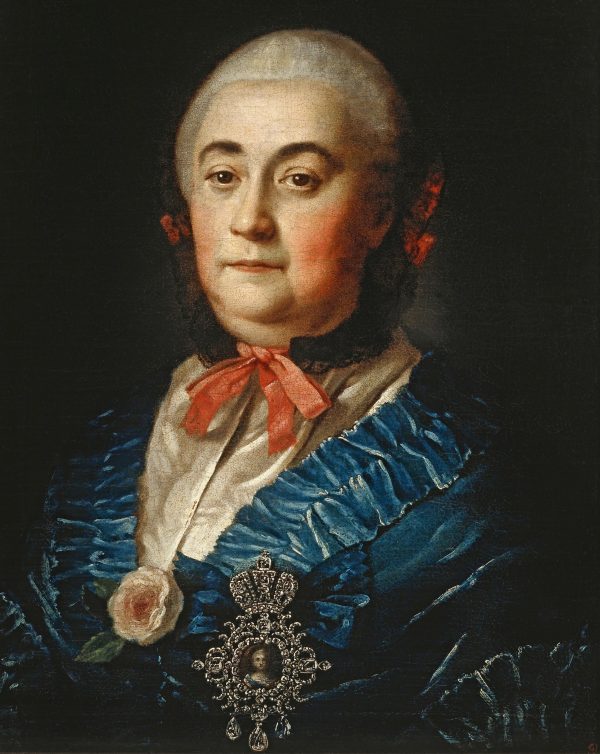
A hand-painted oil on canvas reproduction of Portrait Of Catherine III The Great by Aleksey Antropov, rendered with the tonal restraint that defined the Russian Baroque court portrait.

Court portraiture in eighteenth-century Russia carried a formal language borrowed from the Baroque, tempered by a growing taste for direct, closely observed likeness. Within that tradition, this state portrait of Catherine the Great occupies a particular moment: the empress rendered not as a distant emblem of power but as a figure whose presence, dress, and bearing are described with an almost documentary attentiveness.
Aleksey Antropov builds the composition around the sitter as a fixed, commanding vertical, the regalia and costume handled with the density of detail that court commissions demanded. Gold thread, ermine, and the sheen of formal fabric are picked out with a controlled, deliberate touch, while the face is painted with the plainer, more searching realism that set Antropov apart from his more decorative contemporaries. Light falls in a way that steadies the figure rather than dramatising her, consistent with the restrained end of the Baroque portrait tradition as it was practised at the Russian court.
The tonal structure of the painting rewards close looking. Antropov keeps the background low in key so that the eye settles on the face and hands before travelling outward to the costume, and the transitions between shadow and highlight are handled with an edge control that is firm without being hard. This is a portrait built through accumulation of observed detail rather than through flourish, and it belongs to the period when Antropov was defining a native Russian portrait manner distinct from the imported styles then fashionable at court.
ByMuseum reproduces this portrait as a hand-painted oil painting reproduction, worked in oil on artist-grade canvas by a trained painter rather than printed by machine. The palette is matched passage by passage against the original, the brushwork left visible where Antropov built up the costume and regalia, and the canvas support itself makes this an oil on canvas reproduction in the fullest sense, not a flat facsimile but a painted object with its own depth and surface. Held at length, or returned to over months on a wall, the portrait continues to give up detail: a fold of ermine, a shift of light across the face, the particular steadiness Antropov brought to a sitter who defined an era.
| artists |
|---|
Empty walls flatten a room. A classical artwork restores structure and visual hierarchy. One painting defines the space, anchors furniture, and establishes identity.
Worldwide shipping included. Each painting is produced to order and safely packed for international transport.
All payments are encrypted and processed through trusted payment providers.
Real brushwork, layered oil paint, and durable pigments on museum-quality canvas.
If the result does not meet expectations, return it for a full refund.


Your artwork is painted on premium cotton canvas, then shipped safely rolled in a rigid tube with extra blank canvas border — ready for stretching or framing locally.
Select a handcrafted frame and we’ll deliver your painting fully assembled, protected, and ready to hang.
For safe shipping, framing is available up to a maximum size. Larger sizes will automatically disable the frame option.


Choose “Stretched” to receive your canvas mounted on wooden stretcher bars — perfect if you’ll frame it later or display it as-is.
Gallery Wrap is a deeper, 1.5" style stretcher. The canvas wraps around the sides and is stapled on the back for a clean, modern, frameless look.
We ship with UPS, FedEx, or DHL straight to your door. You’ll receive a tracking number as soon as your order leaves our studio. Typical delivery is 5 to 7 days after dispatch; large, framed, or stretched pieces may take longer depending on the safest shipping route.


Unframed canvases are protected with a film, carefully rolled, and secured inside a rigid shipping tube.

Stretched, Gallery Wrapped, and Framed paintings are wrapped, cushioned with foam protection, and boxed for safe transit.

Man Writing a Letter
Gabriel Metsu, c. 1664
The gallery list
Every painting is already 50% off. Join the list and we will send you an extra $15 code, plus first access to new collections.
No spam. Unsubscribe anytime. · Privacy Policy
Welcome
Your $15 code is on its way. Explore the gallery while you wait.