Loading cart…
No products in the cart.

Original price was: $599.00.$299.00Current price is: $299.00.
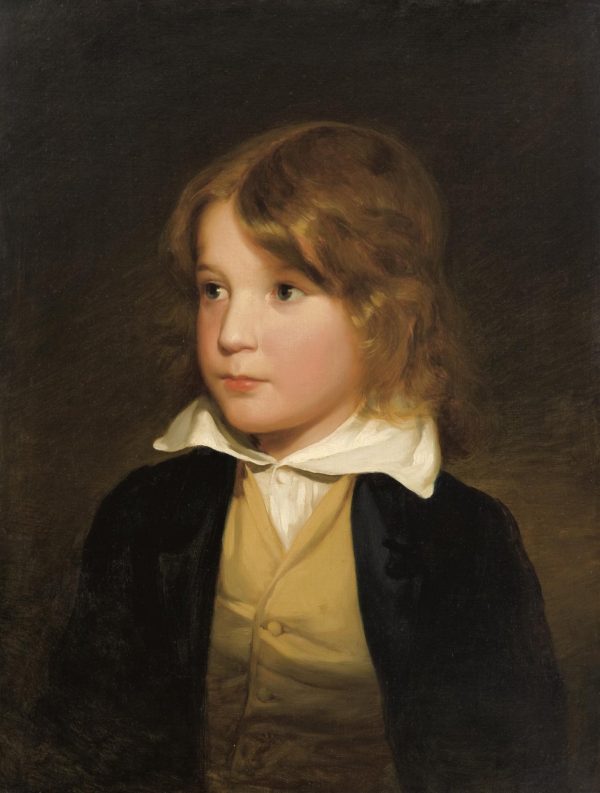
A hand-painted oil reproduction of Portrait of Princess Marie Franziska von Liechtenstein Aged Two by Friedrich von Amerling, prized for its restrained palette and quiet handling of light.
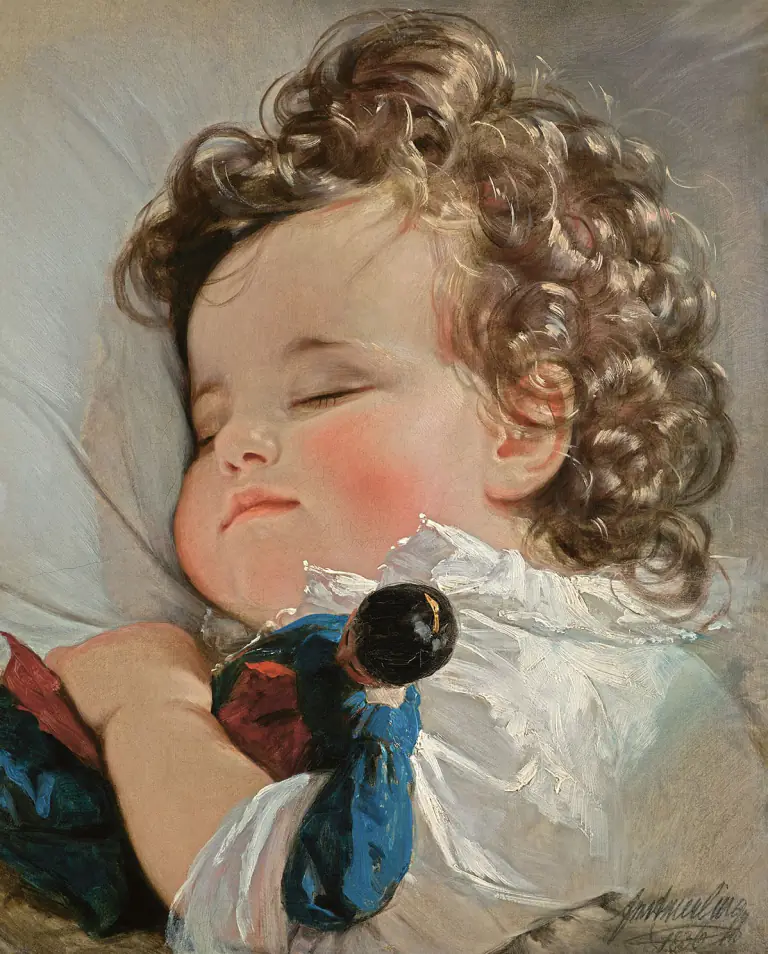
Soft transitions of paint build the child figure at the centre of this canvas before any narrative detail asserts itself. Friedrich von Amerling worked the flesh tones in thin, blended layers, letting warm underpainting show through at the cheeks and knuckles, while the fabric of the dress is handled with looser, more visible strokes that catch light along the folds. Edges soften where forms recede into shadow and sharpen only at the points the eye is meant to settle: the face, the small hands, a glint at the collar.
The sitter, identified as Princess Marie Franziska von Liechtenstein at two years old, belongs to the tradition of aristocratic child portraiture that flourished across Vienna in the early nineteenth century, a genre in which Amerling became a favoured practitioner. Rather than posing the child with stiff formality, he allows a certain looseness of gesture to survive in the final image, the kind of unguarded moment that separates his work from more rigid court portraiture of the period. Colour is kept close in range, built from warm ochres and muted pinks, so that the few brighter passages, a ribbon, a flush of colour in the cheek, carry disproportionate weight.
Light falls unevenly across the composition, gathering at the face and thinning toward the edges of the canvas, a device that draws attention inward without recourse to hard outline. This control of atmosphere, rather than any display of technical bravura, is what gives the picture its quiet authority. Owning an oil painting reproduction of this scale of restraint means owning a demonstration of how much can be said with very little insistence.
Each ByMuseum reproduction of this portrait is painted by hand in oil on canvas, not printed, by an artist trained to match the original palette and to reconstruct the layered brushwork stroke by stroke. Working as a hand-painted replica rather than a mechanical copy, the canvas preserves the raised texture of impasto at the fabric and the softer, glazed passages at the skin, so the surface behaves under light the way an oil painting should, rather than sitting flat as a printed image would. The result is a painted object with its own depth and variation, made to be looked at closely and over time, the way the original still is.
A portrait this quiet in its means has kept its hold on viewers for two centuries, and something in the stillness of a two year old sitting for a painter still reads as immediate rather than distant. To bring a hand-painted version of it into a room is to keep that quietness within reach.
Empty walls flatten a room. A classical artwork restores structure and visual hierarchy. One painting defines the space, anchors furniture, and establishes identity.
Worldwide shipping included. Each painting is produced to order and safely packed for international transport.
All payments are encrypted and processed through trusted payment providers.
Real brushwork, layered oil paint, and durable pigments on museum-quality canvas.
If the result does not meet expectations, return it for a full refund.


Your artwork is painted on premium cotton canvas, then shipped safely rolled in a rigid tube with extra blank canvas border — ready for stretching or framing locally.
Select a handcrafted frame and we’ll deliver your painting fully assembled, protected, and ready to hang.
For safe shipping, framing is available up to a maximum size. Larger sizes will automatically disable the frame option.


Choose “Stretched” to receive your canvas mounted on wooden stretcher bars — perfect if you’ll frame it later or display it as-is.
Gallery Wrap is a deeper, 1.5" style stretcher. The canvas wraps around the sides and is stapled on the back for a clean, modern, frameless look.
We ship with UPS, FedEx, or DHL straight to your door. You’ll receive a tracking number as soon as your order leaves our studio. Typical delivery is 5 to 7 days after dispatch; large, framed, or stretched pieces may take longer depending on the safest shipping route.


Unframed canvases are protected with a film, carefully rolled, and secured inside a rigid shipping tube.

Stretched, Gallery Wrapped, and Framed paintings are wrapped, cushioned with foam protection, and boxed for safe transit.

Man Writing a Letter
Gabriel Metsu, c. 1664
The gallery list
Every painting is already 50% off. Join the list and we will send you an extra $15 code, plus first access to new collections.
No spam. Unsubscribe anytime. · Privacy Policy
Welcome
Your $15 code is on its way. Explore the gallery while you wait.