Loading cart…
No products in the cart.

Original price was: $518.00.$259.00Current price is: $259.00.
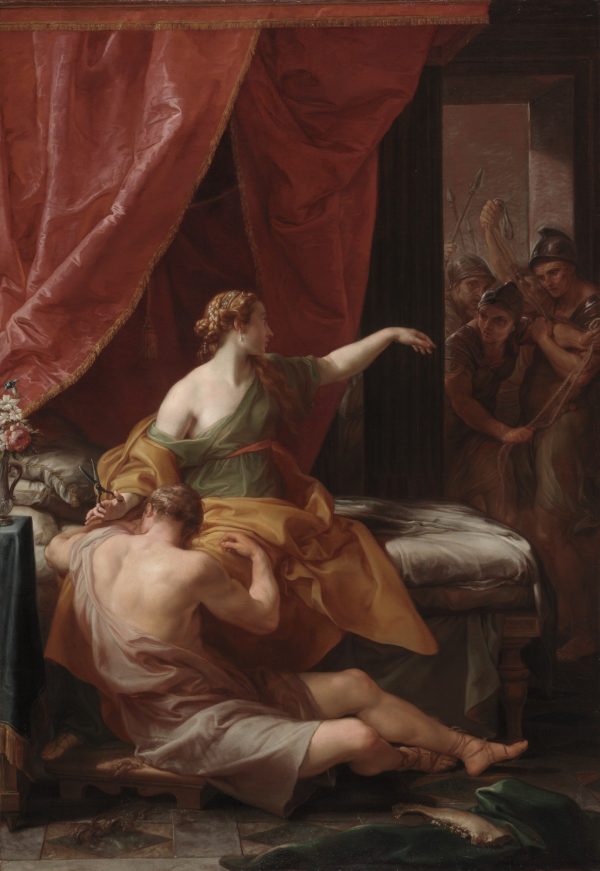
Samson and Delilah by Batoni stages the instant before betrayal with sculptural figures, warm glazes, and the emotional restraint that marks his neoclassical narrative work.
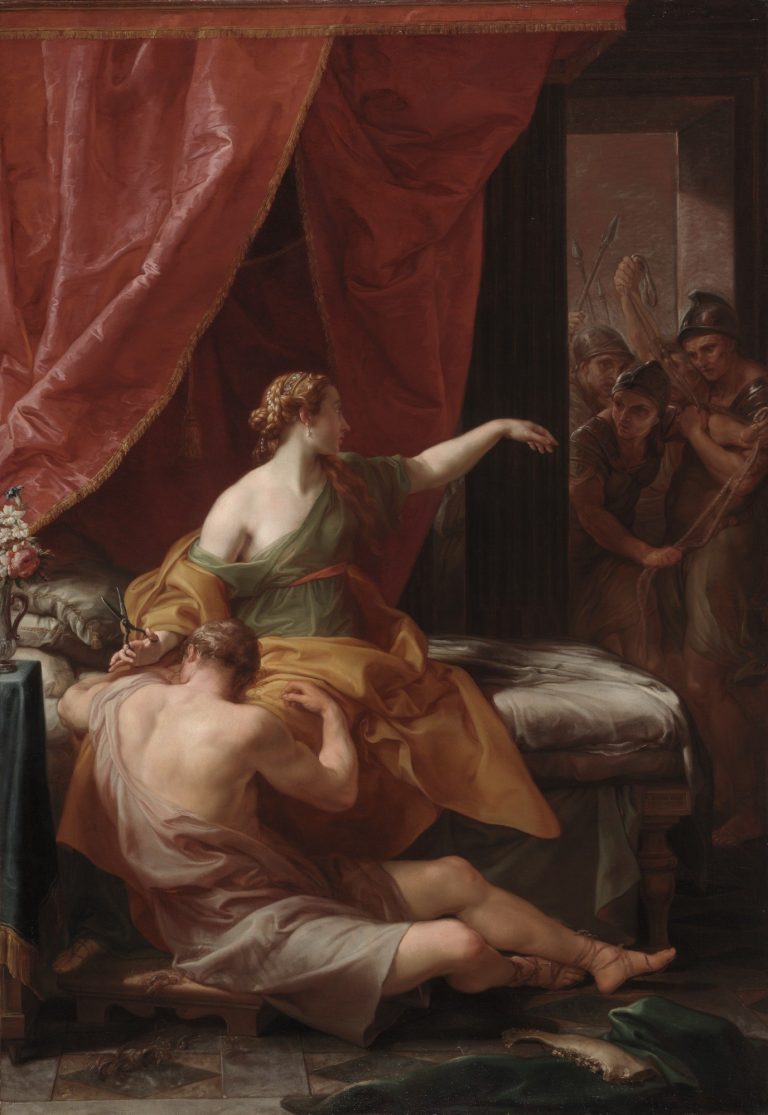
Scholars of eighteenth century Roman painting have long returned to this scene as evidence of how far Pompeo Batoni could carry a biblical subject into the register of high portraiture, giving the encounter between Samson and Delilah the same physical presence he lent to the sitters who filled his studio. Critics have read the composition as a study in contained violence, a moment before rather than during betrayal, which is part of why it continues to hold attention on gallery walls.
The scene fixes on the instant just before the trap closes, Delilah leaning into Samson with a tenderness that reads as genuine even as her hand moves toward the source of his strength. Batoni builds the two figures with a sculptural weight that owes something to his years studying antique statuary in Rome, giving skin, drapery, and shadow a solidity that never tips into rigidity. Warm ochres and deep umbers pool around the pair, and the light falls selectively, picking out the musculature of Samson and the calculated softness of Delilah expression while letting the surrounding chamber recede into shadow.
This handling of light and form places the work within the Roman neoclassical current that Batoni helped shape, where narrative clarity mattered as much as painterly refinement, and it belongs to the mature phase of his career when biblical and mythological commissions sat alongside his celebrated portrait practice. A discerning eye looking at the original would search for the layered glazes that give the flesh its warmth and the confident underdrawing visible beneath the thinner passages, and those are the qualities a faithful oil painting reproduction has to earn rather than approximate. ByMuseum artists work directly from the composition to rebuild it stroke by stroke, matching the palette and the density of the brushwork so the finished oil on canvas reproduction carries real surface texture rather than a flattened copy of one. The result is a painted object, not a printed image, with visible impasto where Batoni would have built it up and a canvas weave that responds to raised light the way the original does.
Living with the painting rewards patience. The tilt of a wrist, the half turn of a head, the way the darkest corner of the room seems to hold more than shadow, these details tend to surface on a second or third look rather than the first, which is part of what keeps the composition interesting on a wall someone passes every day.
Empty walls flatten a room. A classical artwork restores structure and visual hierarchy. One painting defines the space, anchors furniture, and establishes identity.
Worldwide shipping included. Each painting is produced to order and safely packed for international transport.
All payments are encrypted and processed through trusted payment providers.
Real brushwork, layered oil paint, and durable pigments on museum-quality canvas.
If the result does not meet expectations, return it for a full refund.


Your artwork is painted on premium cotton canvas, then shipped safely rolled in a rigid tube with extra blank canvas border — ready for stretching or framing locally.
Select a handcrafted frame and we’ll deliver your painting fully assembled, protected, and ready to hang.
For safe shipping, framing is available up to a maximum size. Larger sizes will automatically disable the frame option.


Choose “Stretched” to receive your canvas mounted on wooden stretcher bars — perfect if you’ll frame it later or display it as-is.
Gallery Wrap is a deeper, 1.5" style stretcher. The canvas wraps around the sides and is stapled on the back for a clean, modern, frameless look.
We ship with UPS, FedEx, or DHL straight to your door. You’ll receive a tracking number as soon as your order leaves our studio. Typical delivery is 5 to 7 days after dispatch; large, framed, or stretched pieces may take longer depending on the safest shipping route.


Unframed canvases are protected with a film, carefully rolled, and secured inside a rigid shipping tube.

Stretched, Gallery Wrapped, and Framed paintings are wrapped, cushioned with foam protection, and boxed for safe transit.