Loading cart…
No products in the cart.

Original price was: $518.00.$259.00Current price is: $259.00.
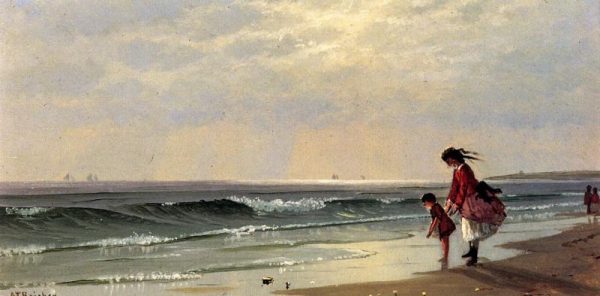
Springtime by Alfred Thompson Bricher, hand-painted in oil on canvas with the layered pigment and quiet luminist light that reward patient viewing.
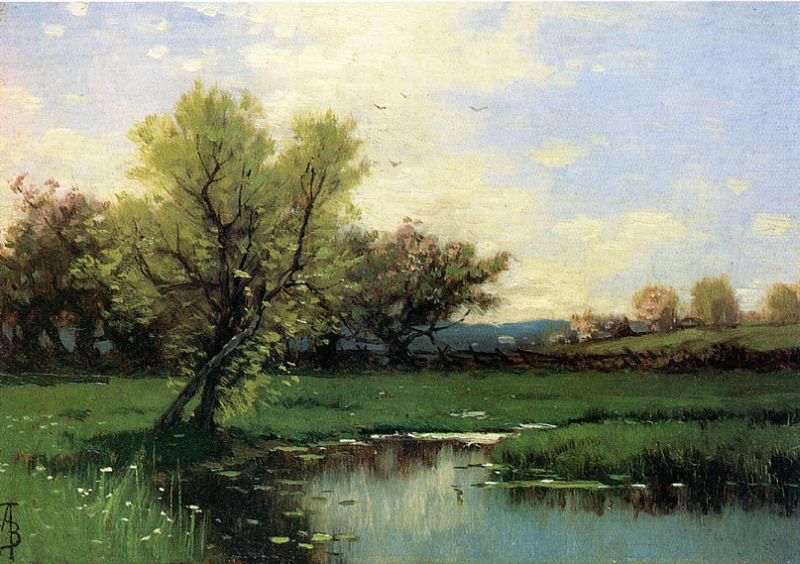
Collectors of Hudson River School landscapes have long returned to Springtime for its quiet confidence, a picture that rewards a second and third look rather than announcing itself in a single glance. Viewers over the decades have noted how the scene settles the eye gradually, moving from an immediate sense of place into the finer passages of atmosphere that reward patience.
The painting is built on a careful reading of spring light, that particular clarity that falls between the density of winter air and the haze of summer. Alfred Thompson Bricher handles this transitional season through subtle shifts in tone rather than dramatic contrast, letting greens, pale blues, and soft earth colors carry the composition without overstatement. The arrangement of forms across the canvas creates a measured rhythm, near passages rendered with more definition and distance handled with a looser, more atmospheric touch, a technique typical of the luminist tendency within the wider Hudson River School.
This is a work from a period when American landscape painters were moving away from grand wilderness subjects toward more intimate, observed moments in nature, and Springtime sits comfortably within that shift. The intervals between forms are handled with real discipline; nothing crowds the eye, and the transitions between light and shadow keep the composition legible even as the details reward closer inspection. It is a picture built on restraint, which is precisely what allows it to hold attention over time rather than exhausting it in one viewing.
A ByMuseum oil painting reproduction of Springtime is created by a trained painter working directly in oil on artist-grade canvas, matching the original palette stroke by stroke rather than approximating it through print. The visible brushwork and the slight variation in surface texture, the way the paint sits differently in the sky than in the foreground, are preserved as part of the physical object, not simulated. Collectors who care about condition and surface will notice the difference between a printed sheet and layered pigment that catches light unevenly, the way an original canvas does; this is what separates a fine art reproduction painted by hand from a mechanical copy. Hung in a room with soft, indirect daylight, the picture holds its quiet mood well into the evening, suiting a study, a reading corner, or any wall where the light shifts gradually rather than glares.
Empty walls flatten a room. A classical artwork restores structure and visual hierarchy. One painting defines the space, anchors furniture, and establishes identity.
Worldwide shipping included. Each painting is produced to order and safely packed for international transport.
All payments are encrypted and processed through trusted payment providers.
Real brushwork, layered oil paint, and durable pigments on museum-quality canvas.
If the result does not meet expectations, return it for a full refund.


Your artwork is painted on premium cotton canvas, then shipped safely rolled in a rigid tube with extra blank canvas border — ready for stretching or framing locally.
Select a handcrafted frame and we’ll deliver your painting fully assembled, protected, and ready to hang.
For safe shipping, framing is available up to a maximum size. Larger sizes will automatically disable the frame option.


Choose “Stretched” to receive your canvas mounted on wooden stretcher bars — perfect if you’ll frame it later or display it as-is.
Gallery Wrap is a deeper, 1.5" style stretcher. The canvas wraps around the sides and is stapled on the back for a clean, modern, frameless look.
We ship with UPS, FedEx, or DHL straight to your door. You’ll receive a tracking number as soon as your order leaves our studio. Typical delivery is 4–5 business days after dispatch; large, framed, or stretched pieces may take longer depending on the safest shipping route.


Unframed canvases are protected with a film, carefully rolled, and secured inside a rigid shipping tube.

Stretched, Gallery Wrapped, and Framed paintings are wrapped, cushioned with foam protection, and boxed for safe transit.
A note from the studio
Our studio is working through an exceptional number of commissions, so we have paused new orders for a short time. We will start taking orders again on 1 October.
Every painting is made entirely by hand, and we would rather pause than rush one. Thank you for your patience and your trust.
Leave your details and we will reserve your place: we will write to you as soon as orders reopen.
Thank you
Your request is saved. We will write to you on 1 October, and a confirmation is on its way to your inbox.