Loading cart…
No products in the cart.

Original price was: $518.00.$259.00Current price is: $259.00.
A hand-painted oil on canvas reproduction of Jean Beraud St Mary Magdalene in the House of Simon the Pharisee, prized for its precise Salon-era staging of sacred narrative within a modern Parisian interior.
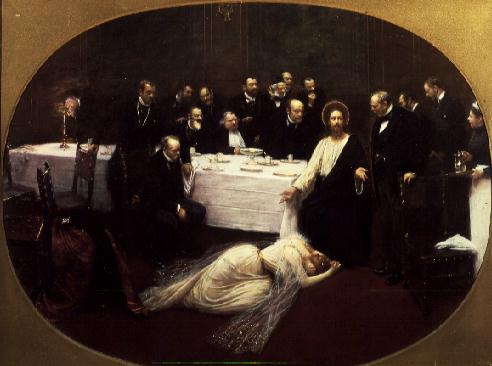
Viewers have long been drawn to the way Jean Beraud reimagined a Gospel scene within the drawing rooms of nineteenth century Paris, dressing sacred narrative in the manners and materials of his own age. Critics of the Salon years noted the audacity of the transposition, and later observers have kept returning to the same question: what does it mean to place Mary Magdalene among silk gowns and gaslight rather than in the dust of ancient Judea. That interest has never rested on subject alone; it comes back, again and again, to the canvas itself and the choices that make the transposition convincing.
The composition places its figures within an interior of considerable social precision, the furnishings and dress rendered with the same observational rigour Beraud brought to his scenes of Parisian boulevards and salons. Simon the Pharisee and his guests occupy the space with the poise of the fashionable classes, while Mary Magdalene enters as a figure of disruption, her posture and the attention of the room around her carrying the emotional weight of the scene. Light falls unevenly across the gathering, picking out silk, skin, and tableware with a precision that owes as much to Beraud training in genre painting as to any devotional tradition.
What distinguishes the picture is the confidence with which Beraud handles tonal transition, moving from the crisp illumination on the central figures to the softer, absorbing shadow at the edges of the room. Colour is applied with restraint, so that the reds and golds of costume register against a generally muted palette, and edges are worked and reworked until each form sits convincingly within the perspectival depth of the interior. The painting belongs to a moment when Beraud was moving between religious subject and modern life, testing how far the conventions of one could inform the other, and the result carries the deliberateness of an artist working through that problem in full command of his technique.
ByMuseum recreates this painting as a hand-painted oil on canvas, an oil painting reproduction built up in layered colour by a trained painter working directly from the original composition. The palette is matched with care, the brushwork left visible where the original demands it, and the surface allowed to carry the texture of worked paint rather than the flatness of a printed image; buyers looking specifically for an oil on canvas reproduction will find the support and the handling treated as inseparable from the image itself. Each canvas therefore carries the slight variation of a genuinely painted object, not a mechanically repeated one.
The picture suits a collector drawn to narrative painting of the late nineteenth century, and equally a room built around considered, figurative work rather than decoration for its own sake. It also makes a fitting gift for anyone with a standing interest in Salon-era painting or in the particular tension Beraud explored between the sacred and the social.
Empty walls flatten a room. A classical artwork restores structure and visual hierarchy. One painting defines the space, anchors furniture, and establishes identity.
Worldwide shipping included. Each painting is produced to order and safely packed for international transport.
All payments are encrypted and processed through trusted payment providers.
Real brushwork, layered oil paint, and durable pigments on museum-quality canvas.
If the result does not meet expectations, return it for a full refund.


Your artwork is painted on premium cotton canvas, then shipped safely rolled in a rigid tube with extra blank canvas border — ready for stretching or framing locally.
Select a handcrafted frame and we’ll deliver your painting fully assembled, protected, and ready to hang.
For safe shipping, framing is available up to a maximum size. Larger sizes will automatically disable the frame option.


Choose “Stretched” to receive your canvas mounted on wooden stretcher bars — perfect if you’ll frame it later or display it as-is.
Gallery Wrap is a deeper, 1.5" style stretcher. The canvas wraps around the sides and is stapled on the back for a clean, modern, frameless look.
We ship with UPS, FedEx, or DHL straight to your door. You’ll receive a tracking number as soon as your order leaves our studio. Typical delivery is 5 to 7 days after dispatch; large, framed, or stretched pieces may take longer depending on the safest shipping route.


Unframed canvases are protected with a film, carefully rolled, and secured inside a rigid shipping tube.

Stretched, Gallery Wrapped, and Framed paintings are wrapped, cushioned with foam protection, and boxed for safe transit.