Loading cart…
No products in the cart.

Original price was: $518.00.$259.00Current price is: $259.00.
A single black sash anchors this Boldini portrait; own it as a museum quality hand-painted oil reproduction with the brushwork and depth of the original.
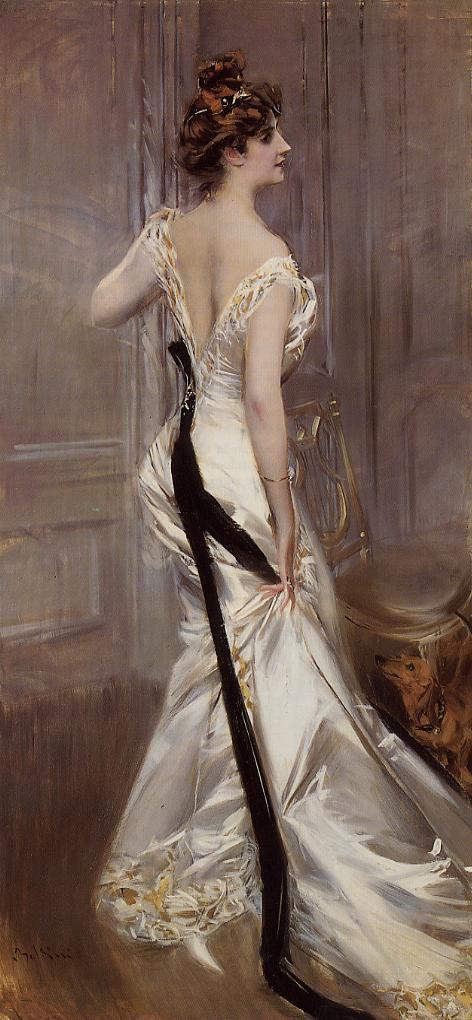
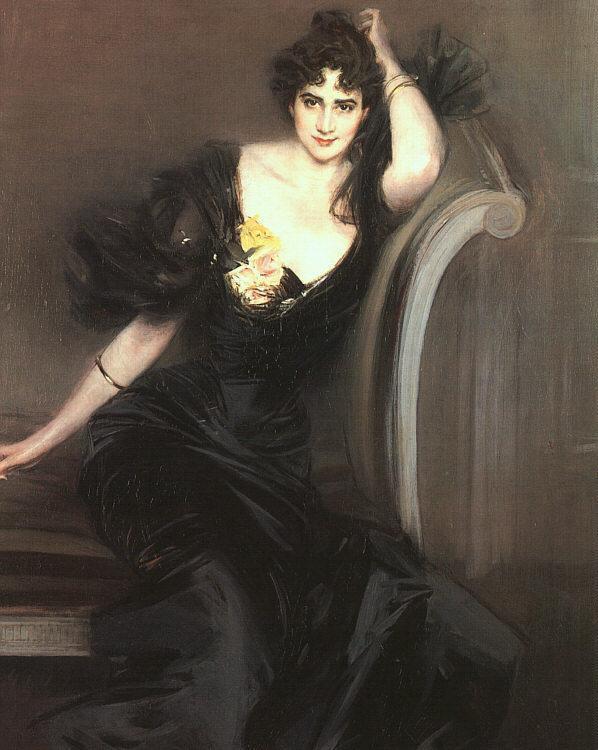
A single band of black cuts across the composition, anchoring the eye before anything else in the picture asks for attention. That sash, dense and unbroken against the lighter passages around it, sets the pitch for the whole portrait: a study in restraint that still manages to feel alive with movement.
Giovanni Boldini built his reputation on exactly this kind of contrast, the deliberate placement of a dark accent within a field of quick, silvery brushwork. In The Black Sash, the figure emerges from a ground of loosely handled tone, the paint applied in flickering strokes that suggest fabric and light without ever quite settling into description. Edges dissolve and reassert themselves as the eye moves across the surface, a technique that gives the picture its sense of motion even though the pose itself is still.
This belongs to the period when Boldini had become one of the most sought-after portraitists working between Paris and the fashionable circles of Europe, a painter whose sitters wanted to look not just presentable but caught mid-gesture, alive with the energy of the moment. The tonal range stays narrow and controlled, built from blacks, greys, and warm flesh tones, yet within that narrow range Boldini finds remarkable variety: a passage of impasto here, a thin wash there, the brush sometimes dragged and sometimes flicked. The composition holds together through these repeated intervals of light and dark, so that the sash, the shadow, and the surrounding drapery all speak to one another across the canvas.
Producing this as a museum quality oil painting reproduction means rebuilding those same decisions by hand, layer by layer, rather than transferring an image mechanically onto canvas. A trained artist works from the original palette and the same sequence of tonal construction, matching the density of that black sash and the loose, breathing quality of the brushwork around it. The surface keeps its texture, the ridges of paint catch light the way an oil painting should, and the result is a physical object built through the same process Boldini himself relied on, not a flat copy of one.
What is carried across is not just the image but the manner of its making: the direction of the brush, the thickness of paint where it matters, the softened edges that give the work its particular atmosphere. That fidelity is the point. A collector choosing a hand-painted version wants the painting to behave like a painting, with all the variation and depth that implies.
Empty walls flatten a room. A classical artwork restores structure and visual hierarchy. One painting defines the space, anchors furniture, and establishes identity.
Worldwide shipping included. Each painting is produced to order and safely packed for international transport.
All payments are encrypted and processed through trusted payment providers.
Real brushwork, layered oil paint, and durable pigments on museum-quality canvas.
If the result does not meet expectations, return it for a full refund.


Your artwork is painted on premium cotton canvas, then shipped safely rolled in a rigid tube with extra blank canvas border — ready for stretching or framing locally.
Select a handcrafted frame and we’ll deliver your painting fully assembled, protected, and ready to hang.
For safe shipping, framing is available up to a maximum size. Larger sizes will automatically disable the frame option.


Choose “Stretched” to receive your canvas mounted on wooden stretcher bars — perfect if you’ll frame it later or display it as-is.
Gallery Wrap is a deeper, 1.5" style stretcher. The canvas wraps around the sides and is stapled on the back for a clean, modern, frameless look.
We ship with UPS, FedEx, or DHL straight to your door. You’ll receive a tracking number as soon as your order leaves our studio. Typical delivery is 5 to 7 days after dispatch; large, framed, or stretched pieces may take longer depending on the safest shipping route.


Unframed canvases are protected with a film, carefully rolled, and secured inside a rigid shipping tube.

Stretched, Gallery Wrapped, and Framed paintings are wrapped, cushioned with foam protection, and boxed for safe transit.
Impressionism
Giovanni Boldini