Loading cart…
No products in the cart.

Original price was: $518.00.$299.00Current price is: $299.00.
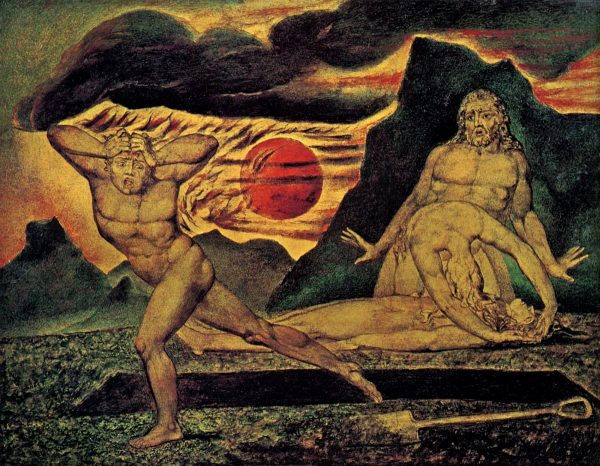
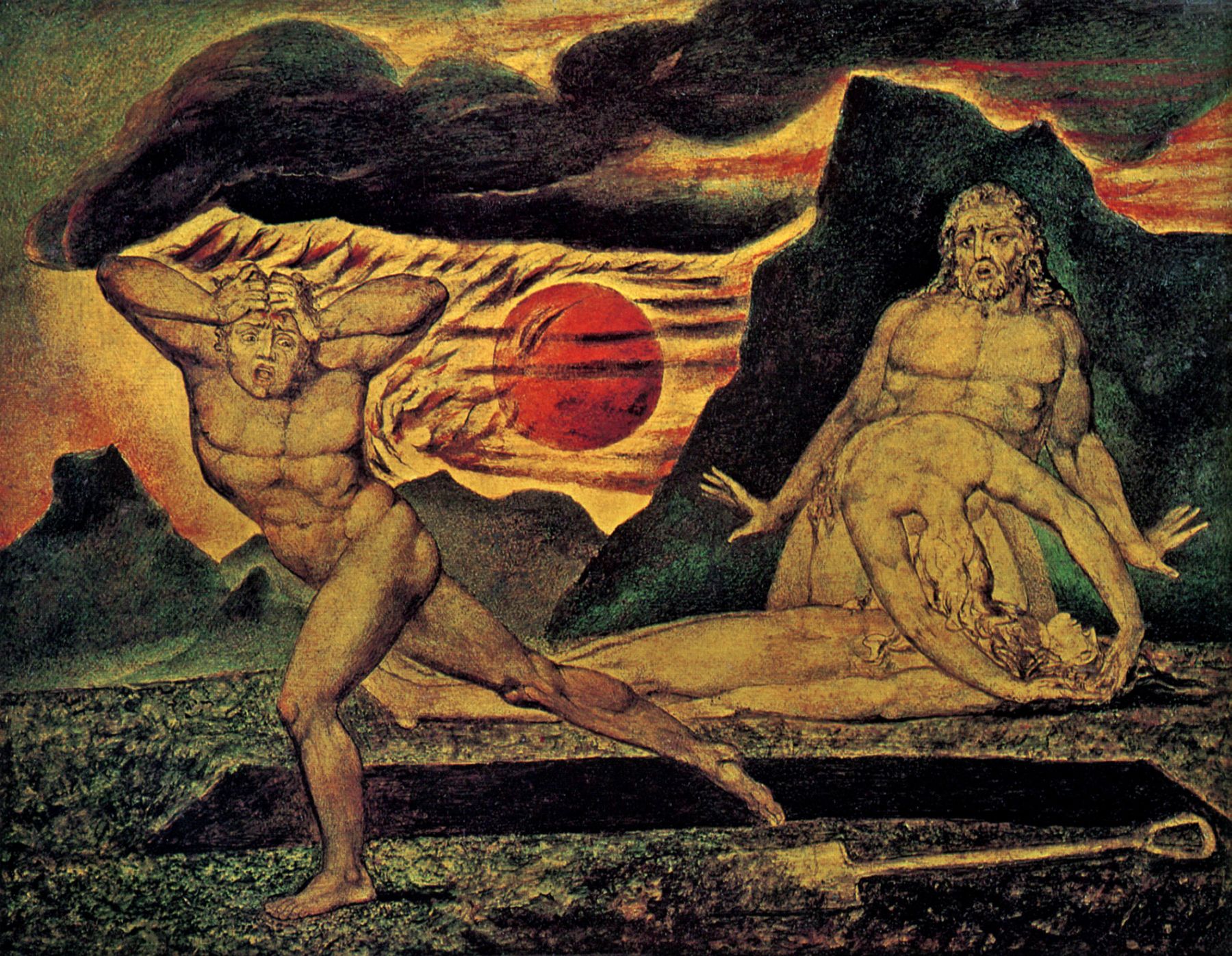
The Body of Abel Found by Adam and Eve by William Blake renders one of the darkest moments in Genesis with sculptural force, now recreated as a hand-painted oil reproduction for any wall.
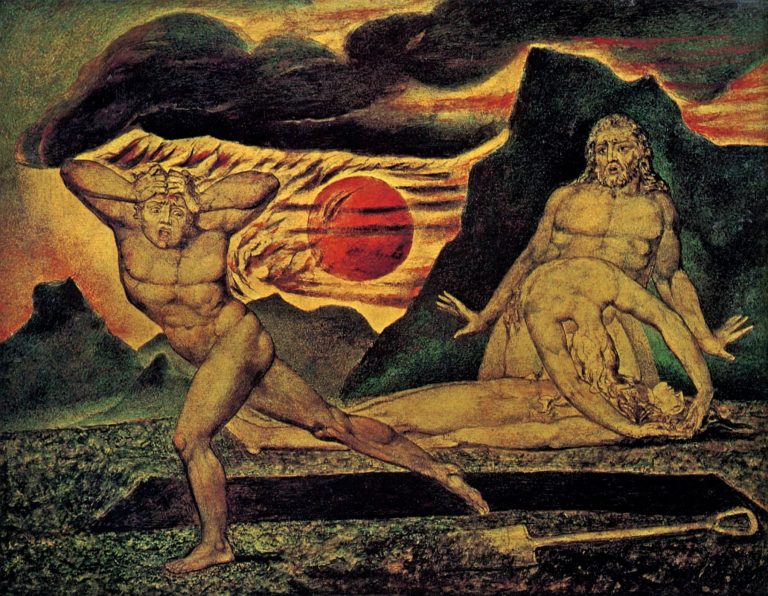
A collapsed body lies at the centre of the scene, and around it two figures bend under the weight of a grief that has no precedent in their world. The light falls unevenly across the group, catching the strained musculature of Adam as he lifts or steadies his son, while Eve recoils with an expression that mixes horror and disbelief. There is no landscape detail to soften the moment; the surrounding space is kept spare so that nothing competes with the bodies themselves.
This is William Blake working within the history painting tradition he inherited from Michelangelo and the Renaissance figure studies he admired, but bending that inheritance toward his own prophetic concerns. The scene depicts Adam and Eve discovering the murdered body of their son Abel, a moment the Bible passes over quickly but which Blake treats as the true origin of human suffering, the point where violence enters the world and grief becomes permanent. The muscular clarity of the figures owes a debt to classical figuration, yet the palette and the compressed, almost theatrical staging belong entirely to the symbolic universe Blake built across his career, where anatomical accuracy always answers to emotional and visionary truth rather than to observed nature.
Colour in this composition does real work. Blake sets warm flesh tones against darker, more turbulent passages of shadow, so that the eye is pulled toward the pale, inert form of Abel and then back out to the anguished faces bent over him. Brushwork throughout stays firm and sculptural, giving each limb a weight that reads almost as relief carving rather than flat paint, a quality that aligns this picture with the moral seriousness of his engraved and illuminated work even though it was executed as an independent painting.
ByMuseum artists produce this oil painting reproduction entirely by hand, translating the original composition stroke by stroke onto artist-grade cotton canvas rather than printing it. What survives the transfer is the density of the palette, the visible brushwork that gives the figures their sculptural presence, and the raw emotional charge of the central grouping, so the version that reaches a wall is a painted object with genuine surface texture, not a flattened copy of one. Buyers looking for a fine art reproduction that keeps faith with the original brushwork and colour logic will find both preserved here.
Empty walls flatten a room. A classical artwork restores structure and visual hierarchy. One painting defines the space, anchors furniture, and establishes identity.
Worldwide shipping included. Each painting is produced to order and safely packed for international transport.
All payments are encrypted and processed through trusted payment providers.
Real brushwork, layered oil paint, and durable pigments on museum-quality canvas.
If the result does not meet expectations, return it for a full refund.


Your artwork is painted on premium cotton canvas, then shipped safely rolled in a rigid tube with extra blank canvas border — ready for stretching or framing locally.
Select a handcrafted frame and we’ll deliver your painting fully assembled, protected, and ready to hang.
For safe shipping, framing is available up to a maximum size. Larger sizes will automatically disable the frame option.


Choose “Stretched” to receive your canvas mounted on wooden stretcher bars — perfect if you’ll frame it later or display it as-is.
Gallery Wrap is a deeper, 1.5" style stretcher. The canvas wraps around the sides and is stapled on the back for a clean, modern, frameless look.
We ship with UPS, FedEx, or DHL straight to your door. You’ll receive a tracking number as soon as your order leaves our studio. Typical delivery is 5 to 7 days after dispatch; large, framed, or stretched pieces may take longer depending on the safest shipping route.


Unframed canvases are protected with a film, carefully rolled, and secured inside a rigid shipping tube.

Stretched, Gallery Wrapped, and Framed paintings are wrapped, cushioned with foam protection, and boxed for safe transit.
Romanticism
William Blake