Loading cart…
No products in the cart.

Original price was: $518.00.$259.00Current price is: $259.00.
The Funeral of the Mummy by Bridgeman, hand-painted in oil on canvas, brings a famous Orientalist procession to your wall with real pigment and visible brushwork.
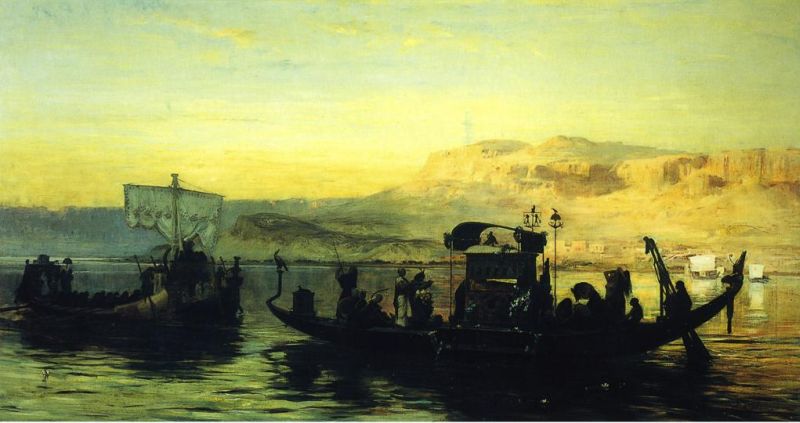
Since it left the studio of Frederick Arthur Bridgeman, this large procession scene has been read as one of the great set pieces of nineteenth century Orientalist painting, a work that critics and collectors have returned to for its staging of ancient ritual as much as for its technical bravura. That reputation was built on decisions made at the easel, and it is worth looking again at what actually produced them.
The subject is a funeral cortege moving toward the Nile, mourners and priests arranged in a procession that Bridgeman choreographs with the discipline of a stage director rather than a documentarian. Figures nearest the viewer are rendered with particular care, their gestures and drapery carrying the emotional register of the scene, while the crowd behind thins into looser, more atmospheric handling that suggests depth without competing for attention. Light falls across the composition in a way that separates the procession from the arid landscape around it, giving the central group a warmth and clarity that the surrounding desert lacks.
Bridgeman had studied in Paris under Gerome, and the influence shows in the exacting drawing beneath the paint and in a taste for archaeological subject matter treated with theatrical seriousness. This canvas belongs to the period when he was working through material gathered on his travels in Egypt and North Africa, translating sketches and studied detail into a finished studio composition. The palette moves between ochres, dust tones, and the cooler blues and whites reserved for ceremonial dress, a contrast that does much of the work in holding the eye on the funeral party itself.
A trained painter working for ByMuseum recreates this composition as a hand-painted oil painting reproduction, matching the original palette stroke by stroke and preserving the layered brushwork and surface texture that a printed copy cannot offer. Pigment is built up on artist-grade canvas the way Bridgeman would have worked it, so the raised impasto in the drapery and the softer glazes in the distance survive in the finished object. What arrives is a painted canvas, not a print, and it carries the weight and presence that a serious collector expects from an oil on canvas. Owning this famous painting in its hand-painted form means keeping something of that original discipline on your own wall, a version that ages and reads like a painting rather than a reproduction of one.
Empty walls flatten a room. A classical artwork restores structure and visual hierarchy. One painting defines the space, anchors furniture, and establishes identity.
Worldwide shipping included. Each painting is produced to order and safely packed for international transport.
All payments are encrypted and processed through trusted payment providers.
Real brushwork, layered oil paint, and durable pigments on museum-quality canvas.
If the result does not meet expectations, return it for a full refund.


Your artwork is painted on premium cotton canvas, then shipped safely rolled in a rigid tube with extra blank canvas border — ready for stretching or framing locally.
Select a handcrafted frame and we’ll deliver your painting fully assembled, protected, and ready to hang.
For safe shipping, framing is available up to a maximum size. Larger sizes will automatically disable the frame option.


Choose “Stretched” to receive your canvas mounted on wooden stretcher bars — perfect if you’ll frame it later or display it as-is.
Gallery Wrap is a deeper, 1.5" style stretcher. The canvas wraps around the sides and is stapled on the back for a clean, modern, frameless look.
We ship with UPS, FedEx, or DHL straight to your door. You’ll receive a tracking number as soon as your order leaves our studio. Typical delivery is 4–5 business days after dispatch; large, framed, or stretched pieces may take longer depending on the safest shipping route.


Unframed canvases are protected with a film, carefully rolled, and secured inside a rigid shipping tube.

Stretched, Gallery Wrapped, and Framed paintings are wrapped, cushioned with foam protection, and boxed for safe transit.