Loading cart…
No products in the cart.

Original price was: $599.00.$299.00Current price is: $299.00.
A hand-painted oil reproduction of The Last Day of Pompeii c by Karl Briullov, recreating this famous painting with layered pigment and the depth of a genuine painted canvas.
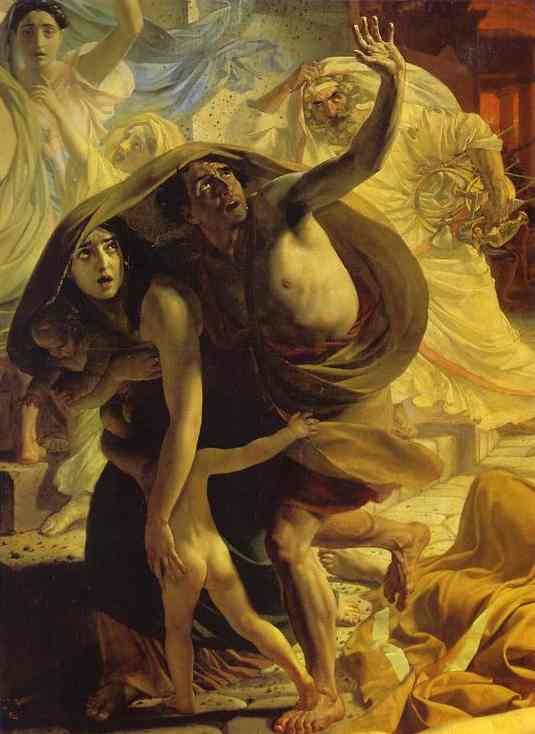
Russian Romanticism reached one of its defining moments in the grand historical canvases of the early nineteenth century, when painters turned from portraiture and mythology toward catastrophe as a subject worthy of the grand manner. Within that tradition, this canvas by Karl Briullov stands apart for the sheer scale of ambition it brings to a single, terrible afternoon in antiquity.
The composition gathers a crowd of figures at the moment Vesuvius erupts over ancient Pompeii, arranging mothers, children, and fleeing citizens across a stage lit by lightning and falling ash rather than ordinary daylight. Briullov organises this chaos with a classical eye: figures fall into pyramidal groups, gestures echo across the canvas, and the eye is guided through the panic by careful diagonals rather than left to wander in confusion. The result is a famous painting that balances documentary horror with the discipline of academic composition, a tension that gave the work its reputation across Europe when it was first exhibited.
Colour and light carry much of the emotional weight. Cold blues and violets in the sky are set against the warm flesh tones and firelit drapery of the crowd, and Briullov handles this contrast with a control of glazing and highlight that reveals his training in the Italian tradition. Passages of tightly rendered anatomy sit beside broader, more atmospheric strokes describing smoke and falling debris, a hierarchy of finish that rewards both a passing glance and long study. The painting belongs to the period when Briullov was working in Italy, absorbing the example of the old masters while shaping a distinctly Russian voice within European Romanticism.
ByMuseum recreates this composition as a genuine oil painting reproduction, painted entirely by hand rather than printed. A trained artist works in layered oil on artist-grade canvas, matching the original palette of ash grey, firelight orange, and cold sky blue while preserving the visible brushwork and surface texture that give the scene its drama. The canvas that arrives is a painted object with real impasto and depth, not a flat facsimile, so the drama of the eruption reads with the same conviction up close as it does from across a room.
Collectors drawn to history painting, and anyone furnishing a room that calls for scale and narrative weight, will find this reproduction suited to serious display rather than passing decoration. It receives:
Empty walls flatten a room. A classical artwork restores structure and visual hierarchy. One painting defines the space, anchors furniture, and establishes identity.
Worldwide shipping included. Each painting is produced to order and safely packed for international transport.
All payments are encrypted and processed through trusted payment providers.
Real brushwork, layered oil paint, and durable pigments on museum-quality canvas.
If the result does not meet expectations, return it for a full refund.


Your artwork is painted on premium cotton canvas, then shipped safely rolled in a rigid tube with extra blank canvas border — ready for stretching or framing locally.
Select a handcrafted frame and we’ll deliver your painting fully assembled, protected, and ready to hang.
For safe shipping, framing is available up to a maximum size. Larger sizes will automatically disable the frame option.


Choose “Stretched” to receive your canvas mounted on wooden stretcher bars — perfect if you’ll frame it later or display it as-is.
Gallery Wrap is a deeper, 1.5" style stretcher. The canvas wraps around the sides and is stapled on the back for a clean, modern, frameless look.
We ship with UPS, FedEx, or DHL straight to your door. You’ll receive a tracking number as soon as your order leaves our studio. Typical delivery is 5 to 7 days after dispatch; large, framed, or stretched pieces may take longer depending on the safest shipping route.


Unframed canvases are protected with a film, carefully rolled, and secured inside a rigid shipping tube.

Stretched, Gallery Wrapped, and Framed paintings are wrapped, cushioned with foam protection, and boxed for safe transit.
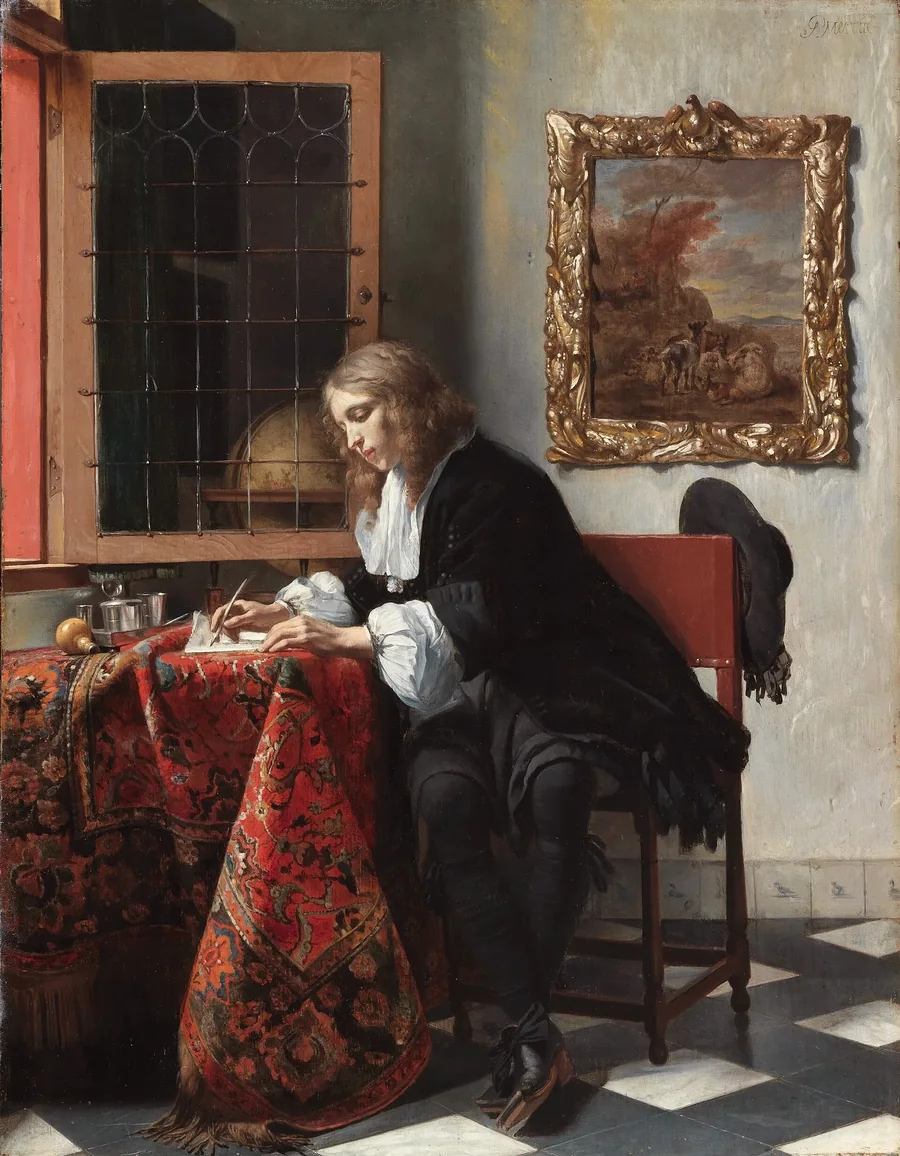
Man Writing a Letter
Gabriel Metsu, c. 1664
The gallery list
Every painting is already 50% off. Join the list and we will send you an extra $15 code, plus first access to new collections.
No spam. Unsubscribe anytime. · Privacy Policy
Welcome
Your $15 code is on its way. Explore the gallery while you wait.