Loading cart…
No products in the cart.

Original price was: $599.00.$299.00Current price is: $299.00.
A hand-painted oil reproduction of The Last Day of Pompeii d by Karl Briullov, rendered in oil on canvas to preserve the drama and brushwork of this famous painting.
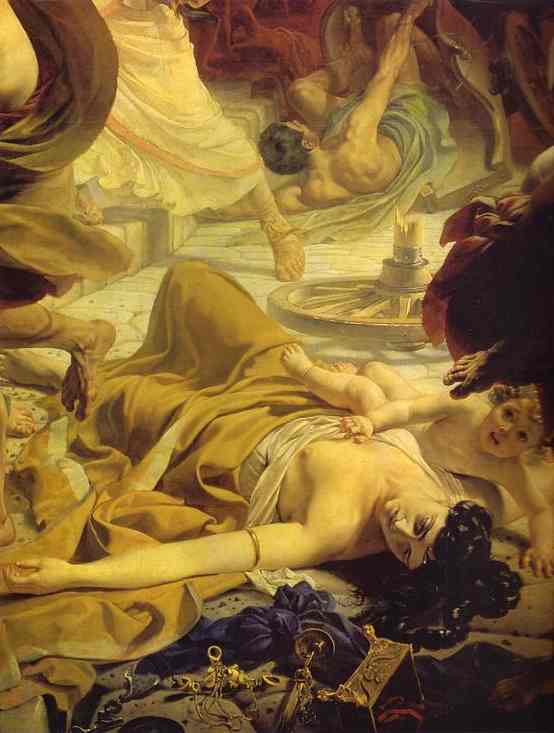
Layered strokes of ochre, ash grey, and sudden flares of orange and white build this canvas from the ground up, the paint applied in passages that shift from thin, smoky glazes to thicker, more urgent touches where the light breaks through. Edges dissolve into shadow in one area and sharpen into hard, almost sculptural contrast in another, a technique that gives the picture its restless, theatrical energy before a single figure is even read.
Out of that handling of paint emerges the subject: the final hours of Pompeii, caught in a single frozen moment of collapse. Karl Briullov arranges his figures in a frieze-like sweep across the foreground, fleeing families, a fallen mother, a rider losing control of his horse, all lit by the lurid glow of Vesuvius against a darkening sky. The composition owes a visible debt to classical sculpture and to the grand manner of history painting, yet the drama and the violent contrasts of light belong entirely to the Romantic sensibility that Briullov brought to Russian art in the 1830s. This was the work that established his reputation across Europe, a famous painting that toured Italy and Russia to public acclaim and set a new standard for historical subjects on a monumental scale.
Colour carries much of the emotional weight. Cool marble whites and deep architectural shadow sit against the hot reds and yellows of the eruption, and Briullov modulates the temperature of the paint to pull the eye from the calm, statuesque figures in front to the chaos consuming the city behind them. It is a picture built on tension between control and catastrophe, and that tension survives in every brushstroke.
ByMuseum artists reproduce this composition by hand, working in oil on artist-grade canvas to match the original palette stroke for stroke rather than reducing it to flat colour. This is a hand-painted oil painting reproduction, built up in real layers of pigment so the brushwork, the impasto, and the surface texture remain visible and tactile, the way they would on a painted object rather than a printed one. Trained painters study the transitions of light across the figures and the sky before committing them to canvas, so the finished work holds its depth under changing light.
Living with a canvas built this way rewards patience. Morning light draws out the pale marble tones of the fleeing figures; evening light deepens the fire at the edge of the frame until the whole scene seems to shift in temperature. Collectors who examine surface and condition closely will find that reward built into the paint itself, a picture that keeps offering new detail long after the first look.
Empty walls flatten a room. A classical artwork restores structure and visual hierarchy. One painting defines the space, anchors furniture, and establishes identity.
Worldwide shipping included. Each painting is produced to order and safely packed for international transport.
All payments are encrypted and processed through trusted payment providers.
Real brushwork, layered oil paint, and durable pigments on museum-quality canvas.
If the result does not meet expectations, return it for a full refund.


Your artwork is painted on premium cotton canvas, then shipped safely rolled in a rigid tube with extra blank canvas border — ready for stretching or framing locally.
Select a handcrafted frame and we’ll deliver your painting fully assembled, protected, and ready to hang.
For safe shipping, framing is available up to a maximum size. Larger sizes will automatically disable the frame option.


Choose “Stretched” to receive your canvas mounted on wooden stretcher bars — perfect if you’ll frame it later or display it as-is.
Gallery Wrap is a deeper, 1.5" style stretcher. The canvas wraps around the sides and is stapled on the back for a clean, modern, frameless look.
We ship with UPS, FedEx, or DHL straight to your door. You’ll receive a tracking number as soon as your order leaves our studio. Typical delivery is 5 to 7 days after dispatch; large, framed, or stretched pieces may take longer depending on the safest shipping route.


Unframed canvases are protected with a film, carefully rolled, and secured inside a rigid shipping tube.

Stretched, Gallery Wrapped, and Framed paintings are wrapped, cushioned with foam protection, and boxed for safe transit.
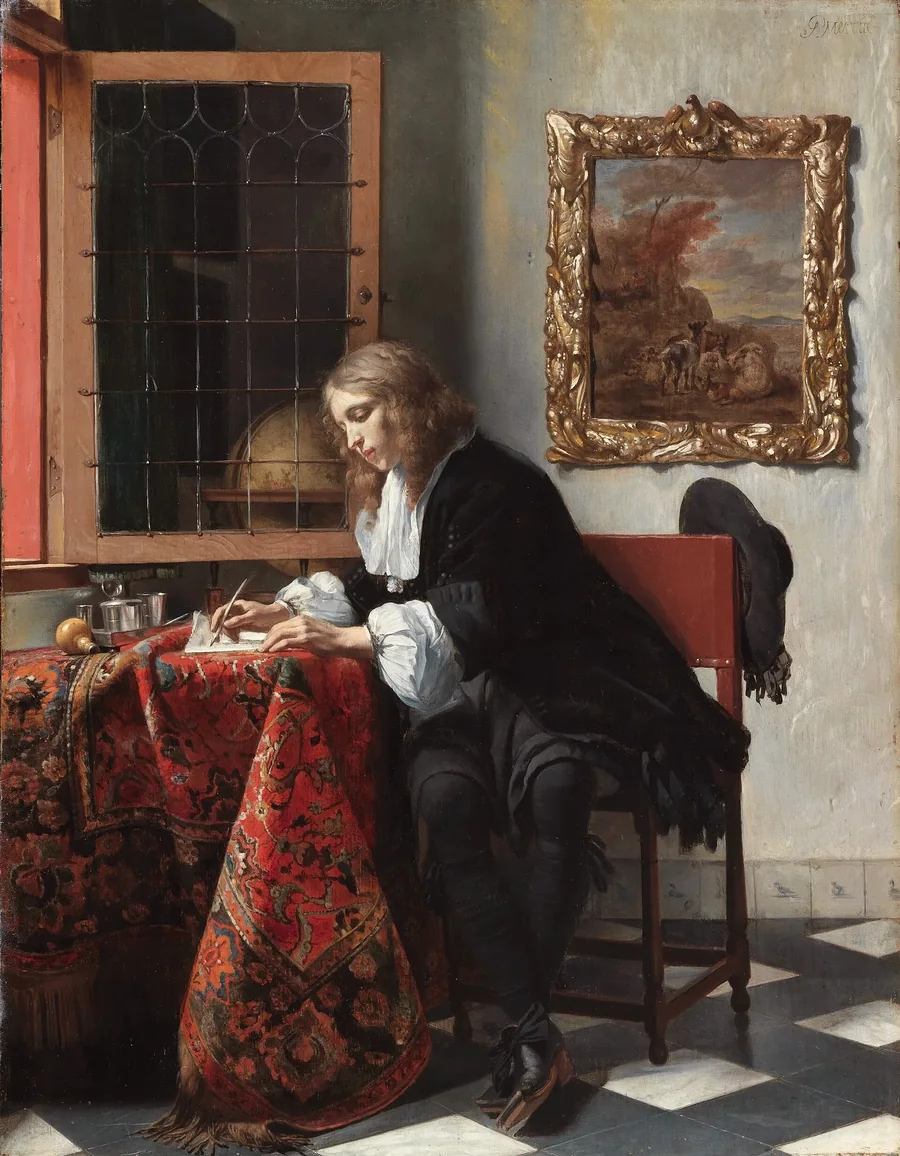
Man Writing a Letter
Gabriel Metsu, c. 1664
The gallery list
Every painting is already 50% off. Join the list and we will send you an extra $15 code, plus first access to new collections.
No spam. Unsubscribe anytime. · Privacy Policy
Welcome
Your $15 code is on its way. Explore the gallery while you wait.