Loading cart…
No products in the cart.

Original price was: $518.00.$259.00Current price is: $259.00.
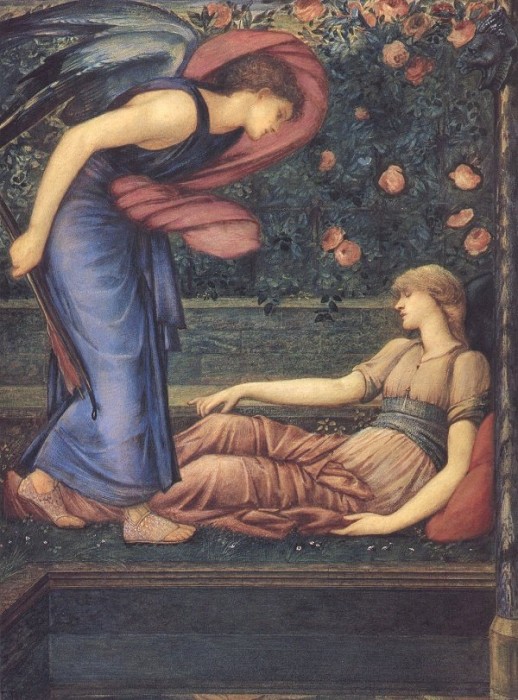
The Morning of the Resurrection by Burne-Jones, painted by hand in oil for its quiet, fresco-inspired stillness and cool, deliberate palette.

By the late 1870s, Edward Burne-Jones had turned decisively toward subjects that let him explore the human figure at rest, in sleep, or at the threshold of another state. The Morning of the Resurrection belongs to this period of quiet religious meditation, when the painter, already established among the Pre-Raphaelite circle, set aside narrative drama in favour of stillness. The scene shows the moment following Christ risen from the tomb, encountered by the mourning women who came to grieve and instead find an empty grave and a transformed presence before them.
The composition is built on a vertical hush: tall drapery folds, an architecture of stone and shadow, and figures whose gestures are restrained rather than theatrical. Burne-Jones favours a cool, mineral palette of greys, deep blues, and pale flesh tones, broken only by the warmer note of the risen figure, so that light seems to originate from within the picture rather than fall onto it from outside. The women lean toward each other in postures borrowed from early Italian fresco painting, an influence Burne-Jones studied closely, and their faces carry the withheld emotion that became his signature after years of study under Rossetti.
Edge and interval do the quiet work here. Rather than dramatising the miracle, Burne-Jones lets the space between the figures, the folds of cloth, and the recess of the tomb carry the psychological weight, so the eye moves slowly across the canvas the way it might move across a wall of frescoes. A hand-painted oil painting reproduction of this work is built the same way the original was, layer by layer in oil on artist-grade canvas, so the cool tonal shifts and the soft, fresco-like edges are rebuilt by brush rather than assembled by machine. Painters working on a replica painting of this kind study the original palette closely, matching the greys against the warmer central passage, and leave the surface with the texture and slight irregularity of hand-applied colour, so the finished canvas reads as a painted object rather than a printed sheet.
Living with this image rewards patience. The first viewing settles on the risen figure and the huddled women, but over weeks the eye starts finding the quieter passages: a fold of drapery echoing the line of an arm, the way one face turns half into shadow. It becomes less a picture one looks at and more one that is gradually read.
Empty walls flatten a room. A classical artwork restores structure and visual hierarchy. One painting defines the space, anchors furniture, and establishes identity.
Worldwide shipping included. Each painting is produced to order and safely packed for international transport.
All payments are encrypted and processed through trusted payment providers.
Real brushwork, layered oil paint, and durable pigments on museum-quality canvas.
If the result does not meet expectations, return it for a full refund.


Your artwork is painted on premium cotton canvas, then shipped safely rolled in a rigid tube with extra blank canvas border — ready for stretching or framing locally.
Select a handcrafted frame and we’ll deliver your painting fully assembled, protected, and ready to hang.
For safe shipping, framing is available up to a maximum size. Larger sizes will automatically disable the frame option.


Choose “Stretched” to receive your canvas mounted on wooden stretcher bars — perfect if you’ll frame it later or display it as-is.
Gallery Wrap is a deeper, 1.5" style stretcher. The canvas wraps around the sides and is stapled on the back for a clean, modern, frameless look.
We ship with UPS, FedEx, or DHL straight to your door. You’ll receive a tracking number as soon as your order leaves our studio. Typical delivery is 4–5 business days after dispatch; large, framed, or stretched pieces may take longer depending on the safest shipping route.


Unframed canvases are protected with a film, carefully rolled, and secured inside a rigid shipping tube.

Stretched, Gallery Wrapped, and Framed paintings are wrapped, cushioned with foam protection, and boxed for safe transit.