Loading cart…
No products in the cart.

$1,499.00
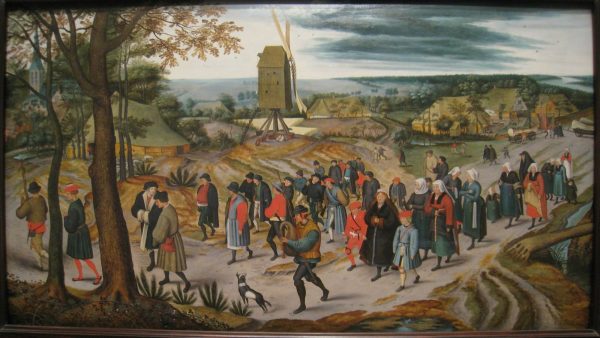
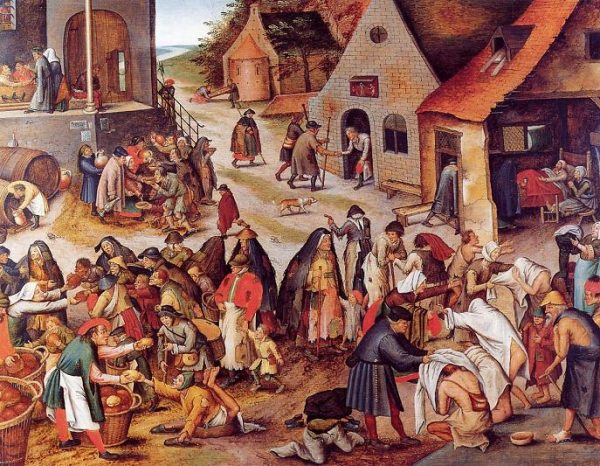
The Seven Acts of Charity by Pieter Brueghel the Younger, recreated as a museum quality hand-painted oil reproduction full of quiet narrative detail worth returning to.

Workshops across the Low Countries in the early seventeenth century kept a brisk trade in moral allegory, and among the most frequently commissioned subjects was the theme of charity performed as active virtue rather than pious sentiment. Pieter Brueghel the Younger, working within the pictorial vocabulary established by his father, took up the subject of the Seven Acts of Charity as a workshop composition intended to instruct as much as decorate, likely produced for a patron or civic body wishing to display the obligations of Christian conduct in visual form.
The composition arranges its figures across a crowded, animated ground, each group performing one of the acts: feeding the hungry, clothing the naked, sheltering the stranger, visiting the sick and the imprisoned, and burying the dead. Brueghel distributes these episodes with the same instinct for orderly multiplicity that marks the finest Flemish narrative painting of the period, allowing the eye to travel from one small drama to the next without ever losing the larger sense of a village going about an appointed duty. The palette leans toward warm earth tones and muted reds, punctuated by passages of grey sky and pale linen that draw the eye toward the acts of mercy at the heart of each vignette.
What distinguishes the work is its patience with detail: the individual gestures of hands offering bread or bandaging a wound, the particular fall of light across a doorway, the careful differentiation of costume that marks status and circumstance among the figures. This attentiveness to incident over grandeur reflects the workshop tradition Brueghel inherited, in which moral instruction was carried by accumulation rather than by a single commanding image, and it places the painting firmly within the northern Baroque interest in everyday life rendered with theological weight.
ByMuseum recreates this composition as a hand-painted oil painting reproduction, with trained artists working in oil on artist-grade canvas to match the original palette, tone for tone, and to preserve the surface variation and visible brushwork that give the painting its texture. The result is a museum quality reproduction, a painted object built up in layered oil rather than printed, so that the depth of colour and the trace of the brush remain visible up close, much as they would in the original panel.
Living with this painting rewards slow looking. Each viewing tends to surface a detail overlooked before, a gesture half hidden in a crowd or a passage of light that shifts the emphasis of the whole scene, so that the painting continues to offer something new long after it has settled into a room.
Empty walls flatten a room. A classical artwork restores structure and visual hierarchy. One painting defines the space, anchors furniture, and establishes identity.
Worldwide shipping included. Each painting is produced to order and safely packed for international transport.
All payments are encrypted and processed through trusted payment providers.
Real brushwork, layered oil paint, and durable pigments on museum-quality canvas.
If the result does not meet expectations, return it for a full refund.


Your artwork is painted on premium cotton canvas, then shipped safely rolled in a rigid tube with extra blank canvas border — ready for stretching or framing locally.
Select a handcrafted frame and we’ll deliver your painting fully assembled, protected, and ready to hang.
For safe shipping, framing is available up to a maximum size. Larger sizes will automatically disable the frame option.


Choose “Stretched” to receive your canvas mounted on wooden stretcher bars — perfect if you’ll frame it later or display it as-is.
Gallery Wrap is a deeper, 1.5" style stretcher. The canvas wraps around the sides and is stapled on the back for a clean, modern, frameless look.
We ship with UPS, FedEx, or DHL straight to your door. You’ll receive a tracking number as soon as your order leaves our studio. Typical delivery is 5 to 7 days after dispatch; large, framed, or stretched pieces may take longer depending on the safest shipping route.


Unframed canvases are protected with a film, carefully rolled, and secured inside a rigid shipping tube.

Stretched, Gallery Wrapped, and Framed paintings are wrapped, cushioned with foam protection, and boxed for safe transit.

Man Writing a Letter
Gabriel Metsu, c. 1664
The gallery list
Every painting is already 50% off. Join the list and we will send you an extra $15 code, plus first access to new collections.
No spam. Unsubscribe anytime. · Privacy Policy
Welcome
Your $15 code is on its way. Explore the gallery while you wait.