Loading cart…
No products in the cart.

Original price was: $599.00.$299.00Current price is: $299.00.
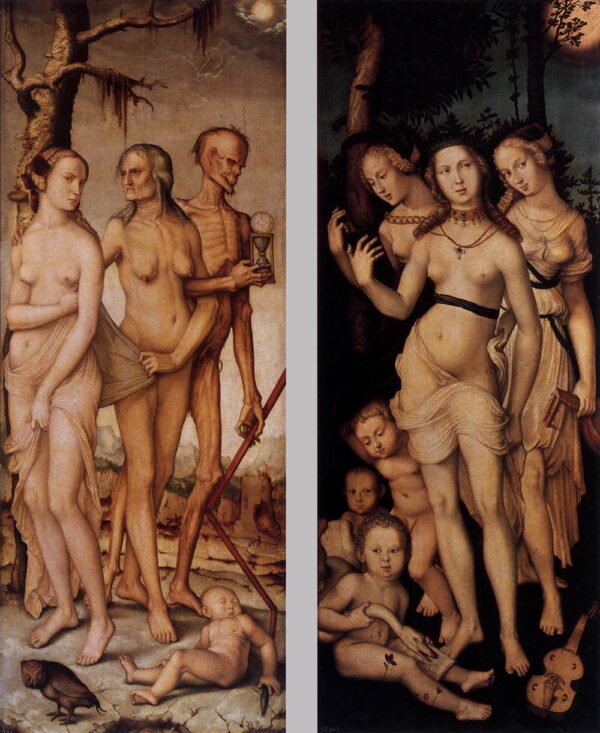
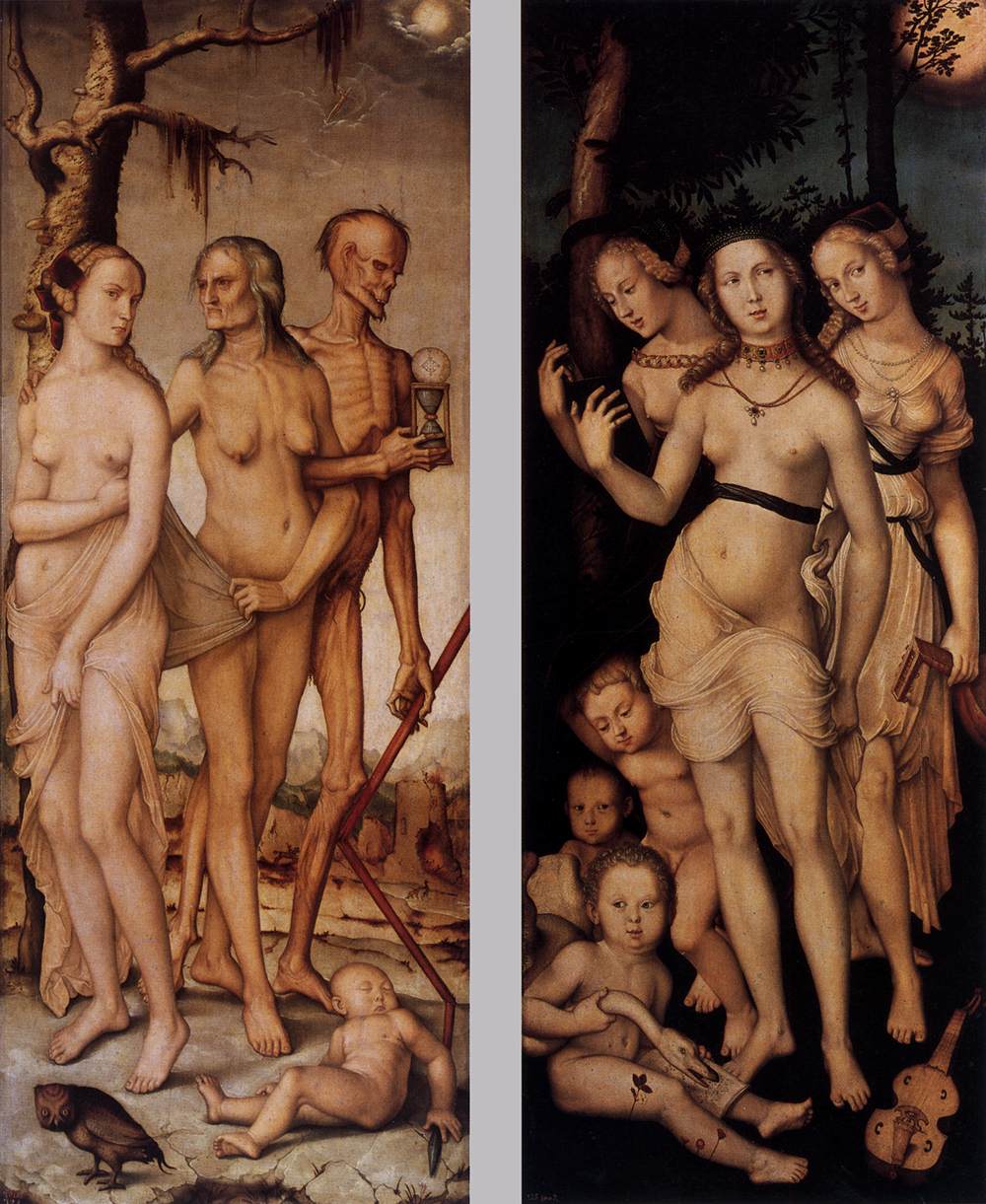
A hand-painted reproduction of Three Ages of Man and Three Graces by Hans Baldung Grien, pairing youthful grace with the stark reality of age in one German Renaissance allegory.
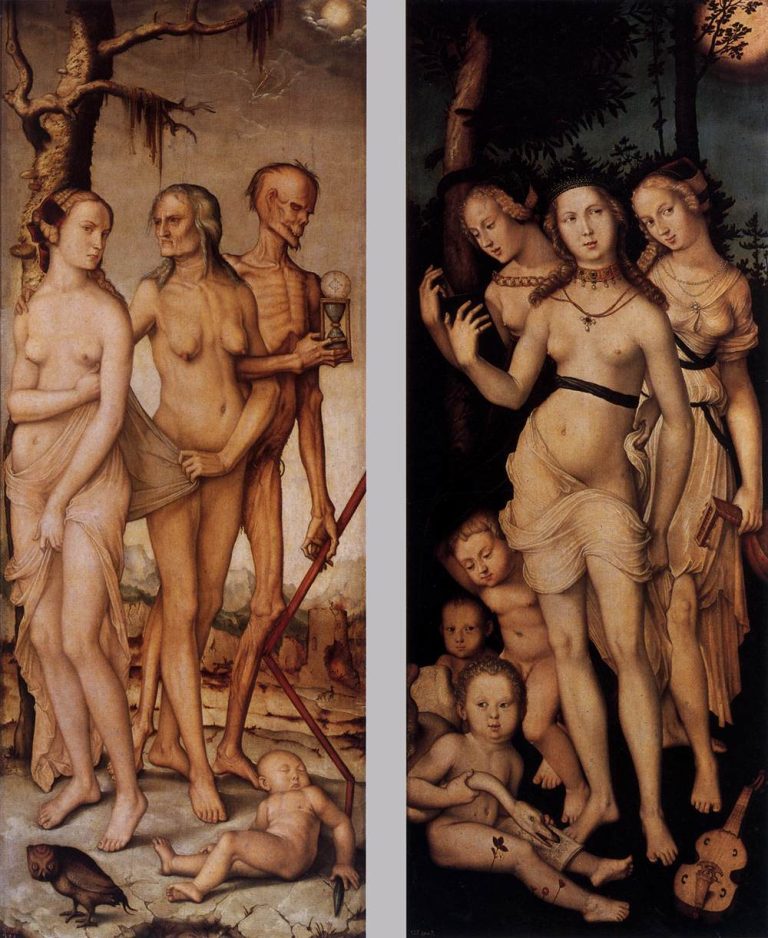
Look first at the hands. In this crowded allegory, one aged figure clutches at drapery with fingers rendered so precisely you can trace each knuckle, while nearby a young womans arm curves with an almost liquid softness. That contrast, of brittle age against pliant youth, is the whole painting compressed into a single gesture, and it tells you everything about why this work still unsettles and delights viewers five centuries later.
Baldung builds the composition around this deliberate friction between two allegorical traditions. On one side stand the three ages of man, moving from childhood through the vigour of middle years into the stoop and shadow of old age. On the other, the three Graces pose with the poised, cyclical grace inherited from classical sculpture, their bodies smooth and unbroken by time. He sets these groups close together, almost touching, so the eye cannot look at one without measuring it against the other.
The palette does much of the argument. Warm, rosy flesh tones catch the light across the younger figures, while the elderly bodies sink into cooler greys and umbers that seem to absorb it. Baldung was one of the more inventive painters to emerge from the German Renaissance, trained in the orbit of Durer yet pursuing a stranger, more theatrical vision of the human body, and this canvas belongs to the mature phase of his career when moralising subject matter and sensuous form sit in open tension rather than easy harmony. The brushwork is fine and controlled in the flesh, looser and more agitated in the surrounding drapery and shadow, a technical choice that heightens the psychological pressure of the scene.
Our painters study the original closely before beginning, matching the warm and cool passages of the palette and preserving the shift in brushwork between the smooth Graces and the more roughly handled figures of age. This is an oil on canvas reproduction built by hand rather than printed, so the ridges of impasto and the fine tonal gradations that give the work its unease remain visible on the surface, not flattened into a single even layer. What survives in the hand-painted oil painting reproduction is not just the image but the touch behind it, the same tension between control and looseness that makes the original so difficult to look away from.
Empty walls flatten a room. A classical artwork restores structure and visual hierarchy. One painting defines the space, anchors furniture, and establishes identity.
Worldwide shipping included. Each painting is produced to order and safely packed for international transport.
All payments are encrypted and processed through trusted payment providers.
Real brushwork, layered oil paint, and durable pigments on museum-quality canvas.
If the result does not meet expectations, return it for a full refund.


Your artwork is painted on premium cotton canvas, then shipped safely rolled in a rigid tube with extra blank canvas border — ready for stretching or framing locally.
Select a handcrafted frame and we’ll deliver your painting fully assembled, protected, and ready to hang.
For safe shipping, framing is available up to a maximum size. Larger sizes will automatically disable the frame option.


Choose “Stretched” to receive your canvas mounted on wooden stretcher bars — perfect if you’ll frame it later or display it as-is.
Gallery Wrap is a deeper, 1.5" style stretcher. The canvas wraps around the sides and is stapled on the back for a clean, modern, frameless look.
We ship with UPS, FedEx, or DHL straight to your door. You’ll receive a tracking number as soon as your order leaves our studio. Typical delivery is 5 to 7 days after dispatch; large, framed, or stretched pieces may take longer depending on the safest shipping route.


Unframed canvases are protected with a film, carefully rolled, and secured inside a rigid shipping tube.

Stretched, Gallery Wrapped, and Framed paintings are wrapped, cushioned with foam protection, and boxed for safe transit.