Loading cart…
No products in the cart.

Original price was: $518.00.$259.00Current price is: $259.00.
Triptych with the Adoration of the Magi by Pieter Aertsen brings the material density of Antwerp painting into a three-panel devotional work built for a room where people stop and look.
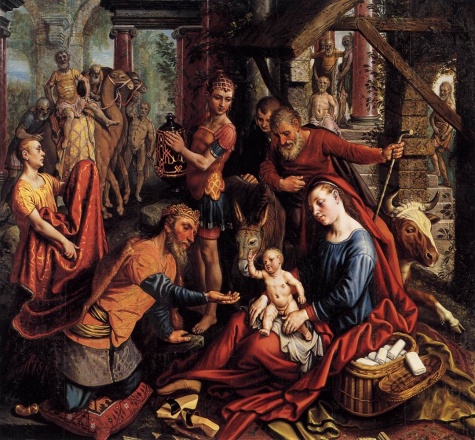
A three-panel devotional work brings a different kind of gravity to a room than a single canvas can. Hung together, the wings of a triptych fold the eye inward toward a central scene, and the effect on a wall is architectural as much as pictorial, suited to a study, a library, or any space where a viewer is meant to stand and look rather than glance in passing.
The subject is the arrival of the Magi before the infant Christ, a scene Netherlandish painters returned to for its opportunity to combine solemn narrative with worldly splendour, and Pieter Aertsen approaches it here with the eye he is better known for applying to market scenes and kitchen interiors. Fabrics catch light with a weight that suggests real cloth, vessels are rendered with the specificity of objects observed rather than invented, and the faces gathered around the central group carry the varied, unidealised character of portraiture rather than pious convention. The triptych format itself does organisational work, holding a devotional focus at centre while the wings carry flanking figures and scenes that complete the story without competing with it.
What unifies the three panels is the handling of light, which moves across the composition in a way that ties the sections together while still granting each its own sense of enclosed space. This is the Antwerp school at a particular moment, still carrying the devotional seriousness of the late Gothic altarpiece but organising it with a Renaissance awareness of structure and proportion. It places the triptych at an interesting point in the career of Aertsen, an artist whose reputation now rests largely on genre painting but who never abandoned the religious commission, and who brought the same appetite for material fact to both.
Reproducing a work of this complexity asks for more than a flat transfer of colour, and ByMuseum builds each version as a hand-painted oil painting reproduction, worked panel by panel by a trained painter matching the palette Aertsen established across the triptych. The oil is layered on artist-grade canvas to hold the tonal relationships between the wings and the central scene, and the surface keeps visible brushwork and texture rather than the flattened finish of a print, so the piece reads as a painted object at whatever scale it is hung.
Empty walls flatten a room. A classical artwork restores structure and visual hierarchy. One painting defines the space, anchors furniture, and establishes identity.
Worldwide shipping included. Each painting is produced to order and safely packed for international transport.
All payments are encrypted and processed through trusted payment providers.
Real brushwork, layered oil paint, and durable pigments on museum-quality canvas.
If the result does not meet expectations, return it for a full refund.


Your artwork is painted on premium cotton canvas, then shipped safely rolled in a rigid tube with extra blank canvas border — ready for stretching or framing locally.
Select a handcrafted frame and we’ll deliver your painting fully assembled, protected, and ready to hang.
For safe shipping, framing is available up to a maximum size. Larger sizes will automatically disable the frame option.


Choose “Stretched” to receive your canvas mounted on wooden stretcher bars — perfect if you’ll frame it later or display it as-is.
Gallery Wrap is a deeper, 1.5" style stretcher. The canvas wraps around the sides and is stapled on the back for a clean, modern, frameless look.
We ship with UPS, FedEx, or DHL straight to your door. You’ll receive a tracking number as soon as your order leaves our studio. Typical delivery is 4–5 business days after dispatch; large, framed, or stretched pieces may take longer depending on the safest shipping route.


Unframed canvases are protected with a film, carefully rolled, and secured inside a rigid shipping tube.

Stretched, Gallery Wrapped, and Framed paintings are wrapped, cushioned with foam protection, and boxed for safe transit.