Loading cart…
No products in the cart.

Original price was: $599.00.$299.00Current price is: $299.00.
Two Horses by Floris Arntzenius, a hand-painted oil reproduction of a quietly famous Hague School study, rich in loose brushwork and layered grey tones.

Floris Arntzenius worked in The Hague during the years when the citys painters turned away from grand historical subjects toward the working life around them, the harbours, the markets, the streets, and the animals that pulled the carts and carriages of a still largely horse-drawn city. Two Horses belongs to that turn of attention, a study made not for a patron or a public commission but from the kind of everyday observation that occupied so much of the Hague School circle in the late nineteenth century.
The composition sets its pair of animals within a shallow, atmospheric space, their bodies rendered with the loose, confident touch that marks the Impressionist strand of Dutch painting at the time. Arntzenius builds form through tonal contrast rather than outline, letting passages of warm and cool grey describe the muscle and weight of the horses while the ground around them dissolves into softer, less resolved brushwork. Light falls unevenly across the scene, catching a flank or a mane and leaving the rest in a haze that suggests damp air and low northern sky.
What holds the eye is the balance between the two animals themselves, one slightly forward, one held back, a quiet asymmetry that keeps the arrangement from feeling posed. The paint is worked wet into wet in places, thinned in others, so the surface carries a record of the speed at which it was made, closer to a sketch caught at the right moment than a finished set piece. It is a modest picture in scale but a telling one for anyone tracing how Dutch Impressionism handled animal subjects with the same fluency it brought to figures and city views, and it stands among the more quietly famous artworks to come out of that circle.
ByMuseum recreates Two Horses as a hand-painted oil painting reproduction, worked by a trained artist on artist-grade canvas rather than printed or output by machine. The palette is matched passage by passage, the looser strokes in the background kept loose, the denser modelling in the horses kept dense, so the surface carries the same variation in texture and paint depth as the original hand of Arntzenius. Held at an angle to the light, the canvas shows the ridges and thin patches that only come from applied pigment, the kind of surface a discerning collector checks for before anything else.
Lived with over time, the picture rewards the kind of close, repeated looking the Hague painters were known for, a passage of shadow near the legs, a stray highlight along a mane, details that surface only after the eye has settled and stopped searching for a single focal point.
Empty walls flatten a room. A classical artwork restores structure and visual hierarchy. One painting defines the space, anchors furniture, and establishes identity.
Worldwide shipping included. Each painting is produced to order and safely packed for international transport.
All payments are encrypted and processed through trusted payment providers.
Real brushwork, layered oil paint, and durable pigments on museum-quality canvas.
If the result does not meet expectations, return it for a full refund.


Your artwork is painted on premium cotton canvas, then shipped safely rolled in a rigid tube with extra blank canvas border — ready for stretching or framing locally.
Select a handcrafted frame and we’ll deliver your painting fully assembled, protected, and ready to hang.
For safe shipping, framing is available up to a maximum size. Larger sizes will automatically disable the frame option.


Choose “Stretched” to receive your canvas mounted on wooden stretcher bars — perfect if you’ll frame it later or display it as-is.
Gallery Wrap is a deeper, 1.5" style stretcher. The canvas wraps around the sides and is stapled on the back for a clean, modern, frameless look.
We ship with UPS, FedEx, or DHL straight to your door. You’ll receive a tracking number as soon as your order leaves our studio. Typical delivery is 5 to 7 days after dispatch; large, framed, or stretched pieces may take longer depending on the safest shipping route.


Unframed canvases are protected with a film, carefully rolled, and secured inside a rigid shipping tube.

Stretched, Gallery Wrapped, and Framed paintings are wrapped, cushioned with foam protection, and boxed for safe transit.
Impressionism
Floris Arntzenius
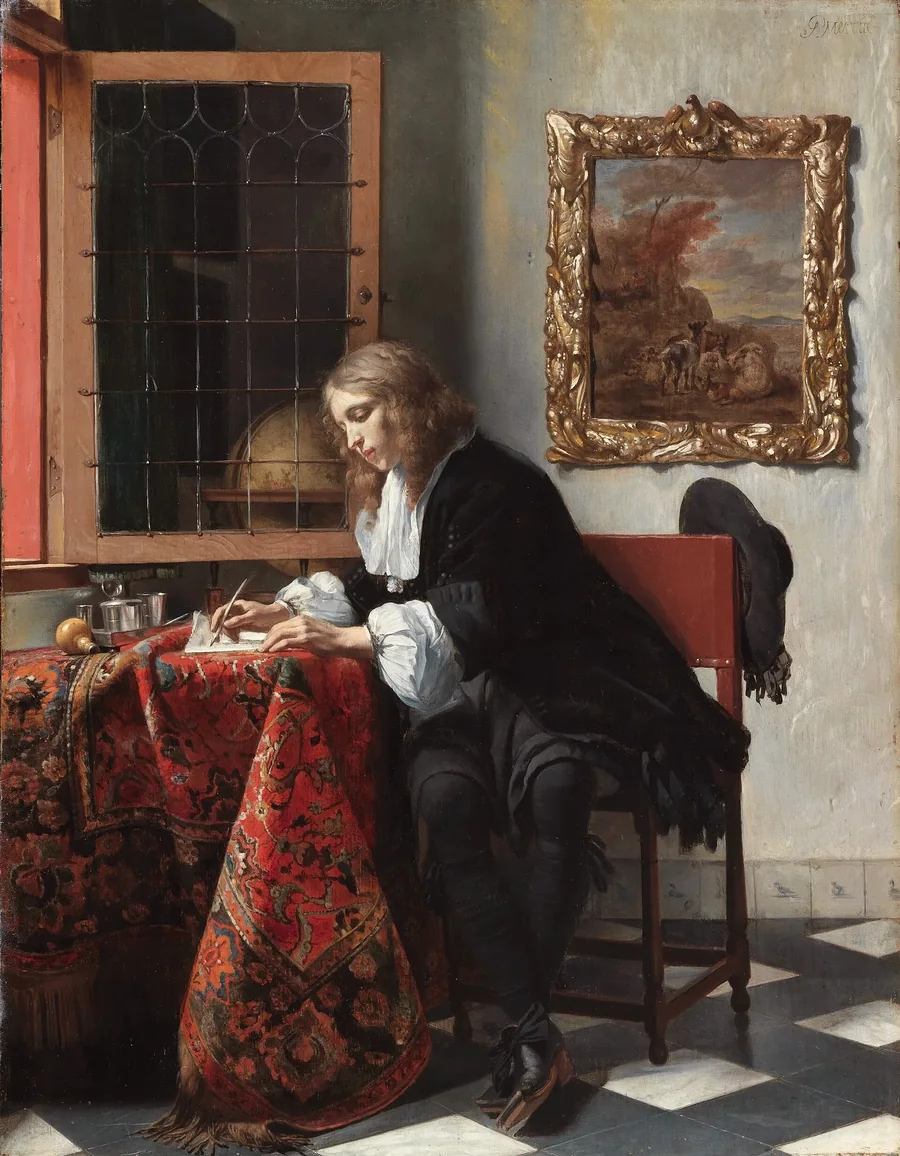
Man Writing a Letter
Gabriel Metsu, c. 1664
The gallery list
Every painting is already 50% off. Join the list and we will send you an extra $15 code, plus first access to new collections.
No spam. Unsubscribe anytime. · Privacy Policy
Welcome
Your $15 code is on its way. Explore the gallery while you wait.


