Loading cart…
No products in the cart.

Original price was: $518.00.$259.00Current price is: $259.00.
A hand-painted oil reproduction of Won de tow a, The Wonder by George Catlin, rebuilt in real pigment and brushwork to preserve the texture of the original canvas.
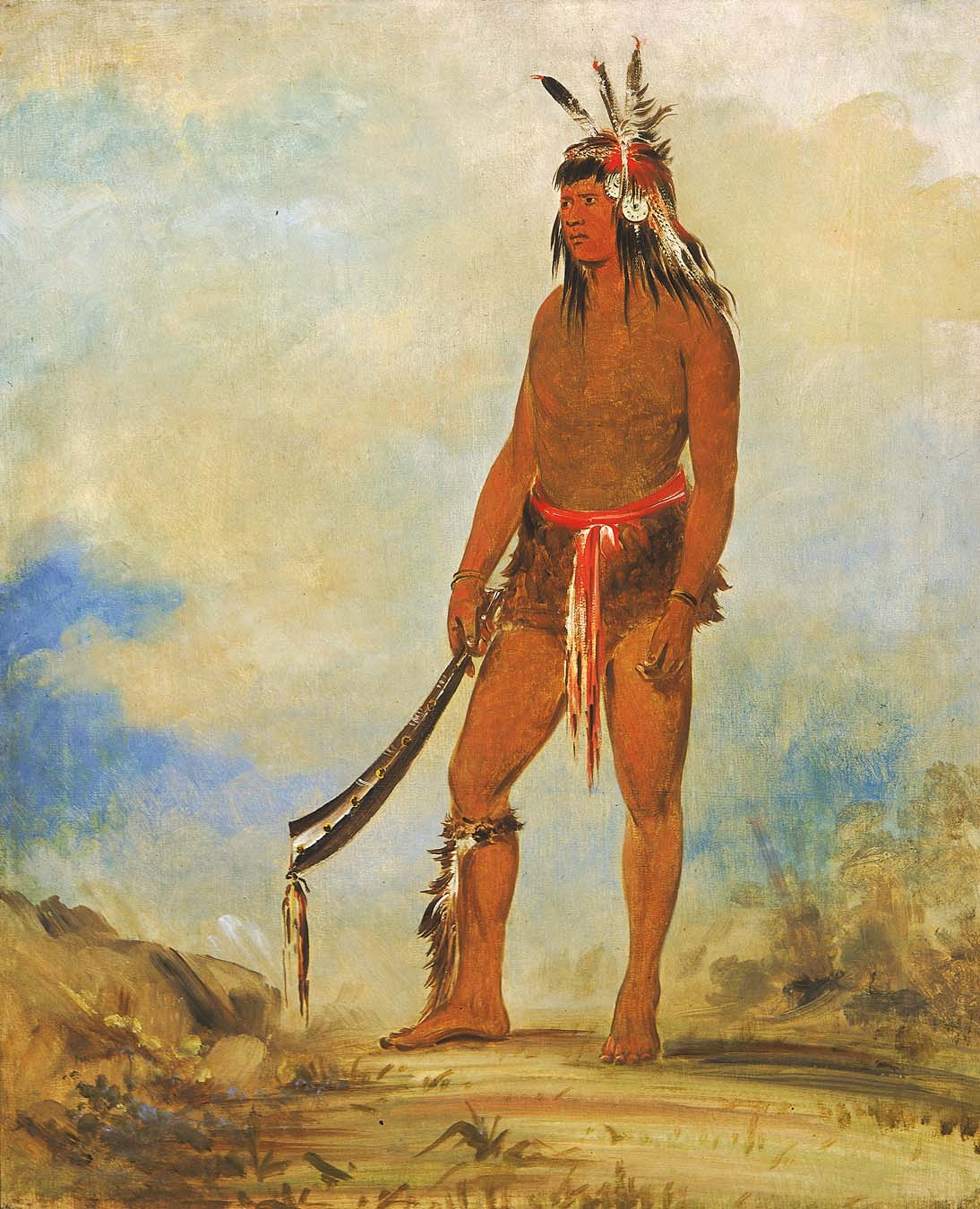
Across the hundreds of portraits George Catlin made of Native American leaders and warriors, most follow a similar formula: a three-quarter view, a plain ground, the sitter presented with careful, documentary attention to dress and ornament. Won de tow a, The Wonder holds to that basic method while asking more of it, using the pose and the surrounding space to suggest something of the bearing of the sitter rather than simply recording likeness.
The composition is built on restraint. Catlin arranges the figure so that the eye moves easily from the central presence outward to the edges of the canvas, with nothing competing for attention along the way. Light falls in a controlled, even manner, defining the planes of the face and the details of costume without resorting to dramatic contrast, and colour is handled with the same discipline, a limited range of tones that keeps the whole image unified. This is characteristic of the working method Catlin developed on his travels through the American West in the 1830s, when speed and clarity mattered as much as finish, since many sitters could offer only brief time to a visiting painter.
Despite that working speed, the picture rewards slow looking. The intervals between major forms, the spacing of pattern against plain ground, the transition from sharply described features to more loosely handled passages elsewhere in the canvas, all hold together with a coherence that suggests real attentiveness on the part of the artist rather than haste. The result sits within the wider tradition of realism, in its commitment to observed fact over invention, while carrying the particular urgency of a record made in the field.
Reproducing a picture like this by hand asks a painter to work slowly back through decisions that Catlin made quickly. Every version begins as a hand-painted oil painting reproduction built layer by layer on artist-grade canvas, with the trained painter matching the original palette tone by tone and rebuilding the brushwork stroke by stroke, so the surface carries genuine texture rather than a flat printed image. The aim is a faithful hand-painted replica, a painted object with the depth and irregularity of real oil, not a copy assembled by machine.
Empty walls flatten a room. A classical artwork restores structure and visual hierarchy. One painting defines the space, anchors furniture, and establishes identity.
Worldwide shipping included. Each painting is produced to order and safely packed for international transport.
All payments are encrypted and processed through trusted payment providers.
Real brushwork, layered oil paint, and durable pigments on museum-quality canvas.
If the result does not meet expectations, return it for a full refund.


Your artwork is painted on premium cotton canvas, then shipped safely rolled in a rigid tube with extra blank canvas border — ready for stretching or framing locally.
Select a handcrafted frame and we’ll deliver your painting fully assembled, protected, and ready to hang.
For safe shipping, framing is available up to a maximum size. Larger sizes will automatically disable the frame option.


Choose “Stretched” to receive your canvas mounted on wooden stretcher bars — perfect if you’ll frame it later or display it as-is.
Gallery Wrap is a deeper, 1.5" style stretcher. The canvas wraps around the sides and is stapled on the back for a clean, modern, frameless look.
We ship with UPS, FedEx, or DHL straight to your door. You’ll receive a tracking number as soon as your order leaves our studio. Typical delivery is 4–5 business days after dispatch; large, framed, or stretched pieces may take longer depending on the safest shipping route.


Unframed canvases are protected with a film, carefully rolled, and secured inside a rigid shipping tube.

Stretched, Gallery Wrapped, and Framed paintings are wrapped, cushioned with foam protection, and boxed for safe transit.
A note from the studio
Our studio is working through an exceptional number of commissions, so we have paused new orders for a short time. We will start taking orders again on 1 October.
Every painting is made entirely by hand, and we would rather pause than rush one. Thank you for your patience and your trust.
Leave your details and we will reserve your place: we will write to you as soon as orders reopen.
Thank you
Your request is saved. We will write to you on 1 October, and a confirmation is on its way to your inbox.