Loading cart…
No products in the cart.

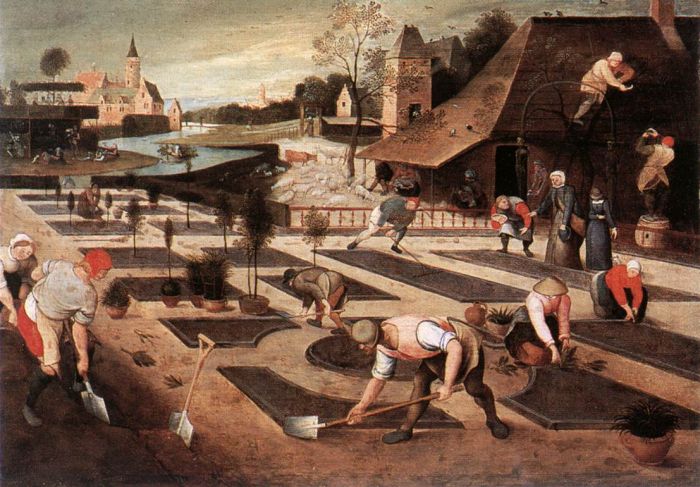
1888 · Oil on canvas · Statens Museum for Kunst, Copenhagen, Denmark
Save articles to your collection
Log in or create a free account, and this article will be waiting in your Private Collection.
Log in or sign upSpring was painted in 1888, at a pivotal moment in the development of the artistic identity of Agnes Slott-Møller. Having trained in the naturalist tradition under Peder Severin Krøyer, she was by the late 1880s in the process of reorienting her practice toward a more visionary and symbolic mode of painting. The work was produced during the same years in which she and her husband Harald were engaging deeply with questions of national artistic identity and with the possibilities of Symbolism as a framework for Danish painting that could stand apart from both academic naturalism and the Skagen school plein-air aesthetic. Spring represents her most complete early articulation of this new direction.
The painting was exhibited at the Charlottenborg Spring Exhibition in Copenhagen and received considerable attention as evidence of a significant new voice in Danish art. Its arrival in the collection of Statens Museum for Kunst cemented its status as a key early work in the national narrative of Danish Symbolism. The decision to place a female figure within a spring landscape in a way that transcended mere genre painting and moved toward allegory and spiritual evocation was itself a statement of artistic intent, signaling that the work of Slott-Møller would operate at the intersection of the natural world and the world of inner experience. This historically significant painting is available as a hand-painted oil reproduction for those who wish to bring its delicate luminosity into their living space.
In Spring, Slott-Møller organizes her composition around a standing female figure positioned among the blossoming branches of a tree, her form integrated into the surrounding natural environment in a way that suggests identification rather than mere proximity. The figure is rendered with a careful attention to silhouette that reflects the influence of both academic training and the decorative flattening that was becoming central to the Symbolist and Art Nouveau aesthetic of the period. The blossoming branches weave around and behind the figure in patterns that echo the linear rhythms of her drapery, creating a visual unity between the human and the botanical that is fundamental to the symbolic meaning of the work.
The palette is characteristic of Slott-Møller in its preference for cool luminosity, with whites and pale pinks dominating the floral elements and a soft, diffused light unifying the entire composition. The handling of paint in the background areas achieves an effect of atmospheric delicacy that contrasts productively with the more precise rendering of the central figure, creating depth while maintaining the overall decorative and tapestry-like quality of the picture surface. The face of the figure is treated with the psychological restraint that would become a signature of this artist, communicating interiority through pose and expression rather than dramatic gesture. The result is a painting of considerable formal intelligence, one that balances technical refinement with genuine poetic feeling. Collectors with an appreciation for Nordic Symbolism will find this work a deeply rewarding addition to any collection when owned as a hand-painted oil reproduction.
Spring carries within it a layered symbolic program that engages with longstanding European traditions of seasonal allegory while inflecting them with specifically Northern concerns. The association of a young woman with the arrival of spring draws on a lineage extending from classical antiquity through Renaissance allegory, but in the hands of Slott-Møller this tradition is refracted through a sensibility shaped by Scandinavian light, Nordic myth, and the particular circumstances of women in late nineteenth century Denmark. The figure does not merely represent spring as an abstract concept but embodies the ambivalent promise of renewal, a promise that, in the broader symbolic vocabulary of this artist, always carries within it the shadow of transience and loss.
The painting also functions as a statement about the relationship between women and the natural world, a relationship that in Symbolist thought was frequently coded as essential and elemental rather than merely incidental. For Slott-Møller, this coding was not a form of reduction but an opportunity to invest feminine experience with cosmic and spiritual significance. The work contributed to an emerging discourse within Danish art about the possibility of a national Symbolism that could draw on the emotional and natural landscape of the North rather than simply importing the iconographies of French or Belgian Symbolism. In this sense Spring is not only a beautiful and technically accomplished painting but also a document of cultural ambition and artistic self-definition. Its enduring appeal to viewers and scholars alike testifies to the clarity and depth of its symbolic vision, making it a painting well worth owning as a hand-painted oil reproduction.
Enjoyed this story?
Save articles to your collection
Log in or create a free account, and this article will be waiting in your Private Collection.
Log in or sign up