Loading cart…
No products in the cart.

Original price was: $518.00.$259.00Current price is: $259.00.
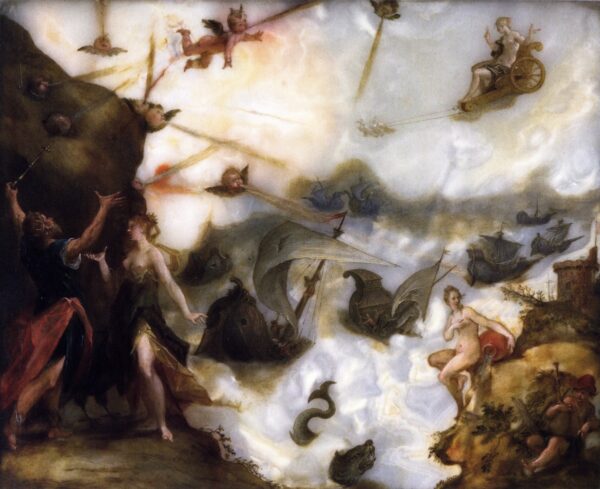
A hand-painted reproduction of Aeolus Releasing the Winds by Hans von Aachen, its swirling Mannerist figures rendered in fluid brushwork on a scale built for the wall.
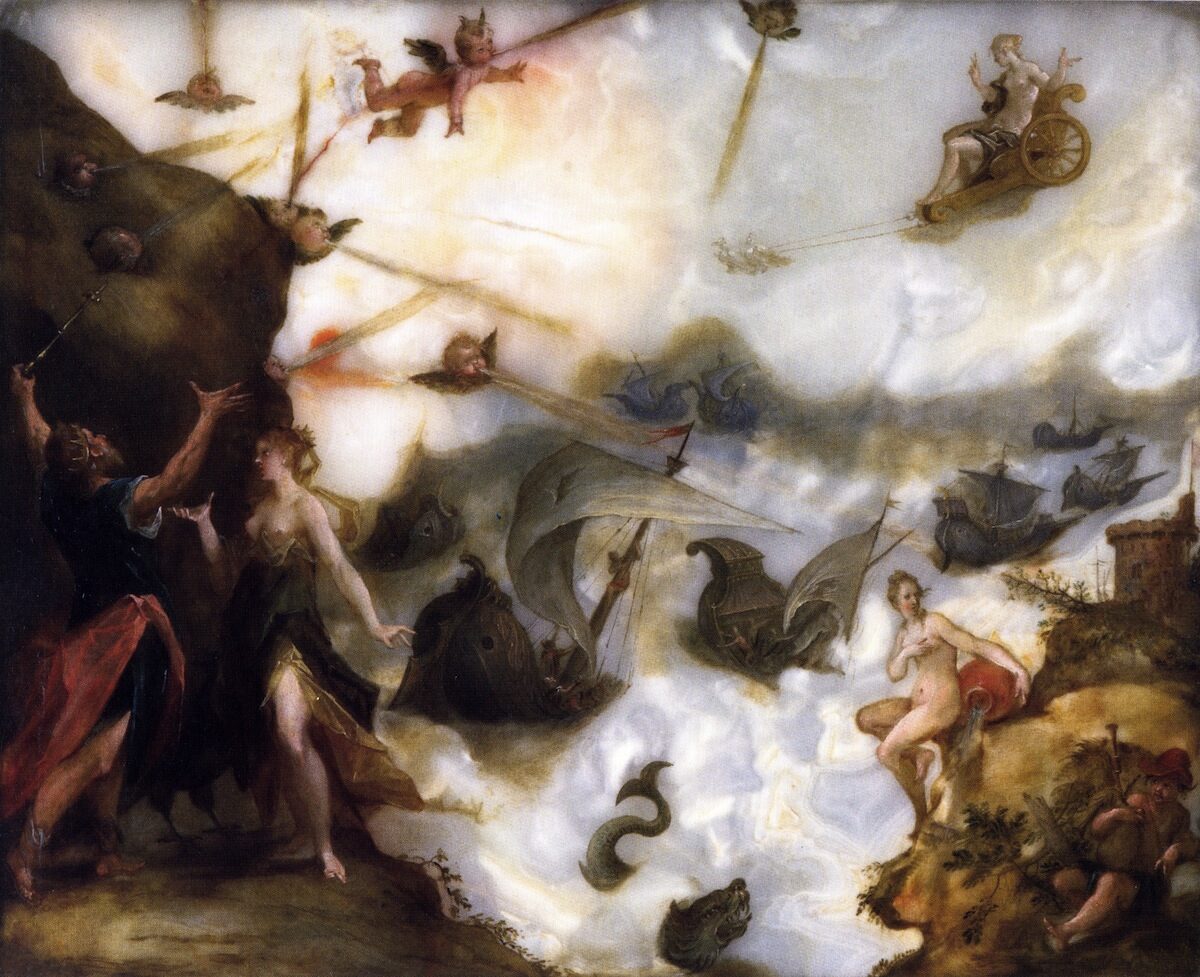
A canvas of substantial presence, built to a scale that lets the eye travel freely across a crowded field of bodies before settling on any single figure. The proportions are wide enough to hold the full sweep of the composition, so a viewer standing before it experiences the picture the way its Mannerist maker intended: as a single, unfolding gesture rather than a series of isolated details. That scale matters as much as the subject in deciding how the work should be hung and seen.
The subject is drawn from classical mythology, Aeolus in the moment he releases the winds from their confinement, an episode that gave Hans von Aachen license to fill the canvas with tumbling, wind-driven bodies. The multifigure arrangement is built on diagonals and counter-turns, pale limbs and torsos twisting against darker atmospheric grounds, so that the composition itself seems to be in motion even though every form is fixed by paint. It is a theme well suited to the Mannerist appetite for elaborate figure invention, and von Aachen answers it with evident relish.
What distinguishes the handling is the fluid modeling of the flesh and the sophisticated tonal range that carries the eye from lit highlights to shadowed recession without a hard edge anywhere in between. This is characteristic of von Aachen at the height of his career, when his Italian training and his position within northern European court culture combined to produce a style equally comfortable with classical restraint and expressive dynamism. Regarded today as a famous painting within the northern Mannerist repertoire, it rewards close looking as much as distant viewing, since the surface itself carries much of the meaning.
The ByMuseum version of this painting is an oil painting reproduction made by a trained artist working directly in oil on artist-grade canvas, not a printed facsimile. What is carried across is specific: the pale luminosity of the figures against their darker grounds, the softness at the edges where form dissolves into implied movement, and the visible brushwork that gives the flesh its sense of pliancy. Matching this palette and preserving that surface texture is what allows the reproduction to hold the same visual charge as the original when seen on a wall rather than a screen.
Artwork guide
Explore the painting’s history, composition and meaning in the ByMuseum art guide.
Read the history and meaning of Aeolus Releasing the WindsEmpty walls flatten a room. A classical artwork restores structure and visual hierarchy. One painting defines the space, anchors furniture, and establishes identity.
Worldwide shipping included. Each painting is produced to order and safely packed for international transport.
All payments are encrypted and processed through trusted payment providers.
Real brushwork, layered oil paint, and durable pigments on museum-quality canvas.
If the result does not meet expectations, return it for a full refund.


Your artwork is painted on premium cotton canvas, then shipped safely rolled in a rigid tube with extra blank canvas border — ready for stretching or framing locally.
Select a handcrafted frame and we’ll deliver your painting fully assembled, protected, and ready to hang.
For safe shipping, framing is available up to a maximum size. Larger sizes will automatically disable the frame option.


Choose “Stretched” to receive your canvas mounted on wooden stretcher bars — perfect if you’ll frame it later or display it as-is.
Gallery Wrap is a deeper, 1.5" style stretcher. The canvas wraps around the sides and is stapled on the back for a clean, modern, frameless look.
We ship with UPS, FedEx, or DHL straight to your door. You’ll receive a tracking number as soon as your order leaves our studio. Typical delivery is 4–5 business days after dispatch; large, framed, or stretched pieces may take longer depending on the safest shipping route.


Unframed canvases are protected with a film, carefully rolled, and secured inside a rigid shipping tube.

Stretched, Gallery Wrapped, and Framed paintings are wrapped, cushioned with foam protection, and boxed for safe transit.