Loading cart…
No products in the cart.


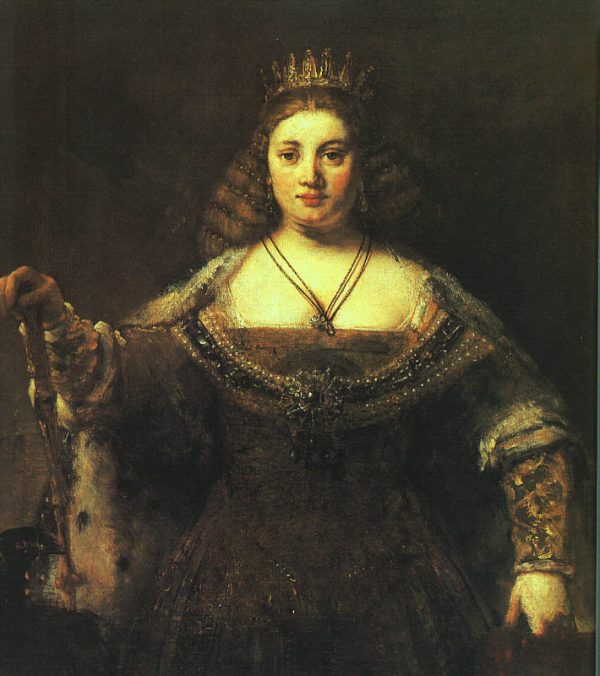
Juno 1664 to 65 presents Rembrandt’s interpretation of its named subject through a deliberately organized composition. Relationships of scale, placement, and open space create a steady rhythm, allowing the image to unfold without relying on unnecessary narrative.
Rembrandt uses changes in light, color, and definition to establish the work’s mood and guide attention. Changes in density across the image help separate primary forms from supporting areas while maintaining a unified overall design. These qualities invite close viewing, where smaller transitions and the relationship between broad passages become increasingly apparent.
Hand painting the image in oils preserves the importance of surface, tonal transitions, and physical brushwork. Because each canvas is painted individually, the result has natural variation, material depth, and a presence suited to collectors who prefer traditional workmanship over printing.
Empty walls flatten a room. A classical artwork restores structure and visual hierarchy. One painting defines the space, anchors furniture, and establishes identity.
Worldwide shipping included. Each painting is produced to order and safely packed for international transport.
All payments are encrypted and processed through trusted payment providers.
Real brushwork, layered oil paint, and durable pigments on museum-quality canvas.
If the result does not meet expectations, return it for a full refund.


Your artwork is painted on premium cotton canvas, then shipped safely rolled in a rigid tube with extra blank canvas border — ready for stretching or framing locally.
Select a handcrafted frame and we’ll deliver your painting fully assembled, protected, and ready to hang.
For safe shipping, framing is available up to a maximum size. Larger sizes will automatically disable the frame option.


Choose “Stretched” to receive your canvas mounted on wooden stretcher bars — perfect if you’ll frame it later or display it as-is.
Gallery Wrap is a deeper, 1.5" style stretcher. The canvas wraps around the sides and is stapled on the back for a clean, modern, frameless look.
We ship with UPS, FedEx, or DHL straight to your door. You’ll receive a tracking number as soon as your order leaves our studio. Typical delivery is 4–5 business days after dispatch; large, framed, or stretched pieces may take longer depending on the safest shipping route.


Unframed canvases are protected with a film, carefully rolled, and secured inside a rigid shipping tube.

Stretched, Gallery Wrapped, and Framed paintings are wrapped, cushioned with foam protection, and boxed for safe transit.