Loading cart…
No products in the cart.

Original price was: $599.00.$299.00Current price is: $299.00.
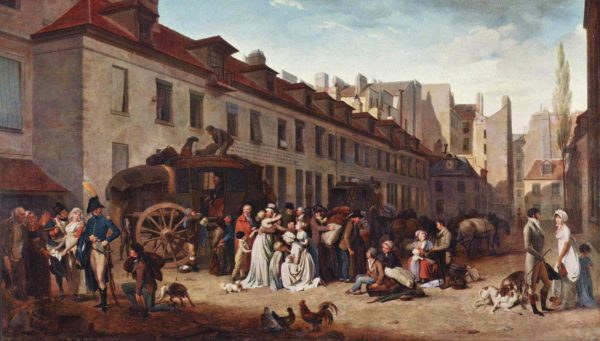
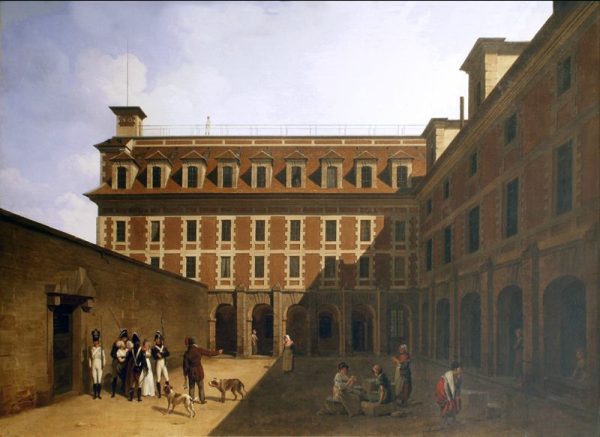
A hand-painted oil on canvas reproduction of La Prison des Madelonnettes by Boilly, painted with the restrained palette and layered brushwork of the original scene.

Thin, controlled layers of paint build the surfaces in this work, with edges softened where forms recede into shadow and sharpened where the eye is meant to settle. The brush moves quickly over drapery and slows over faces, and that shift in handling gives the picture its particular rhythm before the subject itself is even read.
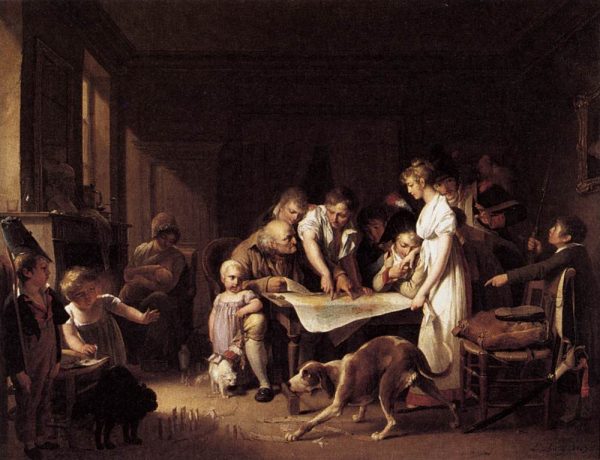
La Prison des Madelonnettes shows Boilly working in the genre register that made his reputation in late eighteenth and early nineteenth century Paris, observing a scene of confinement with the same clear-eyed attention he brought to street life and domestic interiors. Figures are arranged with a compositional logic that owes something to the neoclassical training of the period, yet the touch remains loose and painterly rather than academic. Light falls unevenly across the group, picking out gesture and expression while letting the architecture of the prison fall into a more muted register of greys and ochres.
The palette is restrained, built from earth tones set against passages of cooler shadow, and it is this economy of colour that gives the scene its psychological weight. Boilly does not overstate the drama of the subject; instead he lets the composition of glances and gestures carry the narrative, a method typical of his mature work and one that rewards a slow, close look at the canvas rather than a quick glance from across a room.
ByMuseum artists translate this painting through the same process, working by hand in oil on canvas rather than through any mechanical or printed method. Each oil on canvas reproduction is built up in layers that follow the original sequence of underpainting and glazing, so the brushwork reads as genuine paint rather than a flattened copy. The result is an oil painting reproduction with real surface texture, visible ridges of impasto where the original demands them, and a palette matched by eye against the source image rather than adjusted for a printer.
What is carried across is not just the image but the evidence of the hand that made it: the direction of a stroke, the thickness of paint at a highlight, the slight unevenness of a shadow that a machine would smooth away. That fidelity matters to anyone who intends to live with the piece and study it over time, since a painted surface changes with the light in a way no flat print can.
Empty walls flatten a room. A classical artwork restores structure and visual hierarchy. One painting defines the space, anchors furniture, and establishes identity.
Worldwide shipping included. Each painting is produced to order and safely packed for international transport.
All payments are encrypted and processed through trusted payment providers.
Real brushwork, layered oil paint, and durable pigments on museum-quality canvas.
If the result does not meet expectations, return it for a full refund.


Your artwork is painted on premium cotton canvas, then shipped safely rolled in a rigid tube with extra blank canvas border — ready for stretching or framing locally.
Select a handcrafted frame and we’ll deliver your painting fully assembled, protected, and ready to hang.
For safe shipping, framing is available up to a maximum size. Larger sizes will automatically disable the frame option.


Choose “Stretched” to receive your canvas mounted on wooden stretcher bars — perfect if you’ll frame it later or display it as-is.
Gallery Wrap is a deeper, 1.5" style stretcher. The canvas wraps around the sides and is stapled on the back for a clean, modern, frameless look.
We ship with UPS, FedEx, or DHL straight to your door. You’ll receive a tracking number as soon as your order leaves our studio. Typical delivery is 5 to 7 days after dispatch; large, framed, or stretched pieces may take longer depending on the safest shipping route.


Unframed canvases are protected with a film, carefully rolled, and secured inside a rigid shipping tube.

Stretched, Gallery Wrapped, and Framed paintings are wrapped, cushioned with foam protection, and boxed for safe transit.
Neoclassicism
Louis Leopold Boilly

Man Writing a Letter
Gabriel Metsu, c. 1664
The gallery list
Every painting is already 50% off. Join the list and we will send you an extra $15 code, plus first access to new collections.
No spam. Unsubscribe anytime. · Privacy Policy
Welcome
Your $15 code is on its way. Explore the gallery while you wait.