Loading cart…
No products in the cart.

Original price was: $518.00.$259.00Current price is: $259.00.
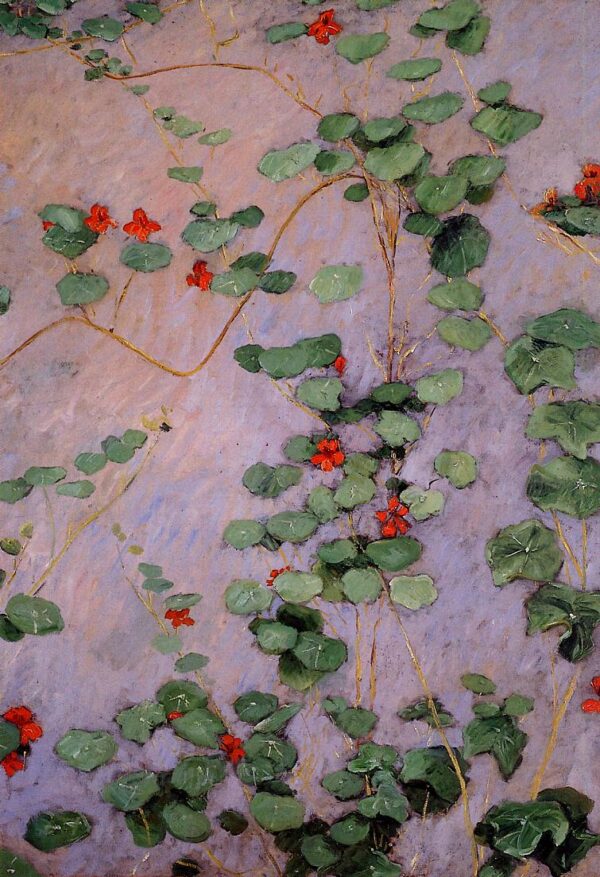
Nasturtiums b by Gustave Caillebotte, offered as a hand-painted oil reproduction with genuine surface texture rarely found in printed versions.
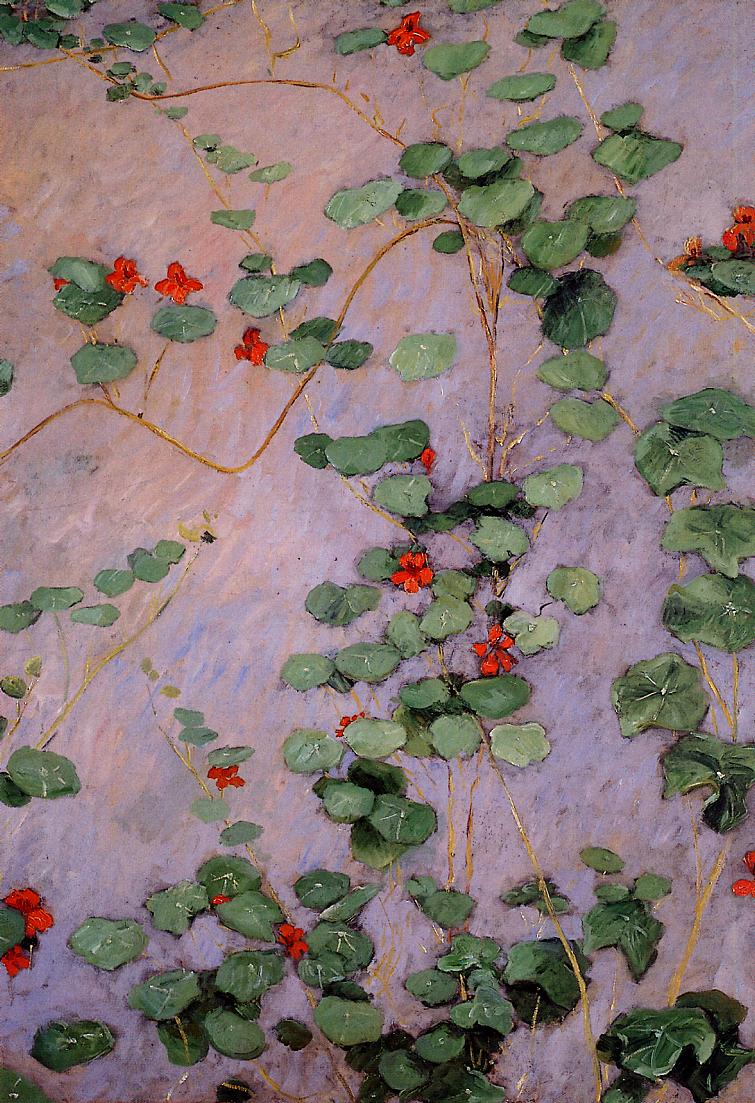
Interpretations of this garden study have shifted over the decades, from an early reading as a minor domestic scene to a more recent appreciation of its quiet formal daring. Collectors and critics have circled back to Nasturtiums b precisely because it rewards the kind of slow looking that busier canvases discourage, and each generation seems to find something new in how little it needs to hold attention.
Return to the canvas itself and the reasons become clear. Caillebotte builds the composition from an unhurried arrangement of leaf and bloom, letting negative space carry as much weight as the painted forms. The nasturtium leaves spread and overlap in a rhythm that feels almost architectural, a trait consistent with a painter trained in engineering before he turned fully to art. Light falls across the surface in shifting, tempered passages rather than dramatic contrast, and the greens modulate through a narrow but carefully tuned range that keeps the eye moving without ever settling into monotony.
The handling of edge and tone is where the picture does its real work. Some leaves are resolved with near-botanical precision while others dissolve into looser strokes, a calculated imbalance that gives the whole surface a sense of breathing space. This belongs to the period when Caillebotte was pulling away from the more anecdotal Impressionist subjects of his peers and toward a cooler, more structural way of organising a scene, one that still reads as distinctly modern.
A trained painter working on a hand-painted oil painting reproduction has to reconstruct that same imbalance by hand, laying down the darker foundational greens before building up the lighter, more broken strokes on top, exactly as the original process would have unfolded. The result is a fine art reproduction with genuine paint thickness and directional brushwork across the surface, something a discerning eye can verify by the way light catches the raised passages rather than sitting flat on a printed sheet. This is a painted object, built layer by layer on canvas, not an image reproduced by machine.
What keeps this particular garden study in circulation is its refusal to overstate itself, a quality that ages well and continues to draw serious attention. Owning a version painted by hand, rather than printed, means owning something that carries forward the same physical logic as the original: paint applied by a human hand, responding to light the way oil paint always has.
Empty walls flatten a room. A classical artwork restores structure and visual hierarchy. One painting defines the space, anchors furniture, and establishes identity.
Worldwide shipping included. Each painting is produced to order and safely packed for international transport.
All payments are encrypted and processed through trusted payment providers.
Real brushwork, layered oil paint, and durable pigments on museum-quality canvas.
If the result does not meet expectations, return it for a full refund.


Your artwork is painted on premium cotton canvas, then shipped safely rolled in a rigid tube with extra blank canvas border — ready for stretching or framing locally.
Select a handcrafted frame and we’ll deliver your painting fully assembled, protected, and ready to hang.
For safe shipping, framing is available up to a maximum size. Larger sizes will automatically disable the frame option.


Choose “Stretched” to receive your canvas mounted on wooden stretcher bars — perfect if you’ll frame it later or display it as-is.
Gallery Wrap is a deeper, 1.5" style stretcher. The canvas wraps around the sides and is stapled on the back for a clean, modern, frameless look.
We ship with UPS, FedEx, or DHL straight to your door. You’ll receive a tracking number as soon as your order leaves our studio. Typical delivery is 4–5 business days after dispatch; large, framed, or stretched pieces may take longer depending on the safest shipping route.


Unframed canvases are protected with a film, carefully rolled, and secured inside a rigid shipping tube.

Stretched, Gallery Wrapped, and Framed paintings are wrapped, cushioned with foam protection, and boxed for safe transit.