Loading cart…
No products in the cart.

Original price was: $599.00.$299.00Current price is: $299.00.
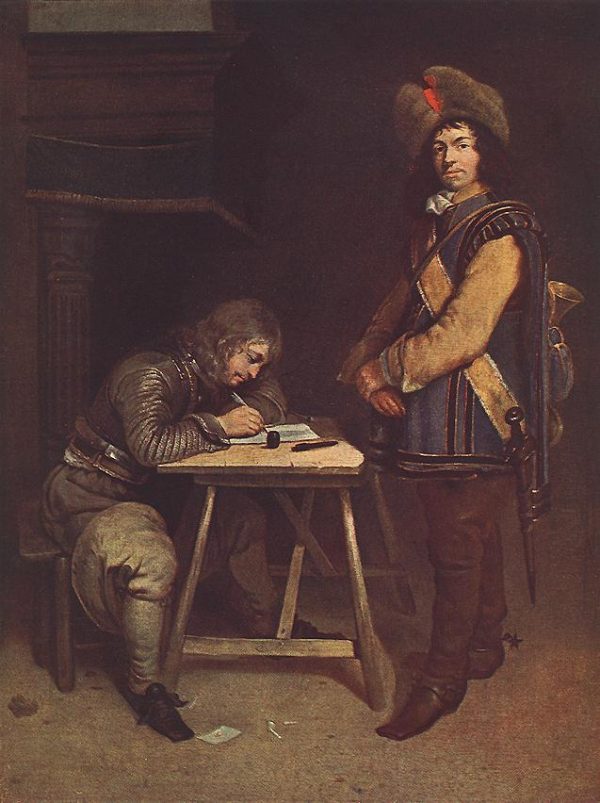
A hand-painted oil on canvas reproduction of Officer Writing a Letter by Gerard ter Borch, matching the original palette and the quiet, tightly controlled surface of Dutch Golden Age genre painting.
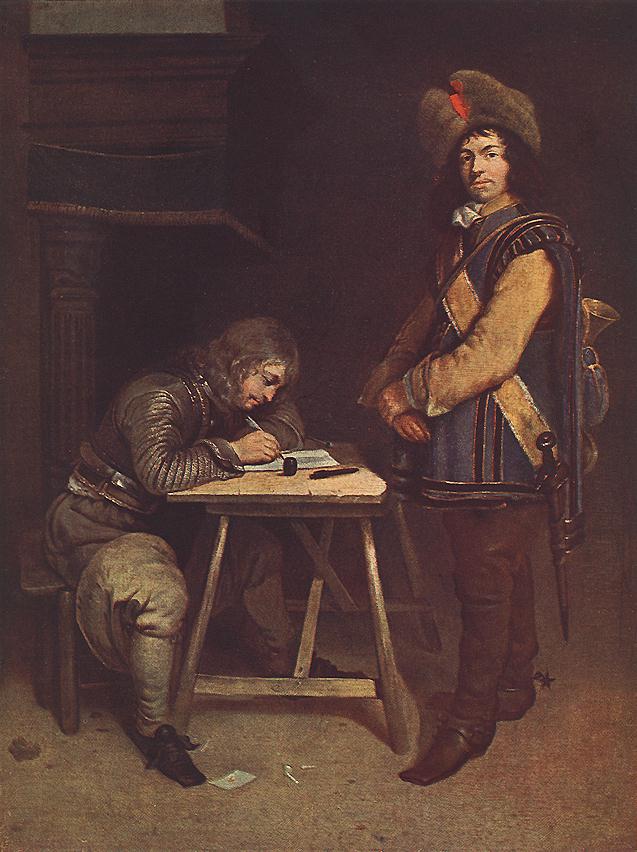
A picture of intimate proportion invites a close, quiet kind of looking, and Officer Writing a Letter is built precisely on that scale. The modest dimensions of the panel keep the viewer near the surface, at a distance closer to reading than to observing, which is exactly the position Gerard ter Borch wants for a scene of private correspondence.
The composition centres on a seated officer bent over a letter, his attention absorbed by the page in front of him while a page or attendant waits nearby, a device Borch used often to suggest a narrative unfolding beyond the frame. Light falls across the table and the folds of costume with a restraint typical of Dutch interior painting of the period, picking out the sheen of satin and the dull gleam of leather while leaving the rest of the room in soft shadow. This selective illumination is where the technical intelligence of the picture lives: rather than describing every object with equal weight, Borch lets a few passages carry the eye, so the viewer moves from the bright cuff at the wrist to the paper beneath the pen and back again.
That control of surface and attention places the painting within the mature phase of Borch career, when he had moved from tavern and guardroom subjects toward the hushed genre scenes of letter writing and reading that made him one of the most closely observed painters of manners in the Dutch Golden Age. The handling is tight and economical, built up in thin, controlled layers rather than loose brushwork, and it rewards the kind of sustained looking a collector gives a picture rather than the glance given a decoration.
Reproducing that economy by hand is a different task from reproducing a broadly worked canvas, and it is the reason ByMuseum treats this as a proper oil painting reproduction rather than a mechanical copy. A trained painter works in oil on artist-grade canvas, matching the cool, restrained palette of Borch stroke by stroke and rebuilding the thin, deliberate layering that gives the original its quiet authority. Where the design calls for a sharp passage of light on fabric, the painter lays pigment with the same discipline; where the shadow recedes, the canvas keeps a comparable depth of tone. The result is an oil on canvas reproduction with a genuine paint surface, one where the weave of the canvas and the slight variation in brushwork remain visible under raking light, giving the object a material presence no printed reproduction can offer.
Empty walls flatten a room. A classical artwork restores structure and visual hierarchy. One painting defines the space, anchors furniture, and establishes identity.
Worldwide shipping included. Each painting is produced to order and safely packed for international transport.
All payments are encrypted and processed through trusted payment providers.
Real brushwork, layered oil paint, and durable pigments on museum-quality canvas.
If the result does not meet expectations, return it for a full refund.


Your artwork is painted on premium cotton canvas, then shipped safely rolled in a rigid tube with extra blank canvas border — ready for stretching or framing locally.
Select a handcrafted frame and we’ll deliver your painting fully assembled, protected, and ready to hang.
For safe shipping, framing is available up to a maximum size. Larger sizes will automatically disable the frame option.


Choose “Stretched” to receive your canvas mounted on wooden stretcher bars — perfect if you’ll frame it later or display it as-is.
Gallery Wrap is a deeper, 1.5" style stretcher. The canvas wraps around the sides and is stapled on the back for a clean, modern, frameless look.
We ship with UPS, FedEx, or DHL straight to your door. You’ll receive a tracking number as soon as your order leaves our studio. Typical delivery is 5 to 7 days after dispatch; large, framed, or stretched pieces may take longer depending on the safest shipping route.


Unframed canvases are protected with a film, carefully rolled, and secured inside a rigid shipping tube.

Stretched, Gallery Wrapped, and Framed paintings are wrapped, cushioned with foam protection, and boxed for safe transit.